

If you only change one habit this run, make it this: master the wet/dry cycle and keep your pH tight. That combination is how we've turned lanky maybes into stupidly healthy, yield-happy plants in our Amsterdam lab and home tents alike.
In this guide, we'll show you exactly how we water cannabis—when, how much, and why. This is a crucial chapter of our complete masterclass on how to grow weed indoors, where we cover everything from lighting to harvest.
Whether you're running living soil, coco, or a tidy DWC bucket, we've got you covered.
Key Takeaways
- The core of how to water cannabis is mastering the wet/dry cycle—saturate to 10–20% runoff, then wait until the top 2 inches are dry and the pot feels light before watering again.
- Time waterings by signals, not a schedule: confirm with the finger test, lift-the-pot weight, and leaf posture, and pour slowly in concentric rings for even saturation.
- Dial pH to unlock nutrients: soil 6.2–6.8 (~6.5), coco 5.7–6.0, hydro 5.5–6.0; calibrate pens regularly and measure pH last after mixing nutrients.
- Adjust how you water cannabis by stage and setup: seedlings get light mist/ring waterings, veg takes deeper every 2–3 days, flower prefers a steady cadence; coco needs frequent feeds with ~30–35% dryback, and fabric pots dry faster than plastic.
- Prevent problems by distinguishing overwatering (heavy pot, wet soil, puffy droop) from underwatering (crisp dry medium, quick perk after watering) and fix by correcting volume, pace, airflow, and dryback.
- Use room-temp, clean water; water early in the light period, avoid standing runoff in trays, and let your environment (heat, RH, airflow) guide frequency.
How Often Should You Water Your Cannabis Plant?
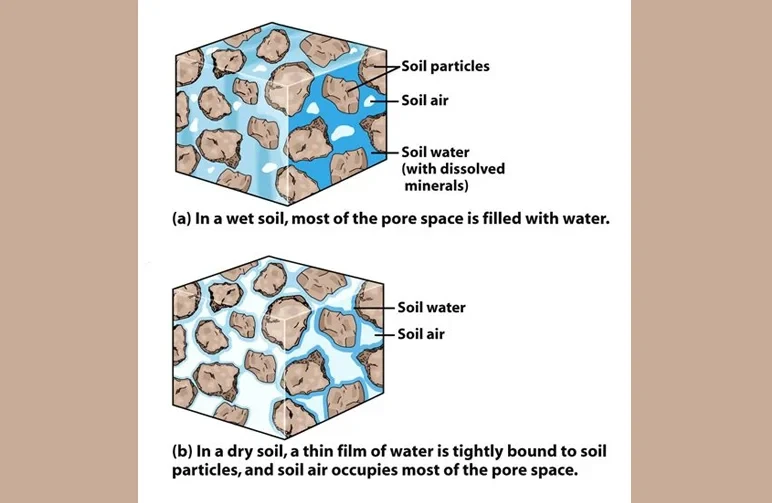
(Image credit: Manaaki Whenua – Landcare Research)
Short answer: usually every 2–3 days. Real answer: you water by signals, not a schedule. The plant's age, pot size, medium, and your environment dictate the rhythm.
The core concept is simple: thoroughly saturate the medium until you see 10–20% runoff, then let it dry back so oxygen can flood the root zone.
That wet/dry cycle is not optional. Roots breathe between waterings. If the top 2 inches (about 5 cm) are dry, the pot feels light, and leaves hold their posture, it's water day. If it's still heavy or cool-damp mid-depth, wait.
Sounds basic, but this alone fixes 80% of the "why is my plant sad?" DMs we get.
The 4 Key Factors That Determine Your Watering Schedule
Your Plant's Growth Stage
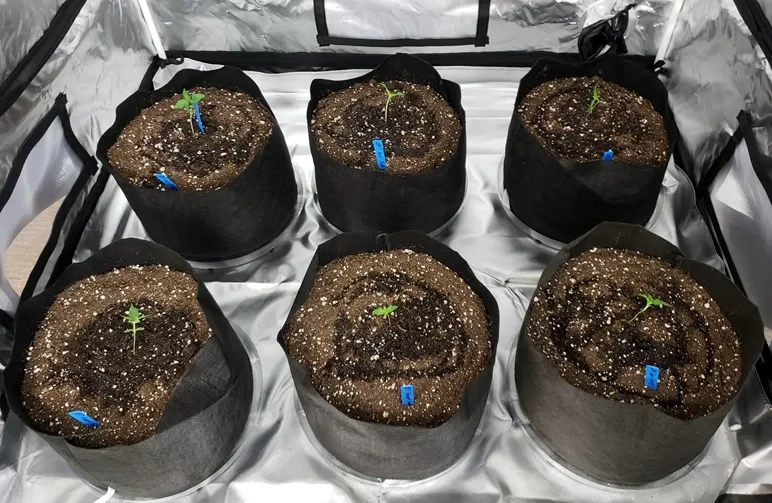
- Seedlings (weeks 0–3): They sip, not chug. We mist or lightly ring-water every 2–3 days, keeping the top layer barely moist while the rest of the pot stays airy. The goal is zero root disturbance and zero sogginess.
- Vegetative (weeks 3+): Roots explode now. Expect a steady 2–3 day cycle with deeper, slower waterings, typically 25–33% of pot capacity per session to achieve full saturation with 10–20% runoff.
- Flowering: A similar cadence, though plants are much thirstier. Many rooms stabilize nicely on a 3-day rhythm. Don't stress the plant for the sake of it; consistency beats theatrics.
Pot Size and Type
- Bigger pots = longer between waterings. A 6 L container often takes ~0.75–1.0 L to fully saturate, while a 20 L fabric pot may need 3–4 L. Always confirm with the lift test.
- Fabric pots drain and breathe better (we love them), so they dry quicker than hard plastic. Plastic pots hold water longer, great for hot, dry rooms but risky if you're heavy-handed.
- Depth matters: tall, narrow pots can create uneven moisture columns. Water in slow concentric rings to pull roots outward.
Your Growing Medium
Choosing the right growing medium for cannabis is the first step in managing your water cycle.
- Soil/compost blends: Run the full wet/dry. Water to runoff, then wait until the top 5 cm are dry and the pot is light before re-watering. This prevents compaction and keeps microbes happy.
- Coco/coir: Different game. Coco thrives on frequent feedings with a partial dryback; aim for ~30–35% dryback, not bone-dry. Keep your EC (Electrical Conductivity, a measure of nutrient salts) steady: never let coco fully desiccate or salts can spike.
- Soilless mixes with perlite: Faster drainage = more frequent, smaller waterings.
- Hydro/DWC: No wet/dry cycle; oxygen is delivered via aeration. Your schedule is about top-offs and reservoir management.
Your Grow Room Environment
- Hotter and drier rooms pull water faster. If you're running 25 °C–28 °C and 50–60% RH in veg, expect shorter intervals than a cooler, humid basement.
- Airflow accelerates evaporation (good), but aggressive fans pointed directly at pots can over-dry the surface (bad). Balance it.
- Water early in the light period indoors, or mornings/evenings outdoors, to align with transpiration.
How to Know Exactly When It's Time to Water
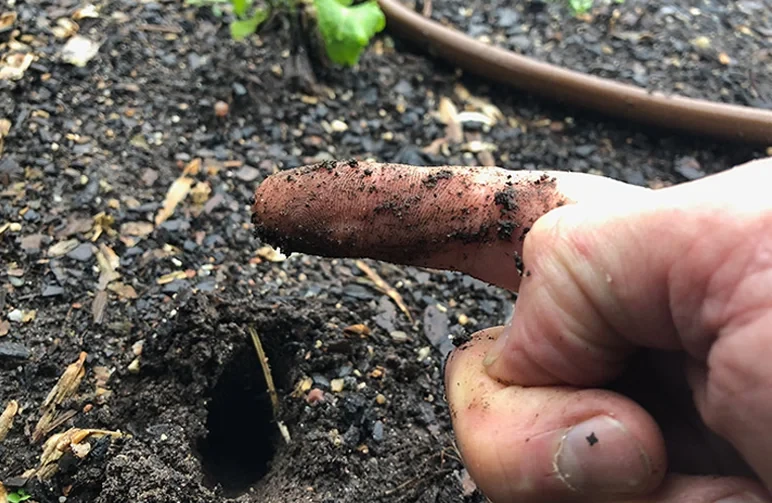
Method 1: The Finger Test (The Gold Standard)
(Image credit: Joe Lamp'l, joegardener.com)
Slide a clean finger 5 cm into the medium. If it's dry up top and only slightly cool deeper down, it's water o'clock. If you feel dampness or cool saturation, wait. We trust this over any app.
Method 2: Lift the Pot
Pick it up right after a proper watering and memorize that "wet" weight. Do the same when it's ready to drink and learn the "dry" weight. The difference becomes your internal scale.
Fabric pots with handles make this dead simple. Combine with the finger test for foolproof accuracy.
Method 3: Observe the Leaves
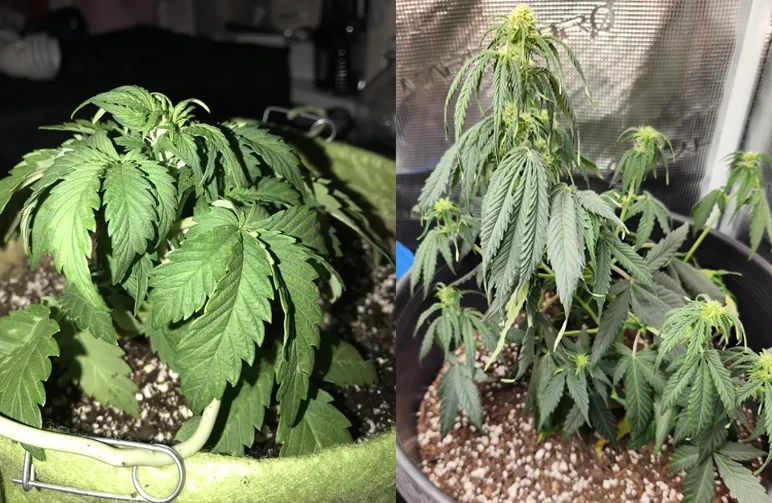
Underwatered leaves droop like tired dog ears—limp, lifeless, with clearly dry soil. Overwatered leaves also droop, but the leaves themselves look puffy or swollen, and the pot will be heavy.
Context is king. Never chase leaf droop without feeling the pot first.
Watering Cannabis: A Stage-by-Stage Guide
Watering Cannabis Seedlings (Weeks 0-3)
(Image credit: Nebula Haze, GrowWeedEasy.com)
Watering is only half the battle at this age; ensure you’ve mastered germinating your cannabis seeds correctly first.
- Container choice: Start small (solo cups with extra drainage or small plugs) to avoid waterlogged zones.
- Method: Light misting or small rings around the seedling, away from the stem, every 2–3 days.
- Volume: Think in tablespoons, not gallons. The goal is to encourage roots to search for water.
Watering During the Vegetative Stage (Weeks 3+)
- Move into breathable pots (fabric highly recommended). Water to a true saturation with 10–20% runoff.
- Frequency: Usually every 2–3 days. If you're still wet on day three, reduce volume next round or increase airflow.
- Technique: Pour slowly in concentric rings from the center outward to encourage radial root growth.
Watering During the Flowering Stage
- Keep the cadence steady: plants love routine during bulking.
- Support stems before heavy waterings to avoid flops from the added weight.
- Avoid leaving runoff pooling in trays. Standing water is an invitation for root disease. Use a shop-vac or tilt and drain your saucers.
Essential Tools for Perfect Watering
A Quality pH Pen
(Image credits: Sirius Fourside via GrowWeedEasy.com & u/Hot_Loss6892 via Reddit)
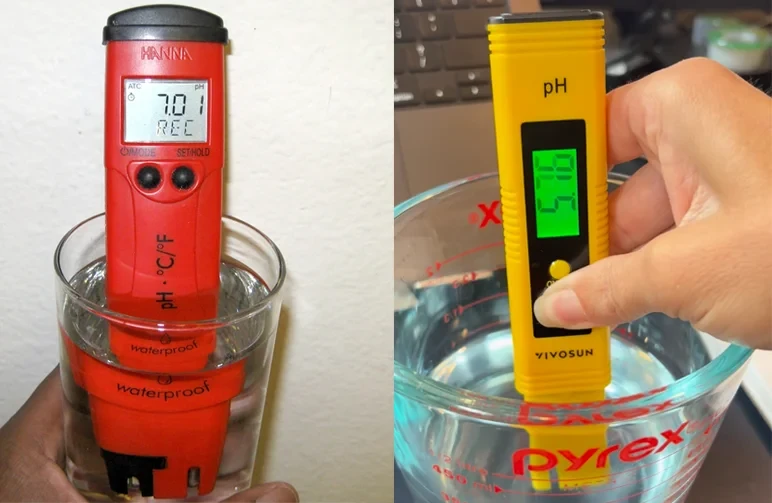
This is non-negotiable. Nutrient lockout caused by incorrect pH is the most common issue we see. A reliable digital pH pen is your best friend. Calibrate it often.
A Graduated Watering Can
Knowing exactly how much water you're giving each plant helps you maintain consistency and dial in your process. A simple can with liter or gallon markings is perfect.
Trays or Saucers
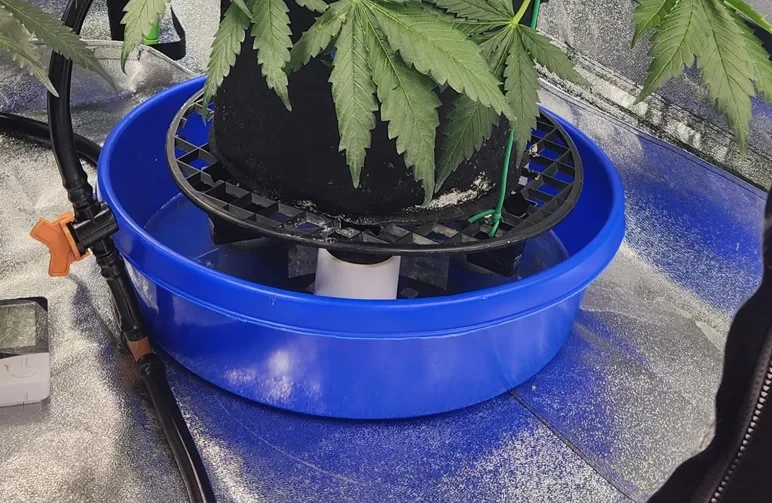
Every pot needs a tray to catch runoff. This allows you to measure your runoff percentage and prevents a mess, but more importantly, it lets you easily remove excess water so your plants aren't sitting in a stagnant puddle.
Overwatering vs. Underwatering: Diagnosing and Fixing Common Problems
(Image credits: Left u/Rick_M514 via Reddit; Right u/VanillaBlackXxx via Reddit)
Signs of Overwatering (The #1 Beginner Mistake)
- Persistent droop with swollen, glossy, downward-curling leaves.
- Yellowing from the bottom up, slow growth, funky smells from the pot.
- A heavy pot and soil that never seems to dry out.
Fix it: Extend the dry period until the top 5 cm are truly dry and the pot is light. Increase airflow and consider a fabric pot next transplant. Water less volume, more slowly, and only when signals align.
Signs of Underwatering
- Wilting leaves with dry, crisp edges and a clearly dry medium.
- The plant perks up quickly after being watered.
Fix it: Water thoroughly to full saturation with 10–20% runoff. Re-establish a consistent rhythm. Don't just splash the top; drive moisture evenly through the entire root profile.
Best Practices for Watering Cannabis
Water Temperature and Quality
- Temperature: Use room temp water, about 18 °C–22 °C. Ice-cold water shocks roots; hot water nukes microbes. Hard pass on both.
- Quality: Dechlorinated or filtered is ideal, especially for living soil. If using tap, let it sit out for 24 hours. In coco/hydro, monitor your starting EC/TDS to avoid salt creep.
The Importance of Water pH
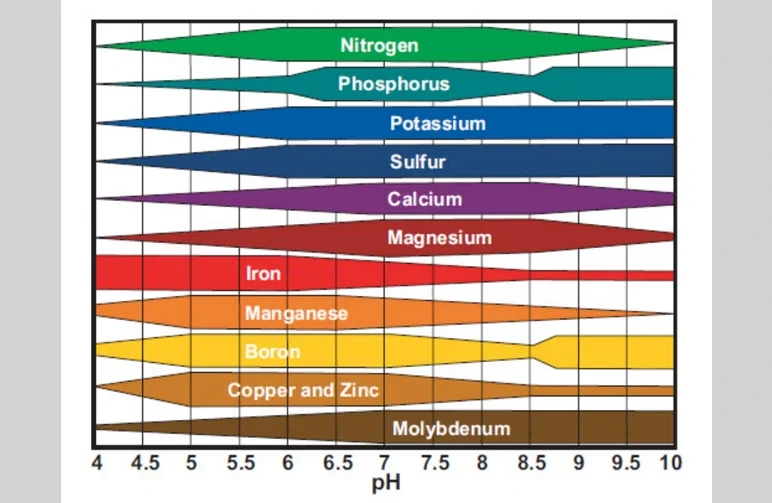
(Image credit: Adapted from classic nutrient availability studies)
pH is the gatekeeper for nutrient uptake. Get it wrong and you'll chase phantom deficiencies all run.
- Soil/compost: pH 6.2–6.8 (sweet spot ~6.5).
- Coco/coir and soilless: pH 5.7–6.0.
- Hydro/DWC: pH 5.5–6.0 with gentle swings.
Tips: Calibrate pens monthly. If you mix nutrients, measure pH last, as nutrients always shift the pH of your final solution.
Signs your pH is off include yellowing between the green leaf veins (interveinal chlorosis) or rusty spots, even when you're feeding properly.
Combining Watering with Nutrients
- Feed on your normal watering day so you still hit full saturation and a proper dryback. No random mid-cycle splashes.
- Coco: Low-dose, high-frequency feeds keep EC stable.
- Soil: Many quality soils carry nutrients for early veg. Start light (25–50% of label strength) and watch the leaf tips for signs of burning.
Water like a grower, not a clock. With autos or photos, indoors or out, the fundamentals don't change: saturate evenly, let it dry appropriately, and keep pH in the lane.
Nail that, and the rest—yield, terps, bag appeal—follows. Need genetics worthy of the effort? We hand-pick and test everything we sell. Buy premium cannabis seeds at WSE and grow along with us.
Frequently Asked Questions
How do I fix soil that's too dry to absorb water?
If your soil has become hydrophobic and water runs down the sides, start by slowly top-dressing with a small amount of water.
Wait 15-20 minutes for it to begin absorbing, then continue your main watering slowly, in stages, to ensure the entire root ball becomes saturated.
Can I use tap water for my cannabis plants?
Yes, in most cases. The key is to let it sit out in an open container for 24 hours to allow chlorine to evaporate. Always check the pH of your tap water and adjust it to the proper range for your medium after adding nutrients.
Do autoflowers have different watering needs than photoperiod plants?
Not fundamentally, as they follow the same principles of the wet/dry cycle. However, because autos have a shorter life cycle, an early overwatering mistake can stunt them more significantly with less time to recover.
Be especially careful not to overwater them in the seedling stage. For a deeper dive into their unique lifecycle, check out our full guide on how to grow autoflowers.
Should I water my cannabis plants at night?
It's best to water early in your "day" or light cycle. Plants primarily transpire (use water) when their lights are on. Watering at night or when lights are off can leave the soil soggy for too long, increasing the risk of root rot and pests.
What pH should I use when watering cannabis in soil, coco, and hydro?
For soil/compost, aim for a pH of 6.2–6.8. For coco coir and other soilless mediums, a tighter range of 5.7–6.0 is ideal. For hydroponics (DWC), maintain a pH of 5.5–6.0. Always measure pH after mixing nutrients.
How can I tell if my cannabis is overwatered or underwatered?
Underwatered plants have droopy, thin, papery leaves and the pot will feel very light. Overwatered plants also droop, but their leaves feel heavy, puffy, and firm, and the pot will be heavy with wet soil.
The weight of the pot is your most reliable clue.