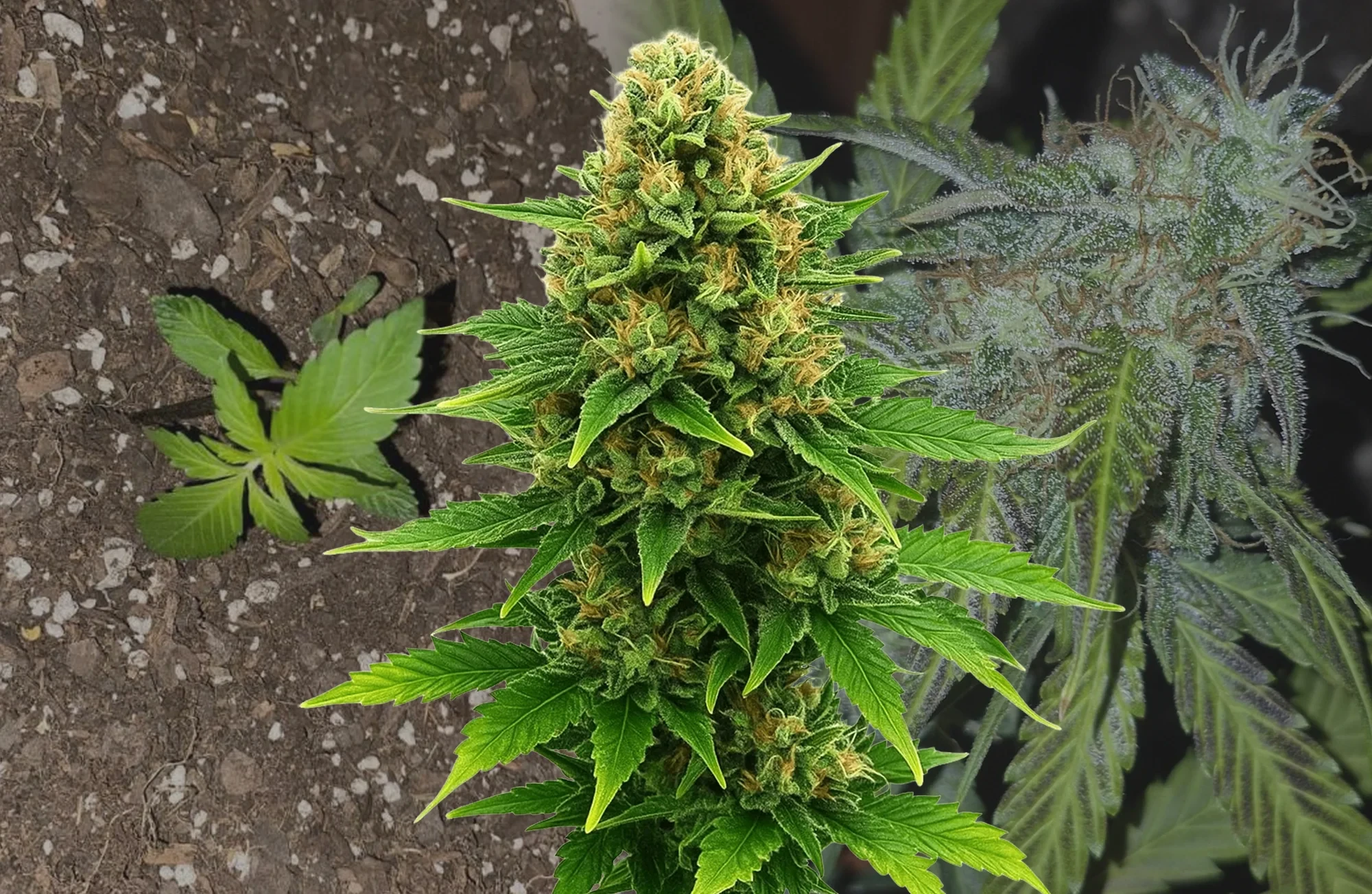


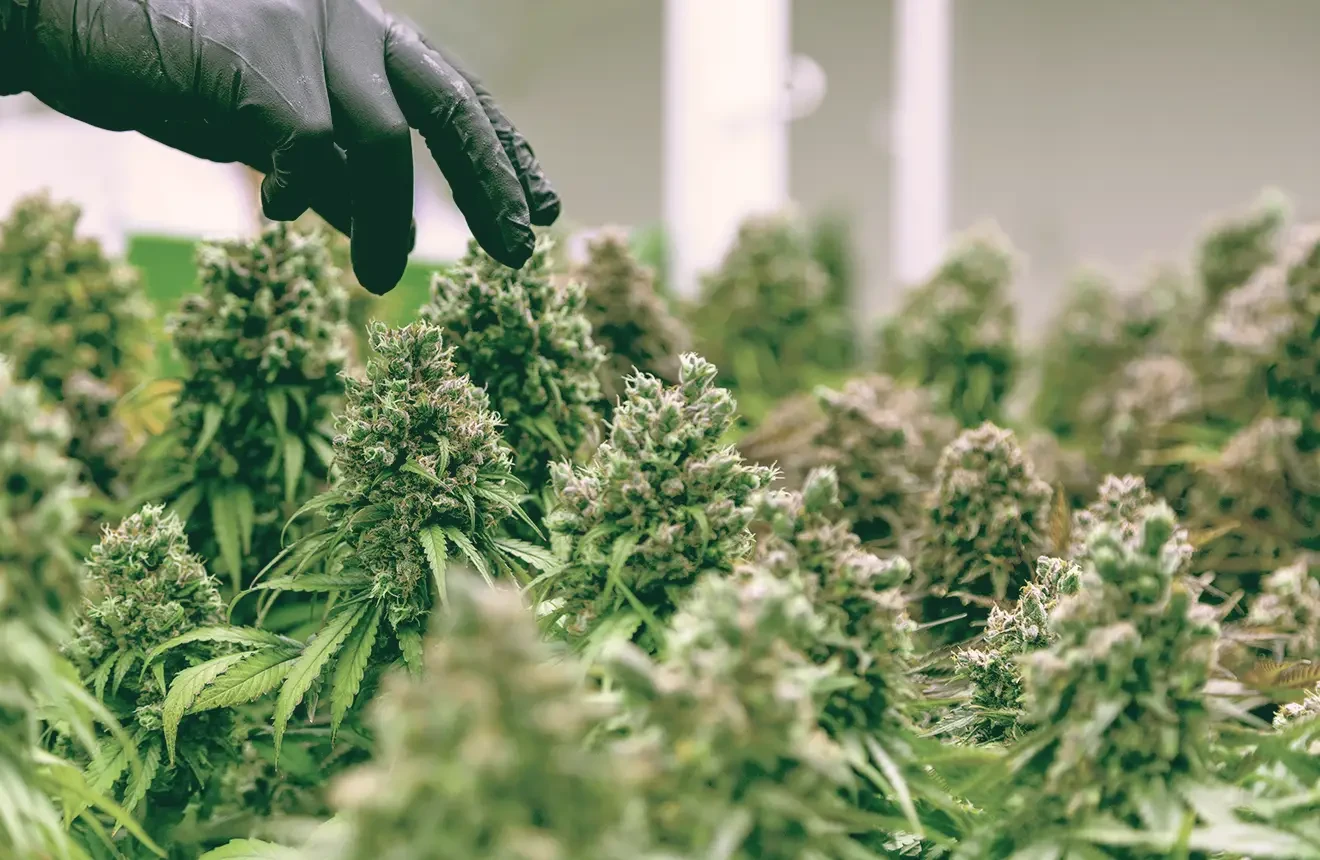
If you have ever stared at your buds and thought, "Is it time to chop?", welcome to the club.
Harvest day is the ultimate waiting game. It is the exact moment where months of hard work turn into taste, potency, and pride. But if you pull the trigger too early, you will ruin the entire run.
In this visual guide, I am going to show you exactly when to harvest. We will look at the frost on your buds, cross-check the hairs, and find the exact perfect day to chop.
Throw your calendar in the trash. We are going to read the plant.
Key Takeaways
- The golden rule: You decide when to harvest by looking at the trichomes (the frost) on the buds.
- The sweet spot: You want the trichomes to look cloudy and milky white. This means the THC is at its absolute peak.
- The tools: You cannot do this with your naked eye. You need a jeweler's loupe or a cheap digital microscope.
- Do not trust the hairs: White and orange hairs are a good hint, but they will lie to you. Only the trichomes tell the truth.
What Are Trichomes? (The Frost Factory)
If you look closely at a ripe weed plant, it looks like it is covered in a thick layer of winter frost. Those tiny, sticky crystals are called trichomes.
They are the resin glands of the plant. Think of them as tiny chemical factories. This is where all the magic actually happens.
Every single drop of THC, CBD, and those loud terpenes you love to smell are built inside these tiny, mushroom shaped heads.
As the plant gets closer to harvest day, the chemicals inside these heads change color. If you want to know exactly how potent your weed is going to be, you have to look right at the factory.
The Tools You Need to See Them
Here is the catch. You cannot see the details of a trichome with your naked eye. If you try to guess, you will guess wrong. You need the right gear to get up close and personal.
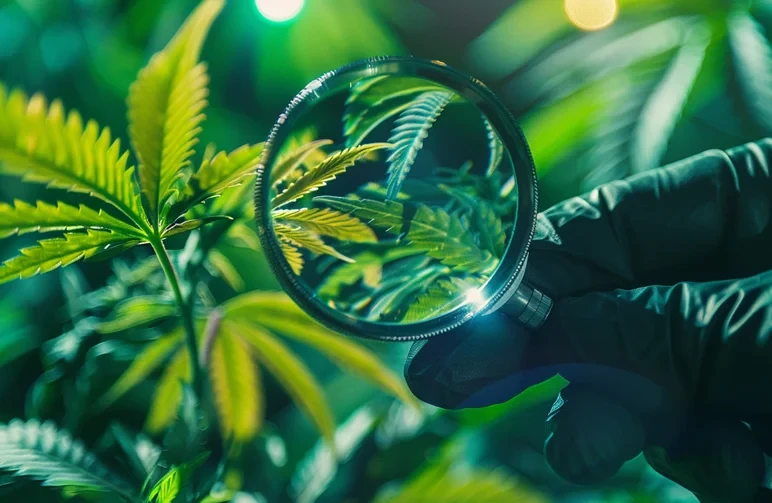
A Jeweler's Loupe
This is a small magnifying glass that fits right in your pocket. You want to buy one that zooms in 30x to 60x. They are incredibly cheap and get the job done perfectly.
A Digital Microscope
If you want to make things even easier, buy a cheap digital microscope that plugs right into your phone. This lets you take clear pictures of the frost.
You can sit on your couch, zoom in on the picture, and study the colors without straining your eyes in the tent.
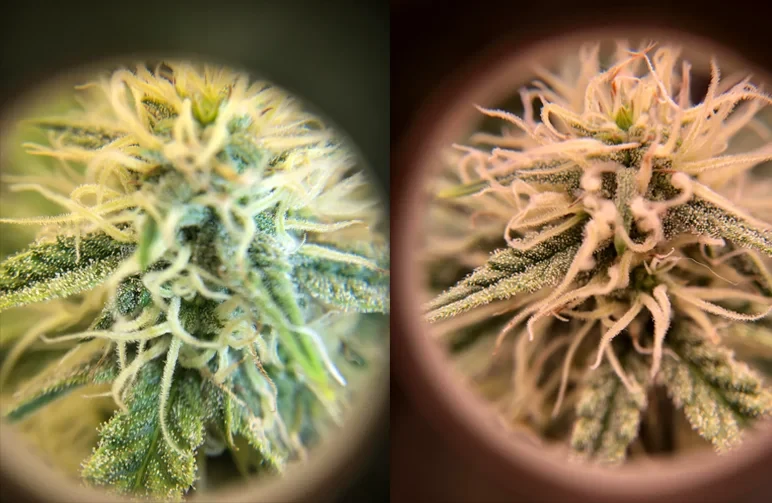
A Pro Tip from the Lab: When you go to check your trichomes, turn your grow lights off. Pink, purple, or yellow LED lights will mess with your eyes and change the color of the frost. Use a bright, neutral white flashlight to get a true reading.
The Three Stages of Trichomes (The Visual Guide)
Now that you have your loupe, it is time to look at the frost. You are looking for three distinct colors. Each color tells you exactly what is happening inside the plant.
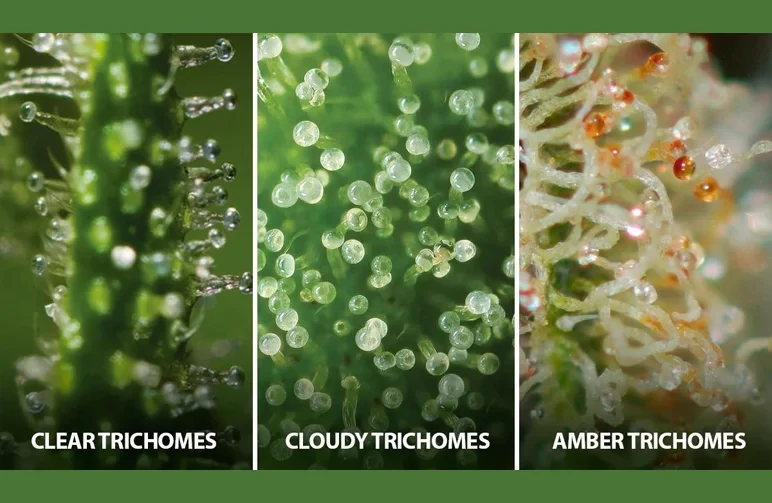
Stage 1: Clear Trichomes (Not Ready)
These look like tiny glass mushrooms. You can see right through them. If your plant is covered in clear trichomes, put the scissors down. The plant is not ready.
The THC is still developing. If you chop now, the high will be weak, short, and jittery. You will also miss out on all the flavor.
Stage 2: Cloudy and Milky Trichomes (Peak THC)
These look like opaque, white plastic. You cannot see through them anymore. This is the absolute sweet spot. When a trichome turns milky white, it means the THC levels are at their absolute maximum.
The terpenes are loud and the plant is firing on all cylinders.
Stage 3: Amber Trichomes (The Couch Lock)
These look like dark maple syrup. When a trichome turns amber, the THC is actually breaking down. It converts into a new chemical called CBN. CBN is what gives you that heavy, sleepy, couch lock feeling.
The Perfect Harvest Ratio (Tailoring Your High)
Here is the best part about growing your own weed. You get to choose your exact high. You just have to wait for the right mix of cloudy and amber trichomes to show up on the buds.
The Head High (Energetic)
If you want a bright, daytime smoke that makes you want to clean the garage, chop on the early side. You want almost 100 percent cloudy trichomes with just a tiny sprinkle of amber.
This gives you a very uplifting, creative vibe.
The Balanced High (Our Lab Favorite)
This is our go to recipe for absolute fire. We wait until the buds are 70 to 80 percent cloudy, and 20 to 30 percent amber. This gives you a massive euphoric head high with a really comfortable, relaxing body finish.
The Heavy Couch Lock (Sedative)
If you want nighttime medicine for pain relief or deep sleep, let the plant ride. Wait until you see 40 to 50 percent amber trichomes. Just be careful.
If you wait too long and the whole plant turns amber, your buds will start to degrade and you risk losing your crop to bud rot.
Do Not Get Tricked by the Pistils (The Hairs)
Back in the day, growers used to look at the hairs on the buds to know when to harvest. These hairs are called pistils.
When the plant is young, the hairs are bright white and stick straight up. As the plant gets older, they turn dark orange or brown and curl inward.
Many people will tell you to chop your plant when 70 percent of the hairs turn orange.
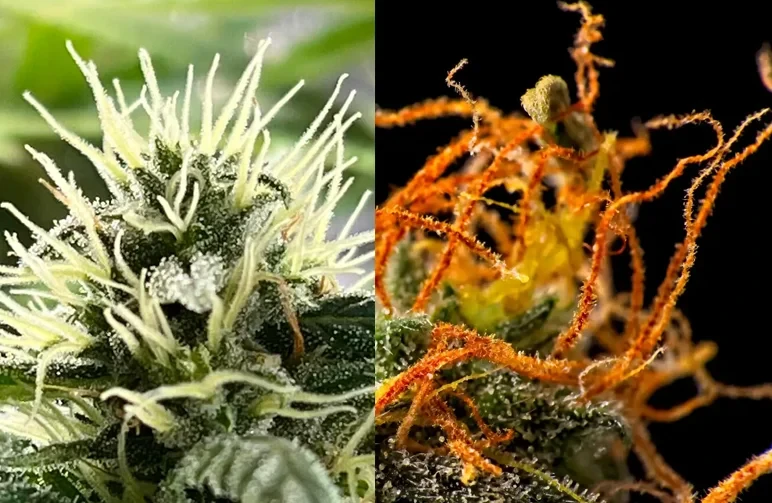
Do not listen to them. Pistils will lie to you.
Heat, heavy wind, or even a tiny bit of stray pollen can make the hairs turn orange way too early. They are a great hint that the harvest window is opening soon. But they are not the final test. You must always confirm your timing by looking at the trichomes.
Where to Look on the Plant
You have your loupe and you know what colors to look for. But where exactly do you point the glass?
You must look right at the actual buds. In the growing world, we call these the calyxes.
Do not look at the tiny leaves sticking out of the buds. We call those sugar leaves. Sugar leaves mature much faster than the actual flowers.
If you check the frost on a sugar leaf, you will see amber trichomes and think the plant is ready. You will end up chopping a week or two too early.
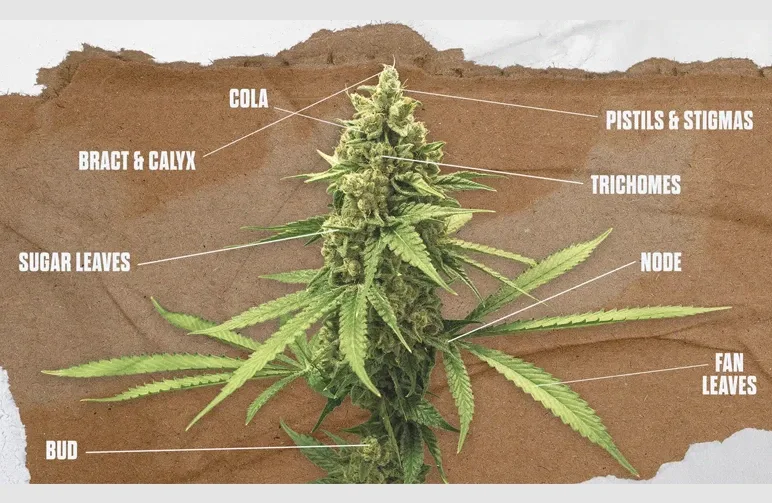
Always check the frost directly on the surface of the actual bud. Make sure you check a few different spots all over the plant to get a true reading.
Frequently Asked Questions
Can I harvest the top of the plant and leave the bottom to keep growing?
Yes. We do this all the time. We call it a staggered harvest. The top buds get more light, so they ripen faster. You can chop the top colas and lower your grow lights.
Let the bottom buds grow for another week or two so they can finish ripening and pack on more weight.
Do autoflowers ripen differently than photoperiods?
No. A trichome is a trichome. The rules are the exact same. Just remember that autoflowers are on a strict clock. Do not trust the timeline printed on the seed pack.
Some plants run long and some sprint to the finish. Always trust the frost.
How fast do trichomes turn from cloudy to amber?
It depends on the strain and your room temperature. Usually, the perfect harvest window lasts about three to ten days. Warmer rooms make the trichomes change faster.
Check your plants every single day once they start turning cloudy.
The Wrap Up
Perfect harvest timing is not magic. It is just observation. Read your trichomes, check the actual buds, and slide your ratio to match the exact high you want.
Patience is the ultimate grower skill. Do not rush the finish line. If you do this right, your jars will be full of loud, potent, incredible weed.
If you are getting ready to set up your drying space and plan out your next run, make sure to check out our complete guide on how to grow weed indoors to map out your exact next steps.
At Weedseedsexpress, we are growers first. We know that great harvests start with great genetics. Grab some premium seeds from our lineup and grow something you are truly proud of.
Keep your loupe handy, and happy growing!