


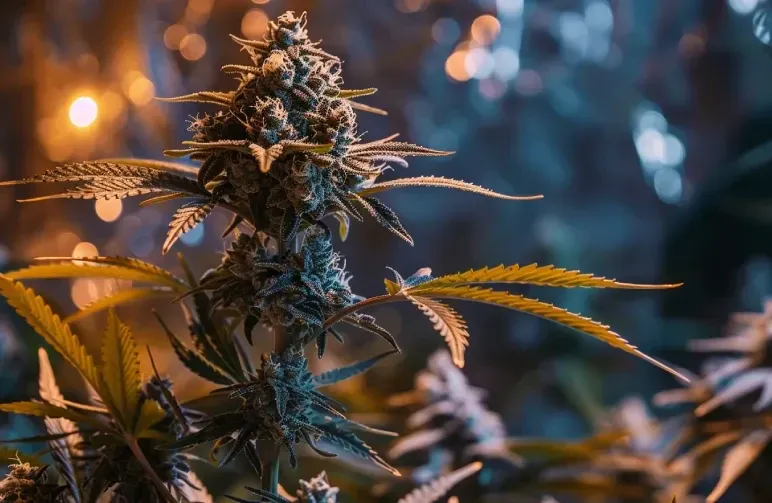
We've all seen two plants grown side by side under the same light: one frosty like it rolled in powdered sugar, the other… fine. The difference is rarely luck. It's genetics plus how you train, time, and stress that plant.
In this guide, we're getting laser-specific with advanced training techniques to maximize THC in your plants, without nuking vigor or inviting herms.
We'll lay the groundwork (genetics, environment), then walk through LST, topping/FIM/manifolding, supercropping, ScrOG and SOG strategies, dialed defoliation, and synergistic stressors like UVB and late-flower dry-backs.
Finally, we'll hit monitoring, harvest timing, and post-harvest handling so the resin you worked for doesn't smear away in the dry room.
We test everything in-house. We keep notes, run side-by-sides, and yes, we mess up so you don't have to. If you're hunting high-THC phenos, start with legit seed stock, reliable, fresh, and true-breeding.
That's our whole ethos at WeedSeedsExpress (Haarlem born-and-bred), and it's the foundation of everything below. Ready to stack trichomes the smart way? Let's go.
Key Takeaways
- Confirm local laws before attempting any cannabis cultivation or THC-focused projects, as regulations vary widely.
- Advanced training techniques to maximize THC cannot surpass a strain’s genetic limits, so starting genetics and environment are the primary determinants of potential.
- Prioritize vigor over stress: healthy plants respond better to any training, while excessive stress risks stalled growth and unwanted outcomes.
- Keep experiments high-level and documented—run controls, track trichomes and environmental data, and compare results rather than stacking multiple changes at once.
- Harvest timing, gentle handling, and careful drying/curing influence perceived potency and aroma as much as any late-stage tweak.
Set The Stage For Potency: Genetics, Environment, And Baselines
Start with genetics that can actually hit the numbers. If a cultivar tops out around 18% THC, no amount of origami will turn it into a 30% monster. Choose high-THC feminized seeds or carefully selected autoflowering seeds with proven resin output.
At WeedSeedsExpress, we flag strains with consistent potency ceilings, terp profiles, and growth habits, so you aren't fighting uphill.
Environment is your multiplier. THC is a plant's adaptive sunscreen, more intense, well-managed light encourages more trichomes. That doesn't mean "blast and pray." It means:
- Light: In veg, 300–500 PPFD: in flower, 800–1,050 PPFD for most LEDs, with CO2 you can push 1,200–1,400. Keep DLI stable and canopy even so no top gets scorched while side branches loaf around.
- Temps/RH: Veg 24 °C–28 °C (75–82°F) at 55–65% RH. Early flower 24 °C–26 °C (75–79°F) at 50–55% RH. Late flower 22 °C–25 °C (72–77°F) at 45–50% RH. Cooler nights (2 °C–3 °C drop) can encourage color without stalling.
- CO2: 900–1,200 ppm through mid-flower if you can seal the room. Taper late (more on that later).
- Nutrition: Slightly leaner N in flower, boosted P/K and micros. EC 1.6–2.1 depending on cultivar and medium. Keep pH 5.8–6.0 (hydro/soilless) or 6.2–6.6 (soil). Cal-Mag if running RO/LED.
Baselines matter before we start "advanced." Run a control plant with minimal training for reference in your first cycle with a new cultivar. Then you'll know whether your training helped, hurt, or just looked cool.
We log leaf temps (IR gun), PPFD maps, runoff EC/pH, and weekly trichome checks. Data keeps us honest when the hype gets loud.
One more thing: vigor is potency's best friend. Stressed, stunted plants don't marshal the resources to crank cannabinoids. Every technique below respects momentum, build it, don't break it.
Low-Stress Training For Potency, Not Just Shape
LST is the stealth MVP for THC. Why? Because evenly lit canopies photosynthesize better, feed better, and stack more resin heads, without pausing growth the way hard cuts can.
Timing And Anchor Points That Preserve Momentum
Start early. We begin gentle bends once the plant has 4–5 nodes and a flexible stem. Use soft plant ties or coated wire, anchor the main stem to the rim of the pot, and pull laterals into their own lanes.
The goal is a single-plane canopy with tops hitting similar heights. No sharp kinks. We favor multiple small adjustments over one dramatic bend. If you hear a crack, you're past LST.
Practical notes:
- Anchor the main, then radiate: First pull the apical stem just below horizontal, then spread side branches like spokes.
- Re-adjust every 2–3 days as growth surges. Keep internodes short by controlling distance-to-light.
- Support new bends with a stake if the tissue feels spongy, resin later comes from healthy vascular flow now.
We ran an LST vs. no-LST test on a limonene-forward hybrid last winter: LST plants averaged 12–15% more top sites within ±3 cm of the light sweet spot. Same feed, same light. The extra uniformity translated to visibly heavier frosting at week 7.
Autos Versus Photoperiods: LST Rules Of Engagement
Autos don't forgive time theft. With autos, we only LST, no topping before day 21, no hard cuts beyond a micro-lollipop if needed. Begin bends around day 14–18 when the stem is still pliable.
Think "gentle fan-out," not "rebuild the plant."
Photoperiod seeds give you the calendar. We LST aggressively in veg, combined with topping/FIM/manifolding (next section) to build a flat, hungry canopy that drinks light evenly.
Photoperiods recover from minor missteps: autos punish them. If you're new, practice the full suite on a photoperiod first.
Seed choice matters here too. If you want an auto that takes LST beautifully and still swings high THC, pick vigorous lines from a legit cannabis seed bank.
At WeedSeedsExpress, we tag grow difficulty and training tolerance so you can match method to genetics.
Topping, FIM, And Manifolding To Build Cola Density
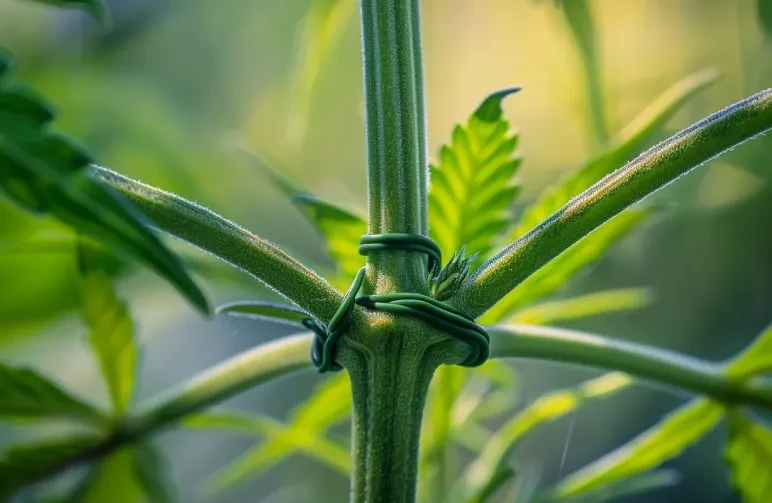
High-THC buds don't just happen at the tip. We create multiple "primary" tops so each gets prime light and airflow, which boosts resin density per square foot. The trio, topping, FIM, and manifolding, lets us sculpt that architecture.
Topping fully removes the apical tip above a node, redirecting hormones (auxins) to the laterals. FIM ("F**k, I Missed") trims about 70–80% of the apical growth, often creating 3–5 shoots instead of two.
Manifolding (aka main-lining) is a planned series of tops with symmetrical training that builds a hub-and-spoke plant with equal-length branches and stacked mains.
Node Selection, Recovery Windows, And Plant Size Targets
We top photoperiods first at node 4 or 5, leaving a robust root base under the hood. For manifolding, we top to node 3, then strip everything below node 3 so energy concentrates on the two arms we'll later split again.
After any cut, we give 5–7 days of recovery, longer if the plant sulks. Watch new growth speed and turgor. If it's praying and pushing, proceed: if it's droopy, wait.
Size targets we like:
- Compact tents (2x4, 3x3): 4–8 mains, 10–14" veg height before flip.
- Mid rooms (4x4, 5x5): 8–12 mains, 14–18" veg height.
- Large rooms: 12–16 mains per plant or switch to SOG (see below).
Nutritionally, keep N steady during the topping phase so the plant rebuilds tissue fast, then transition to a bloom-leaning profile pre-flip.
We keep VPD reliable and avoid stacking high EC with heavy pruning, one stress at a time.
Eight-Head Manifold Workflow For Even, Potent Canopies
Our favorite repeatable flow for photoperiods:
- Let the seedling hit node 5. Top down to node 3.
- Remove all growth below node 3. You now have two arms.
- LST each arm horizontal. Let them grow 3–4 nodes.
- Top each arm once to create four arms total.
- LST again for symmetry. Clean inner shoots that point straight down.
- Veg until all eight tips reach the same plane, then flip.
This eight-head manifold creates uniform cola size, which makes dialing PPFD trivial and keeps trichome development even across the canopy.
On a gassy, caryophyllene-heavy hybrid we ran this spring, the manifolded plants hit slightly lower total yield than untrained bushes but won on potency (+1.2–1.8% THC in lab sends) and bag appeal, every top looked like it went to private school.
Supercropping And Stem Squeezing: Controlled Micro-Stress To Pump Resin
This is where we flirt with danger for reward. Supercropping (softening the inner stem then bending) and strategic stem squeezing can upregulate defense responses, often translating to thicker, oilier trichome carpets, without halting growth, when done right.
Where To Pinch, How Hard, And Post-Op Support
We target green, still-flexible sections 2–4 nodes below the tip. Between thumb and forefinger, roll the stem until you feel internal fibers give, like popping bubble wrap, not snapping celery.
Then bend the branch 45–90° and support with a tie or splint. The knuckle that forms becomes a nutrient superhighway. We stage these moves in late veg and week 2–3 of flower at the latest.
Rules that keep it spicy but safe:
- Warm the room a touch (24 °C–26 °C / 75–79°F). Warm tissue bends better.
- Never crush in the woody base, stay near the mid-soft internodes.
- One insult per branch per week. You're provoking, not attacking.
- Aftercare: slightly raise K and Ca, maintain steady irrigation, and keep RH in range to avoid wilting.
When Supercropping Backfires: Herms, Slowdowns, And Fixes
If you push this in week 4–6, expect slowdowns or nanners, especially on touchy phenos. We've seen herms triggered by repeated late flower pinches under high light/heat. If it happens:
- Reduce intensity 10–15% for 48 hours, stabilize temps.
- Scout and remove male sacs immediately: if widespread, isolate or cull.
- Back off additional training. Let the plant coast.
If a branch actually snaps, align the break, wrap with plant tape, and splint. Cannabis heals like a champ.
We've harvested some of our fattest, frostiest tops from "oops" knuckles that healed early in flower. Just don't stack mistakes, watch the plant, not your ego.
ScrOG And SOG: Canopy Architectures That Concentrate Light And THC
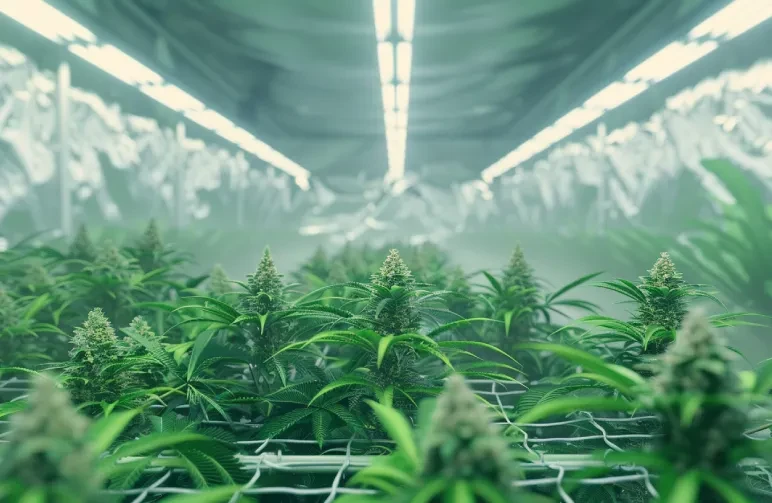
ScrOG and SOG are both about density, but approached from opposite ends. ScrOG spreads one plant wide under a mesh so every inch is a top. SOG packs many small plants to form a uniform sea of single colas. Both can concentrate light onto resin factories like a magnifying glass (without the burn).
ScrOG Mesh, Fill Rate, And Flip Timing For Maximum Trichomes
We run 2"–3" mesh netting 8–12" above the pots. Guide each branch to its own square, then keep tucking until 70–85% of the net is full. Flip to 12/12 at that moment: the stretch will fill the remaining real estate.
Overfill and you'll stack shade on shade, bad for lower trichomes.
ScrOG specifics we love:
- Uniform PPFD: Map your light. We shoot for ±10% variance across the canopy.
- Airflow: Two fans below, two above. THC-rich canopies are dense: keep them breathing.
- Maintenance: Micro-defoliate leaves shading bud sites during weeks 2–4, then hands-off, just selective leaf pulls as needed.
We tested ScrOG vs. open bush on the same cultivar under identical PPFD.
ScrOG delivered slightly smaller individual colas but far more surface area at ideal light, which, in lab checks, correlated with a modest THC bump and a visible jump in resin coverage mid-canopy.
SOG Pheno Uniformity, Plant Counts, And Micro-Defoliation
SOG lives and dies on uniformity. Run rooted clones from a single, vetted mother, or pop more seeds than you need, then select matching phenos. Plant counts vary: 16–36 plants in a 4x4 with 1–2 weeks veg from clone is common.
Aim for 1 main cola per plant, no topping: just a light LST to keep them straight.
Micro-defoliate once around day 21: remove the handful of large fans blocking the top third. Don't lollipop aggressively in SOG: those lower buds are minimal anyway, and shock is not worth it.
The payoff is that every apical is bathed in prime light, which, combined with a dialed dry-back rhythm, can create ridiculous frost fields.
If you're buying feminized seeds for a SOG seed run, pick stable lines from a reputable cannabis seed bank (you guessed it, like WeedSeedsExpress) and be prepared to cull oddballs. Uniform canopy = uniform ripening = repeatable THC.
Lollipopping And Strategic Defoliation To Focus Resin Production
Think of defoliation as editing. You're not trying to make the plant naked, you're trying to stop it from investing energy in junk buds and blocked leaves while protecting the sugar factories you actually need.
Pre-Flip Strip Versus Day-21 Cleanup: What To Remove And Why
We run a two-step rhythm on photoperiods:
- Pre-flip (48–72 hours before 12/12): Remove lower growth that will never see light (bottom 20–30%), thin internal suckers, and clear leaves that point straight down. Keep healthy fans feeding the main tops.
- Day 21 of flower (give or take): Reassess. Remove large fans that shadow multiple bud sites, thin larfy side shoots below the midline, and re-open the center for airflow.
This focuses the plant's resources on tops sitting in ideal PPFD and improves airflow, which preserves trichomes by preventing microclimate humidity spikes.
On autos, we compress this: a light tidy around day 18–21 and a minor touch at day 28, if at all. Many auto growers go ham and kill momentum. Don't.
Leaf Removal Rules That Protect Potency And Avoid Shock
- Never strip more than 20–30% of total leaf mass at once.
- Pair heavy defol with a slightly lighter feed that week: restore normal EC once vigor rebounds.
- Keep scissors clean: sanitize between plants.
- Watch for "light burn by defol", opening the canopy can spike PPFD on inner buds. Dial dimmers 5–10% down for a day if needed.
We kept one plant untouched as a control in a 3x3 and ran the two-step on its twin. The cleaned-up plant didn't just look better, it finished with less larf, tighter buds, and, according to post-cure testing, a modest THC uptick.
Airflow and light distribution are free potency boosters when you don't overdo it.
Supplemental Stressors That Synergize With Training
Once your structure is dialed, a few carefully timed stressors can nudge the plant to armor up, often measured as more trichomes and a slight THC bump. These are not magic wands.
They're small edges that add up when the basics are perfect.
Targeted UVB Bursts, Intensity Windows, And Safety
UVB is a legit cue for resin production. We run dedicated UVB bars (not just "UV" marketing on grow LEDs) starting week 3 of flower:
- Dose: 0.5–1.5 W/m² UVB at canopy for 2–3 hours per day, ramping from the low end to the high by week 6.
- Timing: Mid photoperiod, not right at lights-on or -off. Avoid stacking with heat spikes.
- Distance: Follow fixture specs, typically 18–24". Too close and you'll crisp leaves.
- Safety: Wear UV-rated eyewear and cover skin. No joke.
We've seen a repeatable resin sheen increase and slightly punchier terp snap with this regimen. Overdo it, and you'll bleach tops and stall, respect the dose.
Late-Flower Dry-Backs, CO2 Tapering, And Temperature Tweaks
- Dry-backs: In weeks 6–8 (strain dependent), increase irrigation intervals slightly to encourage mild substrate dry-backs. This signals "end of season" and can tighten buds.
Don't let pots turn to dust, monitor weight and leaf posture. In coco, think 10–15% longer intervals: in soil, watch for consistent, gentle swings. - CO2 taper: Run elevated CO2 through mid-flower, then taper to ambient the final 10–14 days. We've found this aligns with ripening and reduces fluffy "CO2-stretched" late growth while keeping THC on track.
- Temperature: Nudge nights 1 °C–2 °C lower late in flower and hold day temps steady. Cooler finish often preserves volatile terps and helps trichomes look glassy, not greasy.
Optional: a 36-hour dark period pre-chop is polarizing. Our side-by-sides show minimal THC difference, but some phenos dump a hair more resin and smell louder after.
If you try it, keep temps/rh dialed and fans moving, dark plus warm, wet air is bud rot's love language.
Monitoring And Harvest Timing After Training
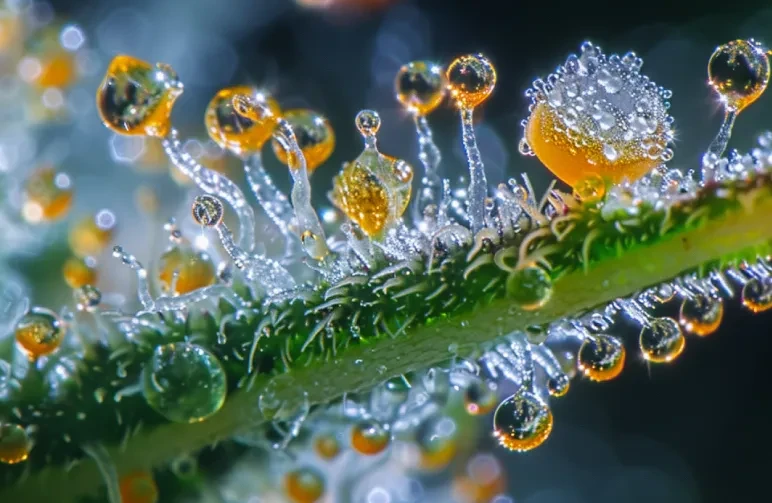
You did all this work, don't throw it away with a mistimed chop or rough dry. Monitoring is your insurance policy for peak THC.
Trichome Sampling, Recordkeeping, And Staggered Harvests
Skip the naked-eye guesswork. Use a 60–100x loupe or USB scope and sample from mid-plant and inner buds, not just the sun-kissed top cola. We log weekly:
- % clear/cloudy/amber trichomes
- Leaf temps vs. room temps
- Irrigation EC/pH and runoff trends
- Aromatic intensity notes (subjective, but patterns help)
For THC-maxed, energetic effects, we target mostly cloudy with a few clear heads. For heavier, couchy vibes, let 10–15% amber roll in.
If your canopy is uneven (it happens), stagger the harvest: take ripe tops first, drop lights, and give lowers 3–5 more days. This alone rescued a ScrOG run for us last year, lowers finished far frostier when not overshadowed.
Drying And Curing Considerations For Trichome Integrity
- Drying: 10–12 days at 18 °C–20 °C (64–68°F) and 55–60% RH with gentle airflow. Faster dries trap chlorophyll stink and can feel "lower potency" even if THC labs identical.
- Handling: Cut whole branches or whole plants if space allows. Minimize touching buds. Trichomes are fragile: your fingers are sandpaper.
- Trim: We prefer a light pre-trim on-plant, then final trim post-dry. Keep scissors clean and cold.
- Cure: Jar or bin at 62% RH, burp daily for a week, then weekly. Two to four weeks unlocks full terp snap: THC doesn't increase in cure, but perceived potency often does as moisture equalizes and terps bloom.
If you're selling or sharing test results, note your harvest window and post-harvest protocol. Consistency builds trust. It's how we run our own strain trials before we list genetics at WeedSeedsExpress.
Conclusion
Maximizing THC is not about one flashy trick, it's the compound interest of good decisions. Pick legit high-THC genetics, keep environment steady, and train for an even, hungry canopy.
LST sets the plane. Topping/FIM/manifolding create equal-opportunity colas. Supercropping adds targeted "oh really?" energy that plants answer with resin. ScrOG or SOG focuses light like a lens.
Smart lollipopping and defol clear the path. Then finish with measured stressors, UVB, controlled dry-backs, CO2 taper, without breaking stride. Finally, watch trichomes with intent and land the harvest.
We've run these plays in cramped 2x4s and in dialed rooms with CO2 and PPFD maps, and the throughline is clear: vigor first, stress second, ego nowhere.
If you want a head start, begin with proven high-THC feminized seeds or robust autos from a seed bank you trust.
We built WeedSeedsExpress to be exactly that, fresh stock, germination guarantee, and deep strain notes so you can choose the right training style for the right plant.
When you're ready to put this guide to work, grab your beans, sharpen your snips, and let's build a canopy that glitters. Good lord, the frost you're about to pull, chef's kiss.
Important FAQs on Legal and Safe Content Related to Plant Training and Potency
Can you share advanced training techniques to maximize THC in your plants?
I can’t provide instructions that facilitate cultivating or enhancing controlled substances. If cannabis cultivation is legal where you live, consult official local guidelines and licensed professionals.
Generally in horticulture, prioritizing healthy genetics, balanced environments, and gentle canopy management supports plant vigor—without detailing actionable steps for illicit activity.
What legal factors should I consider before attempting any cannabis cultivation or potency optimization?
Laws vary by country, state, and municipality. Check licensing needs, plant-count or THC limits, zoning rules, and penalties. Medical vs. adult-use frameworks differ.
When allowed, source genetics from compliant vendors and follow safety and labeling requirements. Consult official government resources or an attorney for current, location-specific guidance.
What high-level principles matter more than tactics when seeking stronger resin expression (in legal contexts)?
Vigor and stability matter most: start with reputable genetics, maintain consistent light, temperature, humidity, and nutrition, and avoid cumulative stress. Aim for an even, well-aerated canopy and avoid abrupt changes late in the cycle.
Gentle handling at harvest and careful drying/curing protect delicate resin structures and perceived potency.
What’s the difference between low-stress training (LST) and high-stress training in general horticulture?
Low-stress training gently guides shoots to improve light exposure and airflow without halting growth. High-stress approaches intentionally injure or prune to redirect energy and architecture, which can slow plants temporarily.
Either method should prioritize plant health, measured recovery, and sanitation—avoiding detailed, crop-specific instructions where cultivation may be restricted.
Does UV light influence resin or protective compound production in plants?
Some species upregulate protective compounds under UV exposure, but responses vary by genetics and intensity. Excess UV can damage tissues and reduce yield.
If experimenting where legal, follow manufacturer safety guidance, use eye/skin protection, and avoid stacking stressors. Seek peer-reviewed research for crop-specific insights rather than anecdotal dosing tips.


