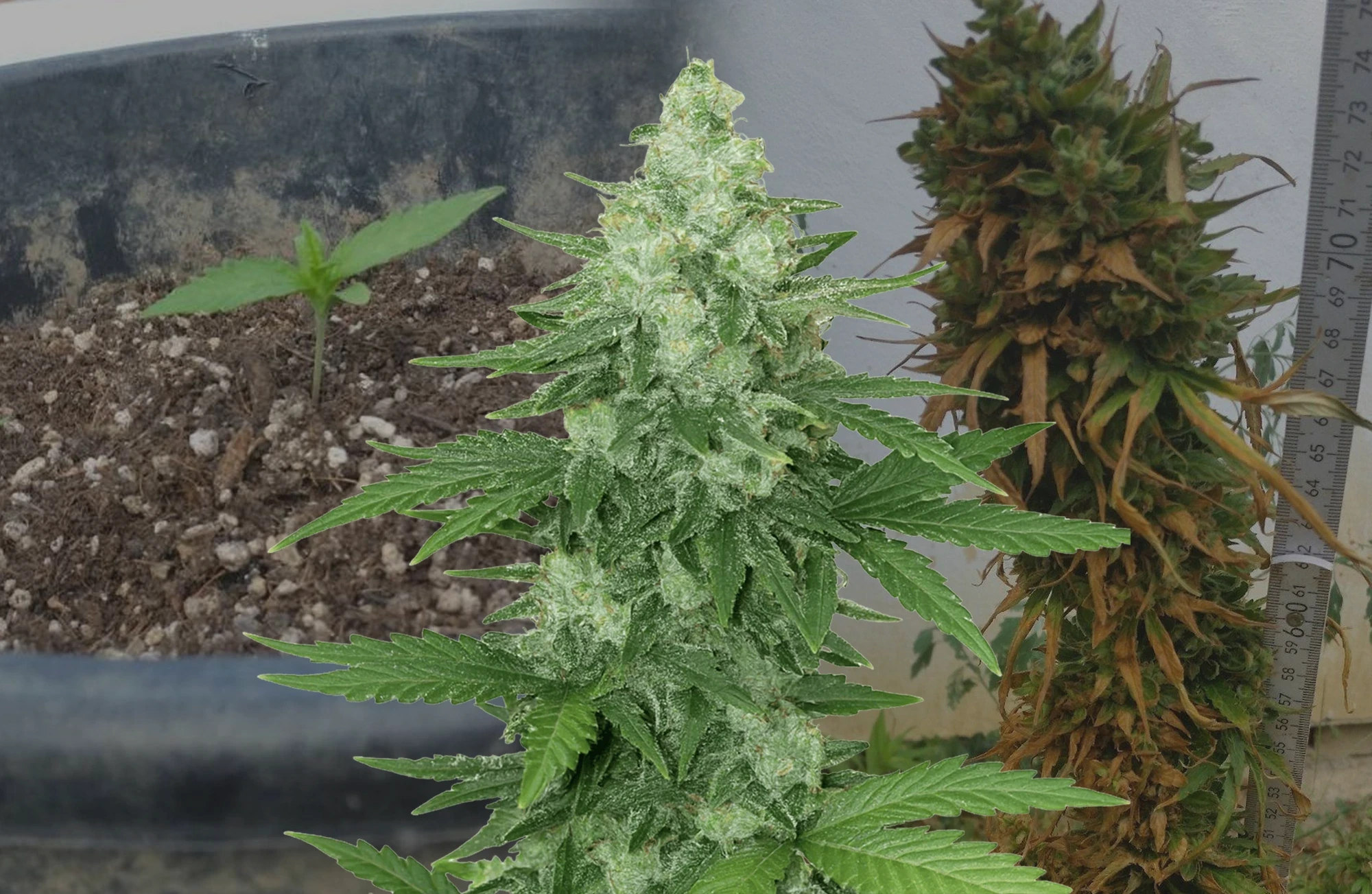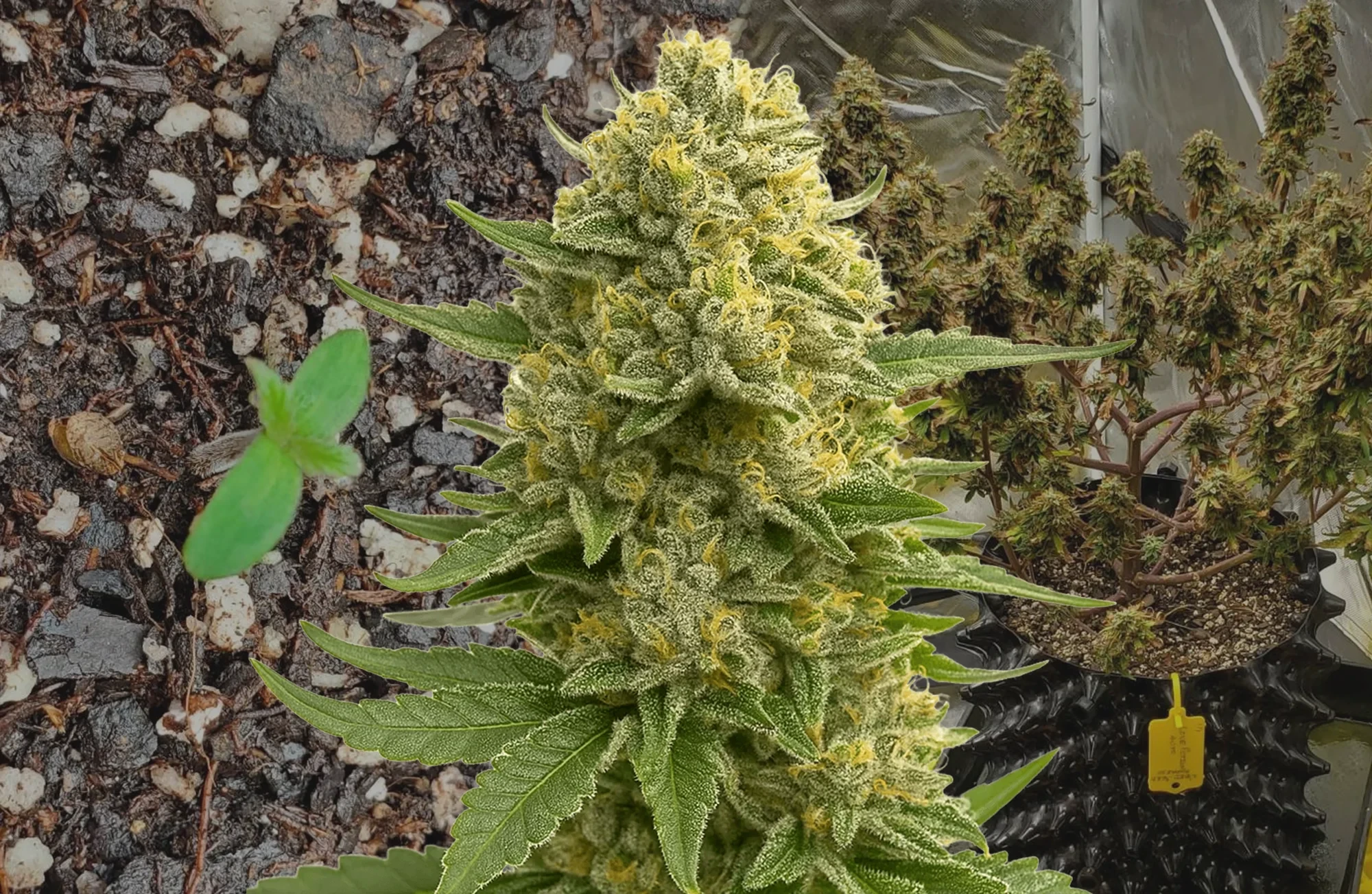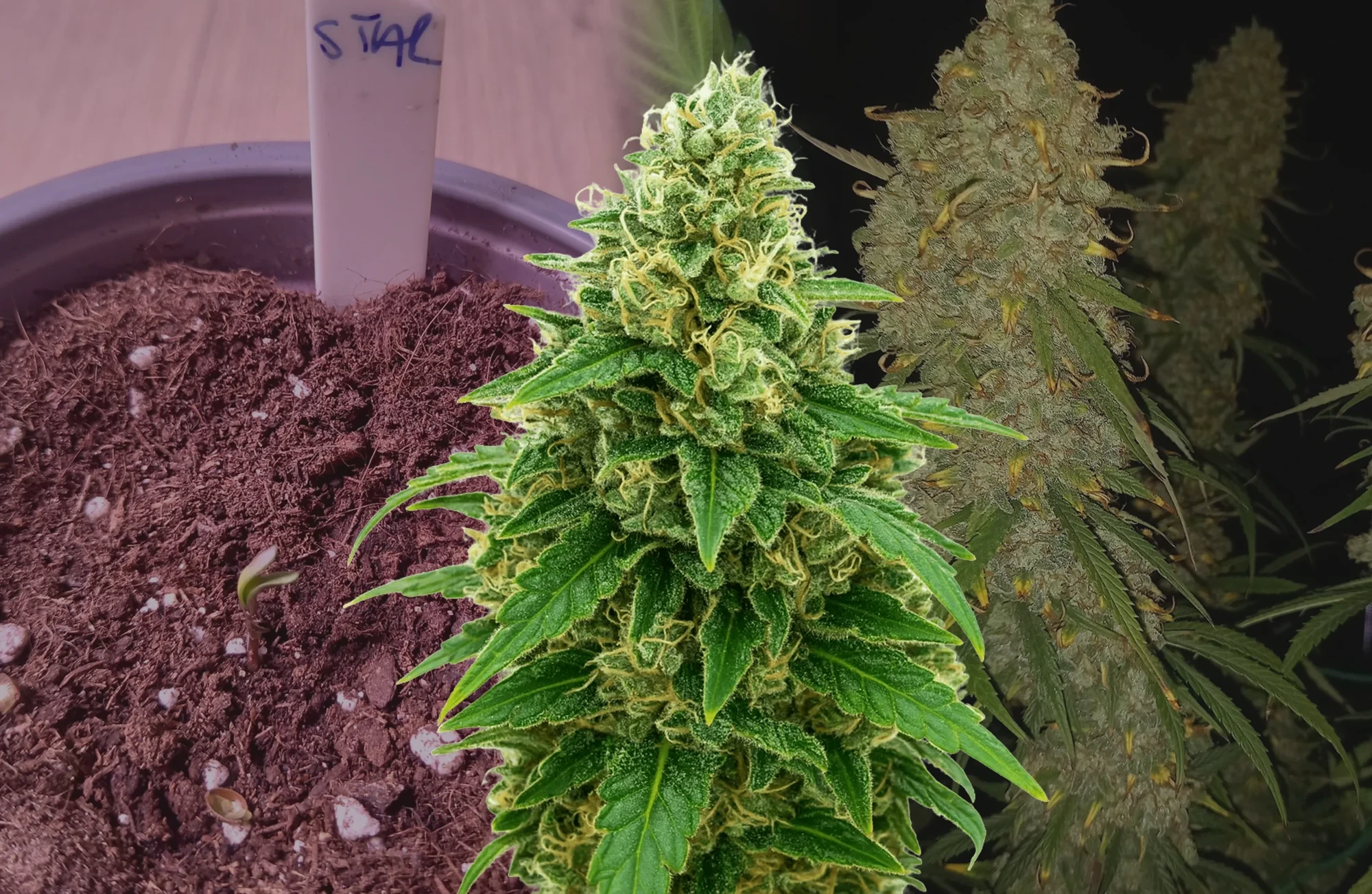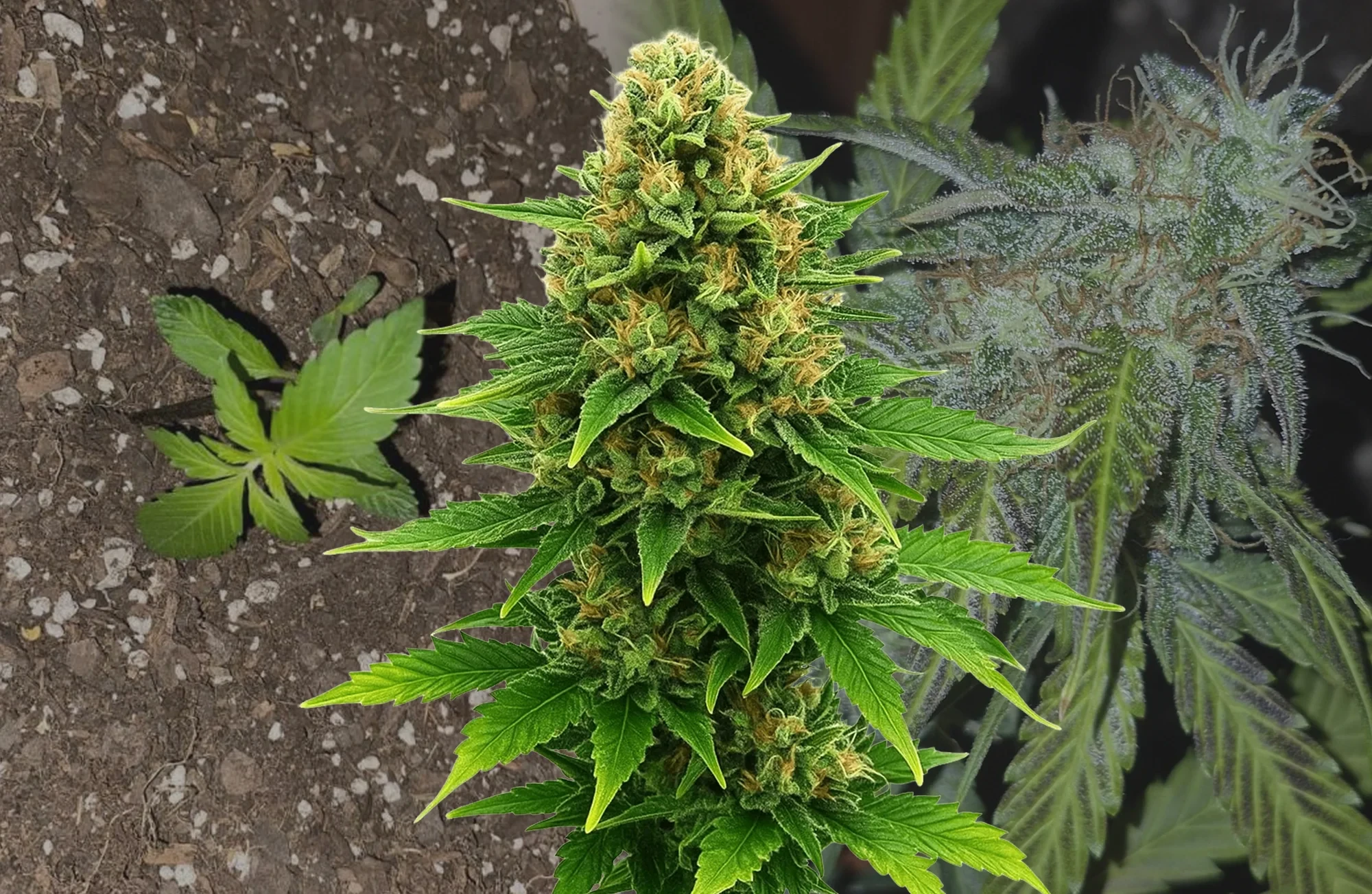


We've bent, topped, tucked, and trellised more plants than we can count in our Amsterdam grow lab, and the verdict is simple: smart training turns good genetics into great harvests.
This guide breaks down the essential techniques—LST, topping, and ScrOG—stripping away the myth and focusing on the timing, tools, and pro-tips we use every day.
Whether you're maximizing a single plant in a tent or keeping a balcony grow stealthy, we'll show you how to shape a perfect canopy, stack dense colas, and pull down frostier, higher-quality buds.
For a complete overview of setting up your indoor space, from lighting to ventilation, be sure to check out our comprehensive guide on how to grow weed indoors.
Key Takeaways
- Breaking apical dominance with LST and topping evens the canopy and can boost yields by 20–40% while improving bud quality.
- Start training in early veg at the 3–5 node stage (day 14–21 for autos), and stop major adjustments once flowers set to avoid slowing bud development.
- Use LST as your foundation: bend and anchor the main shoot horizontally, secure with soft ties, revisit every few days, and for autos keep it gentle and pause when pistils appear.
- Apply HST (topping/FIM) only in veg on vigorous photos: top above node 3–4, sterilize tools, allow 3–5 days recovery, then resume gentle LST to spread new tops.
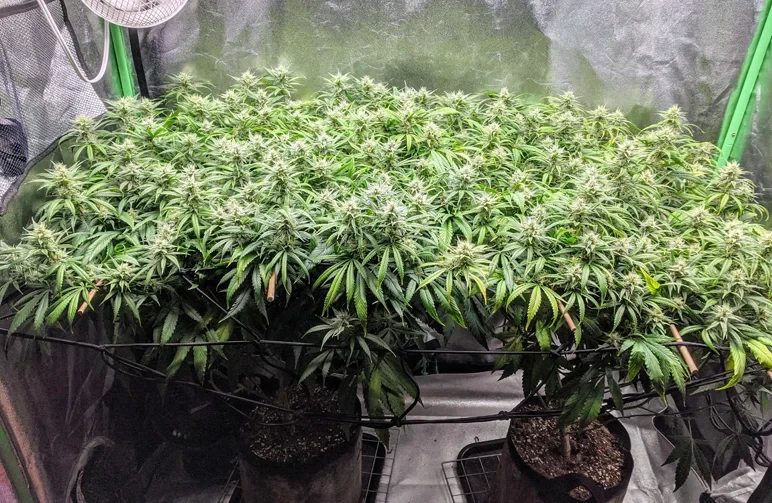
- ScrOG for a uniform wall of colas: set the net 8–12 inches above the pot, tuck laterally to fill 70–80% before flip, and pair with topping for minimal larf and maximal efficiency.
- Use advanced add-ons strategically—super cropping, lollipopping, and light defoliation—to focus energy, strengthen branches, and improve airflow.
Why Train Your Cannabis Plants? A Quick Primer
Understanding Apical Dominance
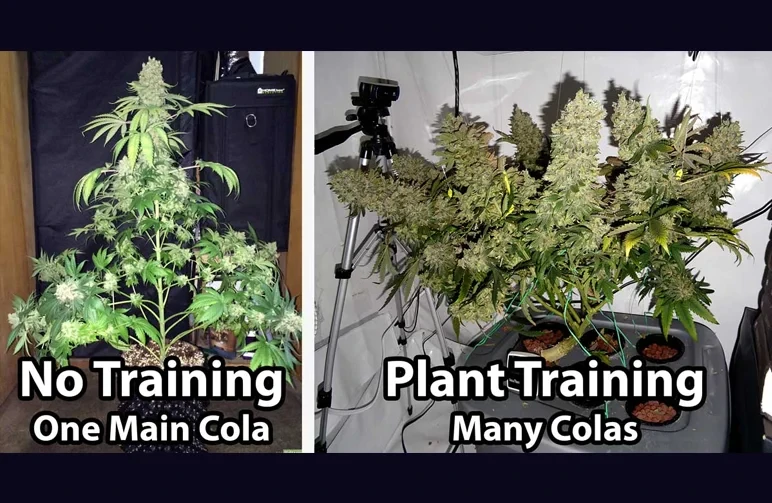
Left to their own devices, cannabis plants focus on a single main cola thanks to apical dominance, the plant hormone hierarchy that prioritizes the topmost growth tip. It's efficient for survival, not yields.
Training redistributes that hormonal traffic so side branches rise to the same priority level. Break that dominance and you don't just get one big spear, you get a table full of spears.
The Core Benefits: Bigger Yields and Better Quality
- Bigger yields: A level canopy exposes more bud sites to prime PPFD, so each branch develops into a proper cola instead of larf. We routinely see 20–40% improvements when growers move from "let it ride" to basic LST + topping.
- Better quality: Even light and airflow reduce microclimates, driving tighter internodes and better terpene expression. Fewer shady pockets mean fewer issues with mildew and airy buds.
- Easier maintenance: Flat canopies make feeding, defoliation, and IPM straightforward. You can actually see what's happening.
When to Start Training Your Plants
Start in veg when stems are still flexible, typically 2–3 weeks after sprout, around the 3–5 node mark. Avoid heavy training late in flower when stems are woody and recovery steals energy from bud building.
With autos, we move even earlier (day 14–21), respecting their shorter clock.
Quick-Look: Comparing Training Techniques
| Technique | Best For | Difficulty | Yield Increase (Est.) | Time to Recovery |
|---|---|---|---|---|
| LST | Beginners, Autos, Stealth | Easy | 15-30% | ~12-24 hours |
| Topping | Photos, ScrOG, Bushy Plants | Medium | 20-40% | 3-5 days |
| FIMing | Experienced Growers | Medium-Hard | 20-40%+ | 4-7 days |
| ScrOG | Indoor, Few Plants, Max Yield | Medium | 30-50%+ | N/A (ongoing) |
Low-Stress Training (LST): Gentle Guidance for Maximum Results
What is LST and How Does it Work?
LST is controlled bending and tying, no cutting. By gently pulling the main shoot horizontal, you expose lower nodes and invite a ring of even tops. It's simple, forgiving, and a perfect on-ramp for new growers or anyone running autoflowers.
Step-by-Step Guide to the LST Bending Method
- Wait for flexible stems (early veg). Water first if needed: hydrated plants bend easier.
- Anchor the base: Use a clip or tie near the stem base to counter-pull so you're not torquing the roots.
- Bend the main tip: Ease it down slowly to roughly horizontal. Think gradual arc, not sharp kink.
- Secure with soft ties to the pot rim, stakes, or bamboo. Keep light tension, not a violin string.
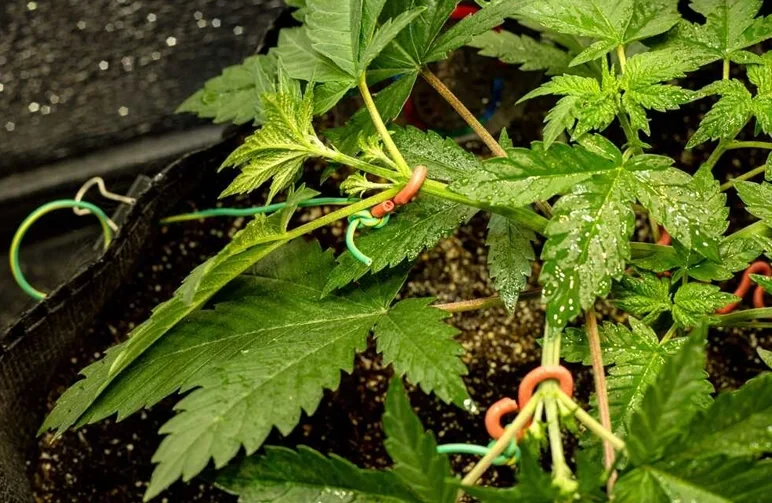
Mastering the Tie-Down: Use soft, rubber-coated wire to gently pull branches away from the center of the plant. Anchoring the ties to the rim of your pot (using binder clips or pre-cut holes) allows you to guide growth without damaging the plant’s delicate skin. Image courtesy of HowToGrowMarijuana.com. - Rotate the pot so the now-exposed lower branches chase the light. That's free training.
- Revisit every few days: As new growth surges, add ties so the canopy stays flat and even.
- In preflower, fine-tune positions and open up crowded sites. Stop major adjustments once flowers set.
Pro-Tip from the Lab: If a branch resists, warm it with your fingers and bend incrementally over two sessions. Don't be a hero; a snapped stem sets you back way more than being patient.
Essential Tools for LST
- Soft plant ties or coated wire
- Plant clips and stakes/bamboo
- Fabric pots with sewn-in tie points (a game-changer for LST)
- Pruners for leaf tidying (clean and sharp, always)
LST for Autoflowers: A Perfect Match?
Absolutely. Autos love LST because it boosts light distribution without the recovery penalty of cuts.
A Word of Caution for Autoflower Growers
Autoflower strains operate on a fixed timeline. High-stress techniques like topping can cause them to stall for several days—time they can't afford to lose. Stick to LST.
Start early (day 14–21), keep adjustments gentle, and stop hard moves the moment you see the first pistils appear. We routinely pair auto LST with selective leaf tucks and minimal defoliation.
With autos, always watch the plant, not just the calendar.
High-Stress Training (HST): Bolder Methods for Bushier Plants
What is HST and When Should You Use It?
HST covers topping, FIMing, and super cropping—methods that intentionally wound or crush tissue to redirect growth. Use these techniques only during the vegetative stage when plants can rebound fast.
The payoff is structured branching and cola multiplication; the tradeoff is 3–5+ days of recovery depending on vigor and environment.
Pros:
- Rapid multiplication of tops for denser, wider canopies
- Stronger branch architecture after healing
- Excellent pairing with ScrOG and manifolding
Cons:
- Recovery time slows veg if your schedule is tight
- Overzealous cuts can stunt runts or slow autos to a crawl
- More infection risk if tools aren't sterile
Our rule: If you're growing photos with a decent veg window, HST belongs in your toolkit. Autos? Stick to LST.
Mastering Topping and Fimming for More Colas
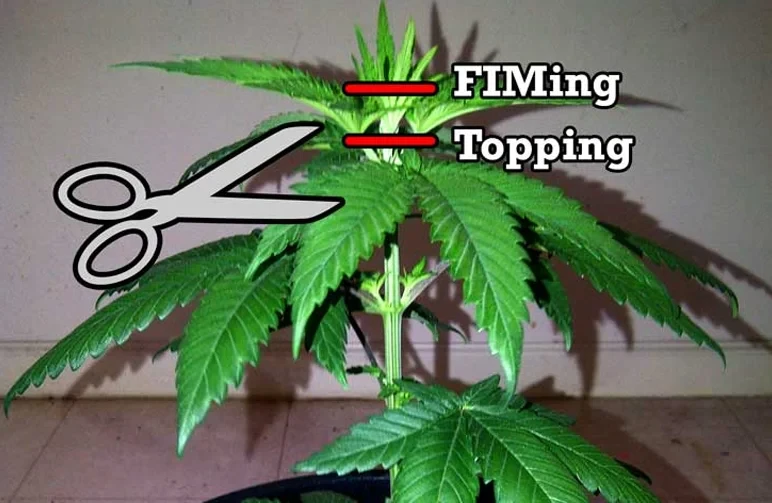
Topping: The Classic Technique for a Bushier Plant
Topping removes the apical tip above a node, splitting dominance into two new main branches and encouraging lateral growth. It's clean, predictable, and a backbone technique for many of our ScrOG runs.
- Wait for 3–5 nodes (usually week 3+ of veg for photos). Plants should be healthy and actively growing.
- Sterilize scissors or a razor. Don't skip this.
- Identify the cut: Above the 3rd or 4th node is our sweet spot for most strains.
- Make a single, decisive snip. No tearing, no hacking.
- Support recovery: Maintain VPD in range, moderate light intensity, and avoid heavy feeds for 48 hours.
- Resume LST after new tops establish. Gently pull them outward to open the center.
FIMing ("F*ck, I Missed"): Topping's Ambitious Cousin
FIMing removes roughly 70–80% of the apical tip instead of a full node cut. Done right, it can produce 3–6 new shoots from the same site. It's a great trick, but the results can be variable.
We use FIM when we want extra tops without dropping the canopy height as much as a full topping. Use sterile tools, give a few days' recovery, then LST those new shoots outward.
Screen of Green (SCROG): Weaving Your Way to a Wall of Buds
What is the SCROG Method?
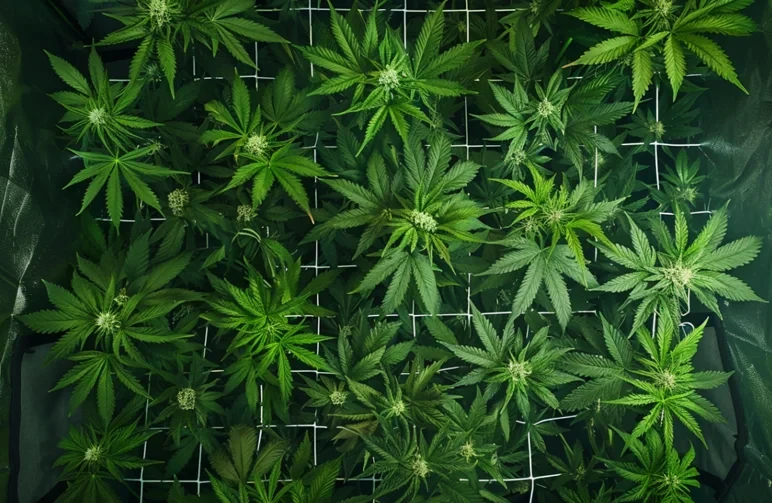
ScrOG uses a horizontal net to spread branches laterally, creating a uniform "screen" of bud sites. It allows you to fill a space with fewer plants and results in a satisfyingly level canopy.
For a 2x2 ft space, one vigorous, well-trained photo-period plant is all you need.
Setting Up Your SCROG Net: Height and Materials
Net height: 8–12 inches above the pot rim for most indoor runs. Lower for squat indicas, higher for lankier sativas.
Materials: Elastic trellis netting for flexibility or a rigid plastic grid for precision. 2–3 inch squares are ideal for easy weaving.
Step-by-Step Guide to Weaving and Tucking
- Pre-shape the plant with topping and LST to spread its arms.
- As shoots reach the net, guide each tip into its own square and tuck it laterally, not up.
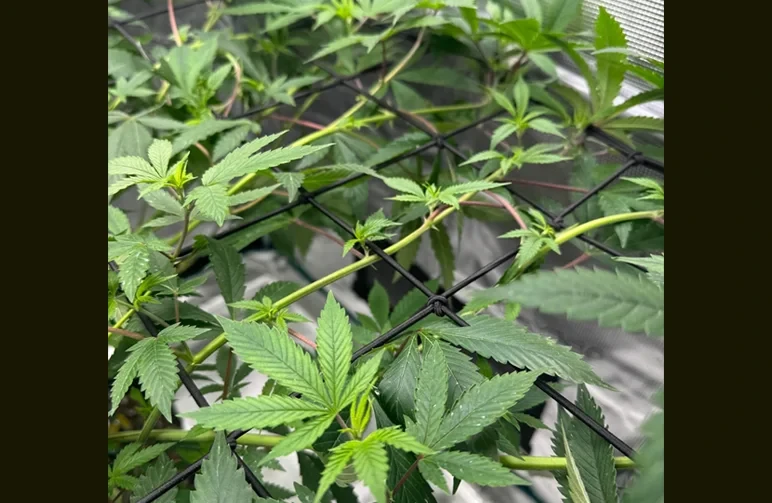
Mastering the Tuck: To achieve a true Screen of Green, you must weave the branches horizontally. As shown here, the goal is to guide each shoot under the netting and into an empty square, forcing the plant to grow out rather than up. Image credit: r/cannabiscultivation. - Keep tucking every 2–3 days so the canopy grows outward and stays flat.
- Aim to fill 70–80% of the net before you flip to flower; the flowering stretch will handle the rest.
- In early bloom (weeks 1–2), continue gentle tucks. Stop once flowers set to avoid snapping branches.
Combining SCROG with Topping for Optimal Results
This is the power combo. Top once or twice to build multiple main branches, then use the ScrOG net to distribute them perfectly. The end result: a wall of evenly lit colas, minimal larf, and maximum efficiency.
Other Advanced and Combination Techniques
Super Cropping: Strategic Stress for Stronger Stems
Gently pinch and roll the inner tissue of a branch between your thumb and forefinger until it softens, then bend it 90 degrees. The "knuckle" that forms heals stronger and repositions the cola into the light.
Best done in veg week 2–4 or very early flower on photos.
Mainlining (or Manifolding): Creating a Symmetrical Plant
This structured method tops down to a chosen node and removes all lower growth to build a precise, even manifold—creating 4, 8, or 16 colas spaced perfectly.
It's gorgeous and efficient but extends veg time. We reserve it for photos and growers who love tidy geometry.
Lollipopping: Focusing Energy on Top-Tier Buds
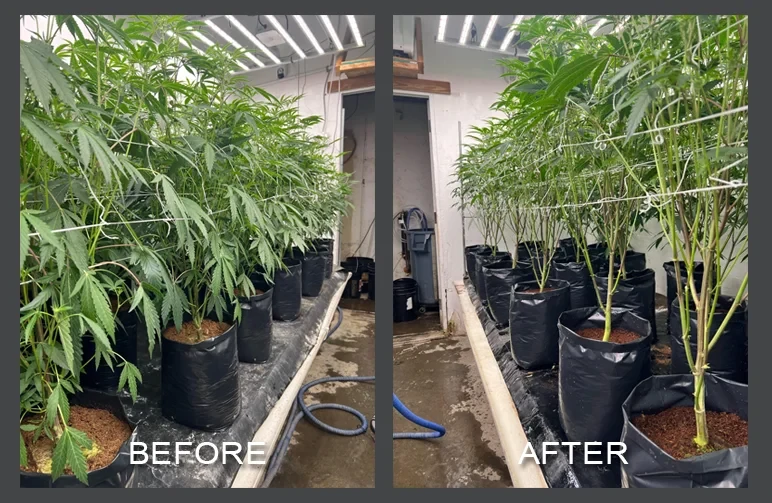
Strip the lower, shaded growth that will never develop into dense buds. We lollipop right before flipping to flower and again around week 2 of flower, especially under a ScrOG.
All the plant's energy is redirected to the top colas, airflow improves, and trim time drops significantly.
Defoliation: Strategic Leaf Removal
This is selective, not scorched-earth. Remove large fan leaves that are blocking light to lower bud sites or creating dense, humid pockets. Do it sparingly in late veg and early flower only.
If the plant's remaining leaves "pray" after a light defoliation, you nailed it. If it droops, you went too hard.
Common Training Mistakes to Avoid
Breaking a Branch: It happens. Don't panic. If it's a clean break, you can often splint it with tape (like a cast) and it will heal. If it's a full snap, cut it cleanly and move on.
Tying Stems Too Tight: Your ties need to be secure, but not tight enough to choke the stem as it grows thicker. Use soft, flexible ties and leave a little slack.
Training Too Late in Flower: Major bending or cutting after week 2-3 of flower is a bad idea. The plant is focused on building buds, and the stress can slow down or stall development.
Not Filling the ScrOG Net Enough: Be patient. Flipping to flower when your net is only 50% full will leave you with an empty tent and wasted potential. Aim for 70-80% coverage before the flip.
Plant Training Timeline: When to Use Each Technique
Vegetative Stage: The Prime Time for Training
- Weeks 2–3: Begin LST. Consider the first top (photos only) at 3–5 nodes. Gentle super crops if needed.
- Weeks 3–5: Continue LST. A second top or FIM (photos) if veg window allows. Install ScrOG net and start weaving.
- Pre-flip check: Lollipop lowers, perform a tidy defoliation, and confirm 70–80% screen fill.
Flowering Stage: What You Can (and Can't) Do
- Early flower (weeks 1–2): Final tucks in the ScrOG as stretch kicks off. Very light defoliation to open up bud sites.
- Mid-to-late flower: No more high-stress moves. Maintain support, perform light leaf tucks, and ensure good airflow. Training time is over.
Frequently Asked Questions (FAQ)
Can I combine multiple training techniques?
Yes, and you should. Our bread-and-butter indoor recipe is topping + LST + ScrOG, with lollipopping pre-flip.
It's synergistic: topping creates more colas, LST spreads them, ScrOG locks in an even field, and lollipopping cleans up the underside.
How do I know if I'm stressing my plant too much?
Watch for drooping that persists beyond the dark cycle, "clawing" leaves, slowed new growth, or yellowing tips post-training.
If you see these signs, pause all training, ease light intensity slightly, and ensure your pH is on point to avoid compounding the stress.
How do I repair a broken or snapped branch?
If it's partially attached, create a splint immediately with grafting tape or even electrical tape and a small stake (like a pencil). The branch can often heal in about a week.
If it's completely detached, make a clean cut to remove it and prevent disease.
What's the difference between SOG (Sea of Green) and SCROG?
SOG uses many small plants with minimal veg time, flipping them to flower early to create a "sea" of single colas. ScrOG uses fewer plants vegged longer under a net to create an even canopy of multiple colas per plant.
Both can produce massive yields; the choice depends on your plant count limits and growing style.
Can I train outdoor cannabis plants?
Absolutely. LST is fantastic outdoors for stealth, wind-proofing, and evening out the canopy. You can also run a ScrOG-style trellis and top your plants early in the season to control height and increase the number of colas.
Your Genetics Are the Foundation
Mastering these training techniques will undoubtedly make you a better grower. But the ultimate potential of your harvest is always locked within the seed itself.
To ensure your hard work pays off, you need stable, vigorous genetics as your starting point.
At Weedseedsexpress, we're growers first. We hand-select and rigorously test every cultivar we offer, backing them with germination guarantees and real-human support.
If you're ready to pair expert training with world-class genetics, explore our collection of feminized strains and autoflower seeds.