

If you've seen tiny black flies hovering around your pots or bouncing off your face during a late-night defoliation, welcome to the club.
We've battled these pests across countless runs in our Amsterdam test rooms and home grows worldwide.
The good news? You can absolutely beat them. The catch? You've got to work both sides of their life cycle and dial in watering like a pro. Here's exactly how we prevent and eliminate fungus gnats without nuking our soil life, or our sanity.
Key Takeaways
- Identify fungus gnats by slow-floating dark adults at soil level and larvae—tiny translucent worms with black heads—in the top 1–2 inches of media.
- Break the life cycle by trapping adults (yellow sticky cards, vinegar traps) while simultaneously killing larvae in the soil to end reinfestation within 4–8 weeks.
- Master moisture: let the top 1–2 inches dry, bottom-water temporarily, improve drainage and airflow, and eliminate standing water to make pots hostile to fungus gnats.
- Treat larvae effectively with a 1:4 drench of 3% hydrogen peroxide, BTI (Mosquito Bits) teas, and/or Steinernema feltiaenematodes, rotating weekly until counts crash.
- Add barriers and monitoring by top-dressing with coarse sand or food-grade DE, using potato slices to track larvae, and keeping sticky cards in every tent.
- Prevent new outbreaks by quarantining and inspecting new plants, using airy well-draining mixes, cleaning trays and drains, and repotting into fresh dry soil if the medium is swampy or sour.
Quick Reference: Your Fungus Gnat Battle Plan
For when you're in panic mode and need answers fast.
| Goal | Primary Method | Secondary Method | Difficulty |
|---|---|---|---|
| Kill Adults | Yellow Sticky Traps | Apple Cider Vinegar Traps | Easy |
| Kill Larvae (Organic) | BTI (Mosquito Bits) | Beneficial Nematodes | Easy |
| Kill Larvae (Fast Knockdown) | Hydrogen Peroxide Drench | Soil Dry-Out / Bottom Watering | Medium |
| Prevention | Proper Watering | Top Dressing (Sand/DE) | Easy |
What Are Fungus Gnats? (And What to Look For)
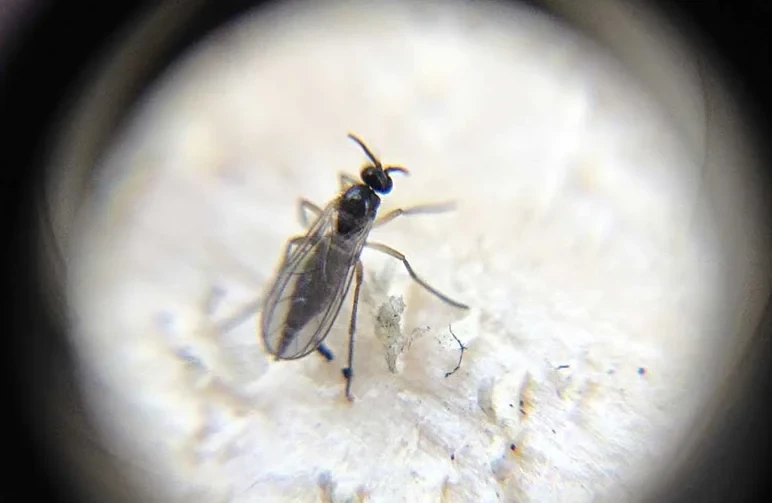
Fungus gnats are small, dark, weak-flying insects that love moist media. Adults are about 1/8 inch (3–4 mm) long with long legs and antennae, and they hang around the soil surface like tiny helicopters coming in hot.
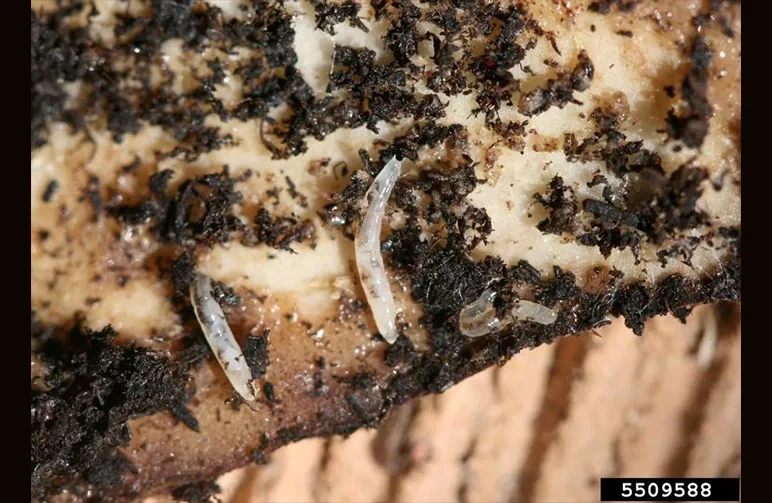
Their larvae, white, translucent, legless worms with black heads, live in the top few inches of soil, feeding on algae, fungi, and (uh oh) the finest parts of your root system.
Identifying Adult Fungus Gnats
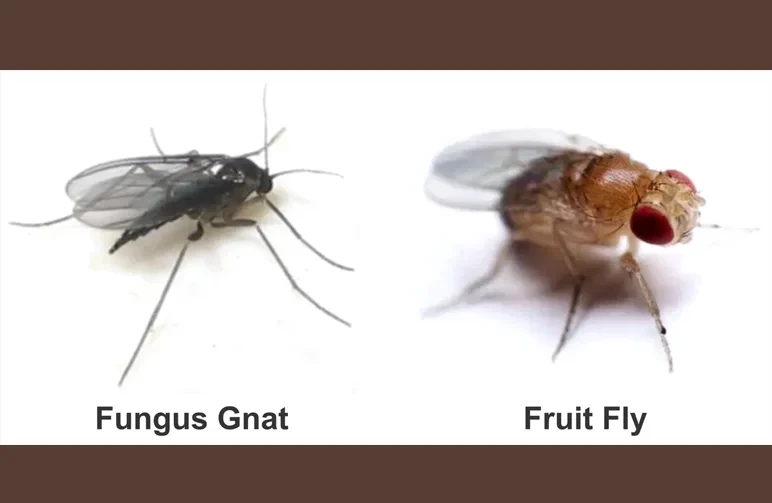
Look for slender, gnatty little flyers that float, not zip, around pots, drain holes, and damp trays. They're darker than fruit flies, with a more mosquito-like vibe and erratic flight.
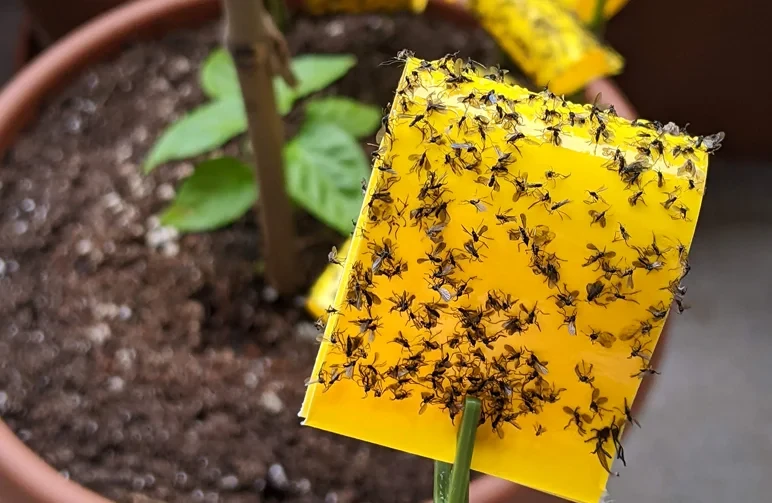
Gently shake a pot and you'll often see a small cloud rise up. Yellow sticky traps placed at soil level will dot up fast if adults are present.
Identifying Fungus Gnat Larvae in the Soil
Scrape back the top 1–2 inches of soil. If you spot tiny, milky worms with dark heads wiggling through the medium or clinging to the pot walls near drain holes, that's them.
You can also lay raw potato slices on the surface: larvae migrate into the slices within hours, like a gross little buffet you didn't order.
The Fungus Gnat Life Cycle: Why You Must Attack from Two Sides
From Egg to Adult: Understanding the Four Stages
The fungus gnat runs a four-stage relay: egg → larva → pupa → adult. Females can lay 200+ eggs in damp media.
Larvae spend the bulk of the timeline in the soil (the damage phase), then pupate and emerge as adults in as little as 7–14 days, faster in warm, wet conditions.
Adults don't live long, but they keep the cycle going at machine-gun pace if moisture is abundant.
Why You Must Target Both Larvae and Adults
If you only kill adults, larvae still mature and the parade continues. If you only kill larvae, fresh adults will keep laying. So our protocol always hits both: slow adult numbers with traps while we disrupt larval survival in the soil.
Done consistently, you'll break the cycle in 4–8 weeks, depending on how entrenched they are and how dialed your moisture control is.
Are Fungus Gnats Damaging Your Cannabis Plants?
Damage Caused by Larvae Feeding on Roots
Larvae chew on delicate feeder roots and root hairs, the exact structures your plant uses for water and nutrient uptake.
In veg, that means slowed growth and a weaker root mass: in flower, it can translate to reduced yields and poor nutrient partitioning when you need it most.
Seedlings and young autos are especially vulnerable—small roots, big impact.
How Adults Can Spread Plant Diseases
Adults get their little feet dirty in decomposing matter and then hop plant to plant. They can vector fungal pathogens (think Pythium and Fusarium complexes) on their bodies.
They're not the main cause of root rot, but in soggy, oxygen-poor media, they're like Uber drivers for problems.
Signs of Fungus Gnat Damage in Your Plants
- Random wilting or drooping, even when watering seems perfect.
- Yellowing or pale, hungry-looking foliage that doesn't track with your feed chart.
- Slow veg, spindly growth, and weak transplants.
- Seedlings that keel over or stall for no clear reason.
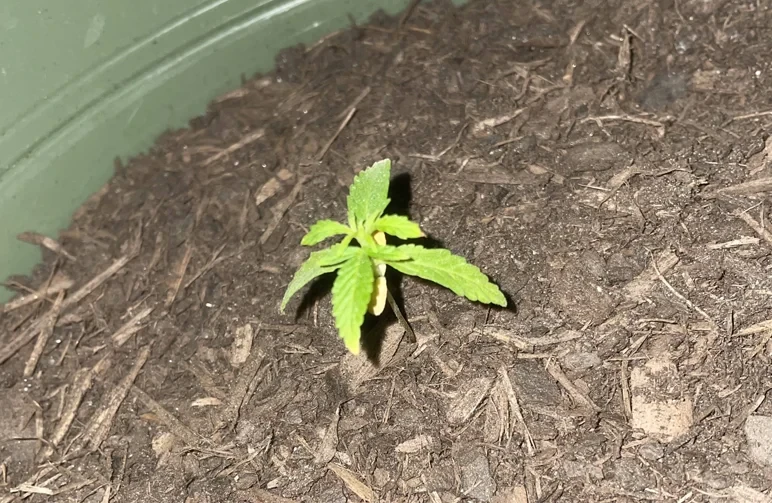
Stalled Growth: A young seedling showing classic signs of fungus gnat pressure. Note the pale, yellowing foliage and stunted development. Because seedlings have such small root systems, even a few larvae can cause significant damage by consuming the delicate feeder roots the plant needs to survive. Image credit: Barron via HomegrownCannabisCo Community - Algae buildup on soil surfaces or trays (a green sheen = a gnat rave).
If the top layer teems with larvae and your sticky traps are loading up daily, it's not "just a few bugs." It's time to act.
While fungus gnats are a common nuisance, they are just one of many potential hurdles during a grow.
If your plants are showing symptoms like yellowing leaves or stunted growth and you aren't 100% sure gnats are the culprit, consult our comprehensive Cannabis Troubleshooting Guide to identify and fix other common pests, pathogens, and nutrient imbalances.
Prevention: The Best Way to Win the War on Gnats
The #1 Rule: Master Your Watering and Moisture Control
Watch the plant, not the calendar. Let the top 1–2 inches of soil dry out completely between waterings. In coco, you can run more frequent feeds, but avoid sopping-wet saucers and standing water.
Aim for root-zone temps of 68 °F-71.6 °F and keep RH reasonable. Gnats love perpetual damp: don't give it to them.
Choosing the Right Potting Soil & Grow Media
Use well-draining, airy mixes. We blend quality potting soil with 20–30% perlite or pumice. Avoid unpasteurized composts and unprocessed manures indoors—amazing outdoors, a gnat magnet inside.
If you reuse soil, bake or solarize it between cycles.
Quarantine All New Plants (Clones are Trojan Horses)
Quarantine any new clones or houseplants for 2–4 weeks. Check for adults, tap the pot to see if a cloud lifts, and use a potato test for larvae.
We keep newcomers in a separate tent with their own sticky cards. Paranoid? Maybe. Effective? Absolutely.
Promote Excellent Drainage and Airflow
- Use pots with plenty of side and bottom drainage holes (fabric pots are great).
- Elevate pots on risers and always empty saucers after runoff.
- Ensure gentle airflow across the soil surface to help it dry.
Your Step-by-Step Guide to Eliminating a Fungus Gnat Infestation
Tools & Supplies Checklist
- Yellow Sticky Traps
- Apple Cider Vinegar & Dish Soap
- Mosquito Bits (BTI)
- 3% Hydrogen Peroxide
- Beneficial Nematodes (Steinernema feltiae) - Optional, for severe cases
- Coarse Sand or Food-Grade Diatomaceous Earth (DE)
- Raw Potatoes
Step 1: Eradicate Adult Gnats & Stop the Egg-Laying
Knock down the flyers so they stop laying eggs while you work the soil.
Using Yellow Sticky Traps Effectively: Place cards horizontally at soil level and a few inches above the canopy. We like one trap per pot for small containers. Replace when 50–70% covered.
DIY Apple Cider Vinegar Traps: Mix apple cider vinegar with a drop of dish soap in shallow cups. Set near pots. The vinegar draws them, the soap breaks surface tension, and they sink.
Step 2: Destroy the Larvae in Your Soil
This is where you end the lineage. Rotate these methods weekly.
Method A: The Soil Dry-Out & Bottom Watering Technique: Let the top 1–2 inches dry hard. Larvae need that moisture band to survive.
For a week or two, water from the bottom by setting pots in a tray of water to hydrate roots without re-wetting the surface.
Method B: Hydrogen Peroxide Soil Drench: Mix 1 part 3% hydrogen peroxide with 4 parts water (1:4). Slowly drench the top 2 inches until runoff.
You'll hear a little fizz—that's oxygen releasing while larvae get wrecked. Use once weekly for 1–2 weeks only.
Method C: Applying Mosquito Bits (BTI):Bacillus thuringiensis israelensis is a staple. Steep Mosquito Bits in water (per label instructions) to make a BTI tea and drench weekly.
It targets gnat larvae specifically and leaves beneficials mostly unbothered.
Method D: Introducing Beneficial Nematodes (Steinernema feltiae): These are microscopic worms that hunt gnat larvae in soil pores. Apply as a cool, fresh drench (follow label rates) with lights dimmed.
We alternate BTI and nematodes weekly for stubborn populations.
Step 3: Create Physical Barriers
Top-Dressing with Sand or Diatomaceous Earth: A 0.5–1 inch layer of coarse sand can break the moisture band and frustrate egg-laying.
Food-grade diatomaceous earth (DE) scratches soft-bodied insects; dust lightly on a dry surface and reapply after watering.
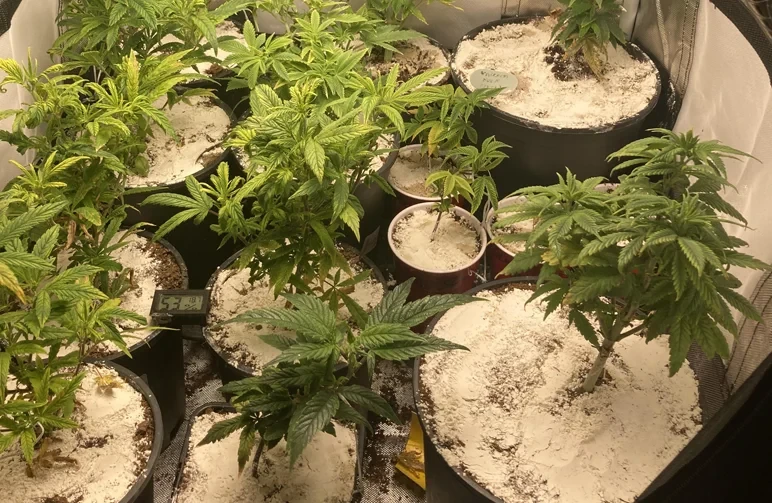
Using Potato Slices for Monitoring and Trapping: Lay raw potato slices on the soil and check after 8–24 hours. Swap daily. It's not the kill shot, but it's a fantastic monitor and a quick way to reduce numbers.
Advanced Tactics for Severe Infestations
Using Neem Oil Soil Drenches
A mild neem oil drench can suppress larvae and surface fungi. Mix per label with warm water and an emulsifier. We use neem as a rotating tool, not a crutch.
When to Repot Your Plant into Fresh Soil
If the medium is saturated, sour-smelling, and crawling, it's sometimes faster to start fresh. Carefully bare-root as much as practical, repot into dry, airy soil, and reset your watering cadence.
Quarantine post-repot with traps and BTI to mop up stragglers.
A Note on Chemical Insecticides
As a last resort (and only where legal and label-appropriate), pyrethrin-based products can nuke populations. Read labels like a lawyer and prioritize grower and consumer safety. When in doubt, skip it.
A Note on Hydroponics: Fungus gnats are rarer in DWC and sterile media but can breed in algae on rockwool cubes or in slimy reservoir buildup. The solution is hygiene: keep surfaces clean, use BTI dunks for rockwool cubes before use, and ensure no light leaks are creating algae.
Fungus Gnat FAQ for Cannabis Growers
How long does it take to get rid of fungus gnats?
With consistent traps + larval control + moisture discipline, expect 4–8 weeks to fully break the cycle. You'll see adult counts drop within days; larvae pressure trails by a couple of weeks.
Do fungus gnats bite humans?
Nope. They're annoying but don't bite. Your plants are the snack.
Can fungus gnats live in drains?
They prefer soil, but they can hang around slimy drain gunk. Clean trays, use enzyme cleaners or bleach in floor drains, and keep areas dry between irrigations.
What's the difference between a fungus gnat and a fruit fly?
Fungus gnats are darker, skinnier, and hover near soil. Fruit flies are tan/orange, chunkier, and mob your bananas. Gnats are weak fliers; fruit flies are zippier and target fermenting fruit, not potting mix.
Pro tip from our lab: prevention beats panic. Keep surfaces dry, quarantine new plants, and run yellow cards in every tent, always. If you're setting up a fresh run, start clean and strong.
And if you need genetics that justify the effort, you can always buy premium cannabis seeds from our Amsterdam team. We ship fast, stand behind germination, and we're here to help if the gnats ever try you again.