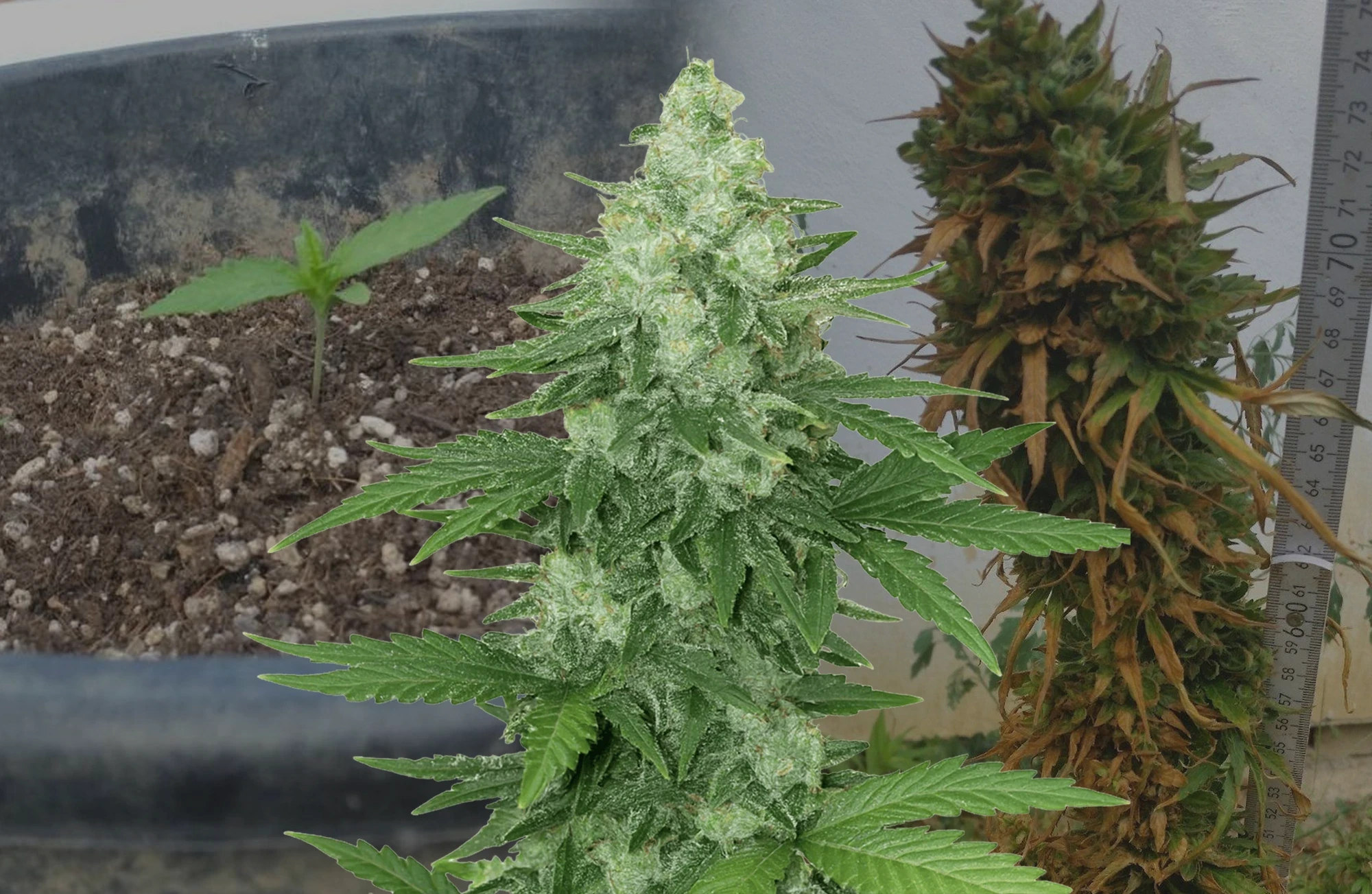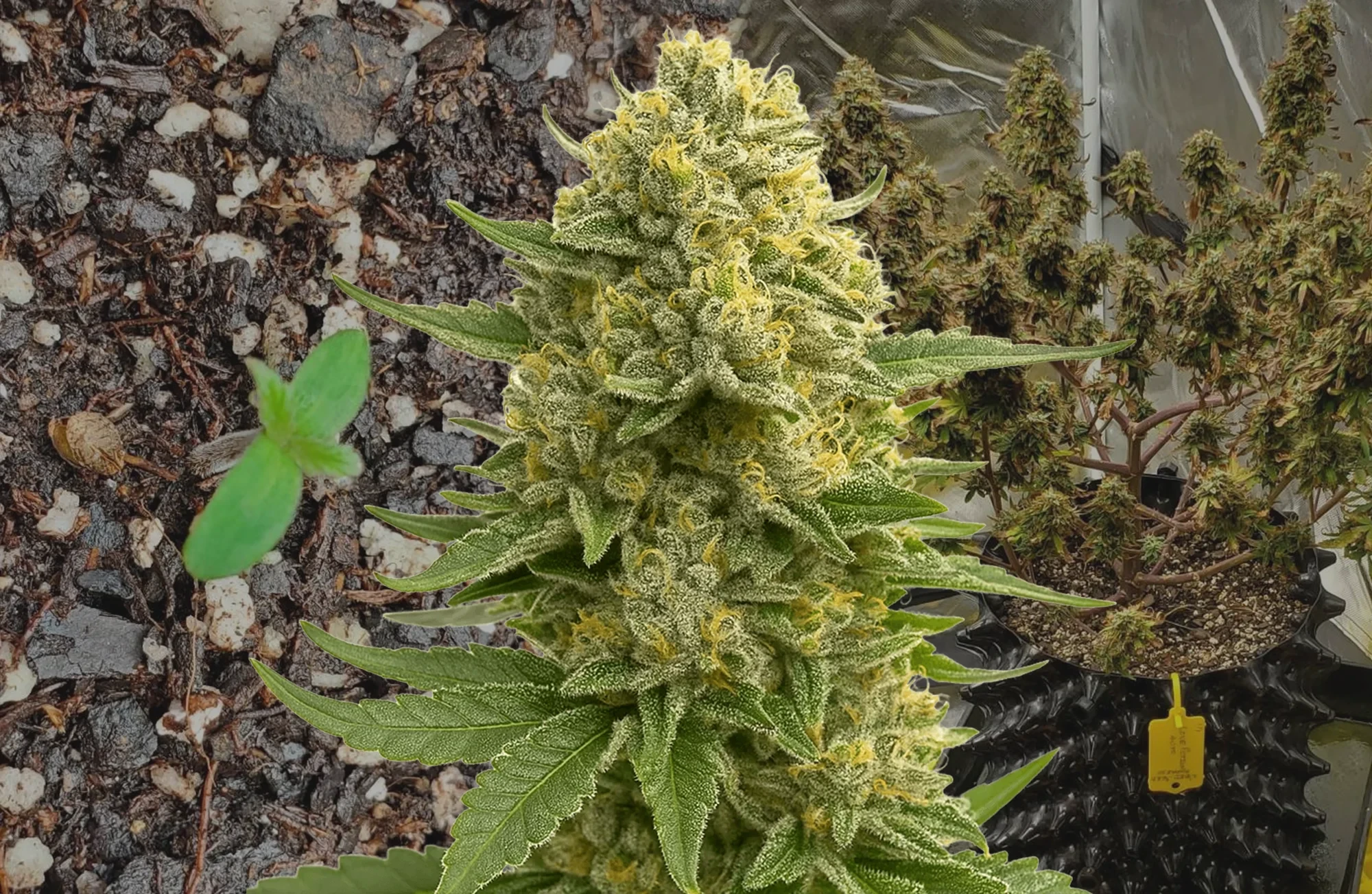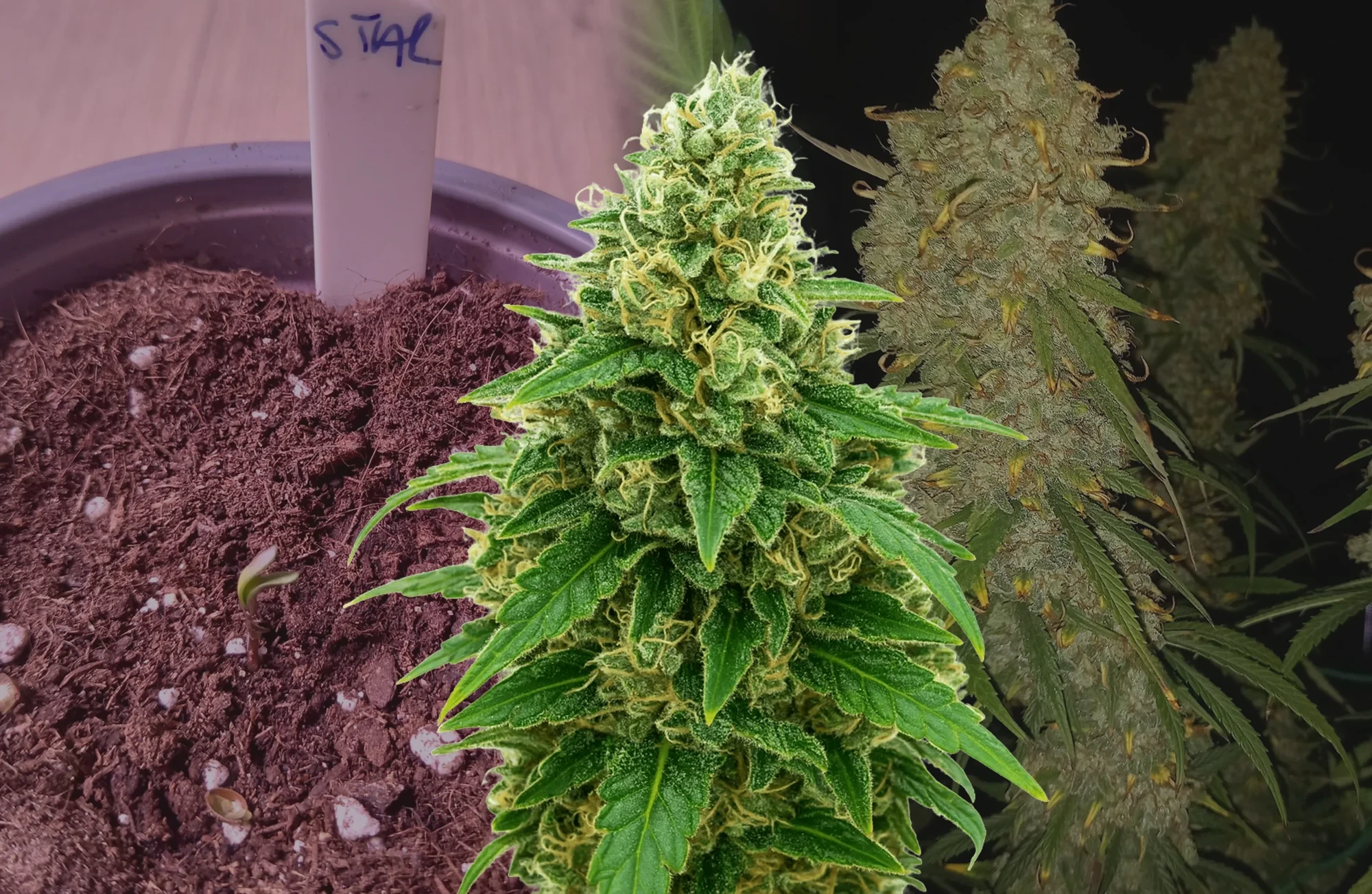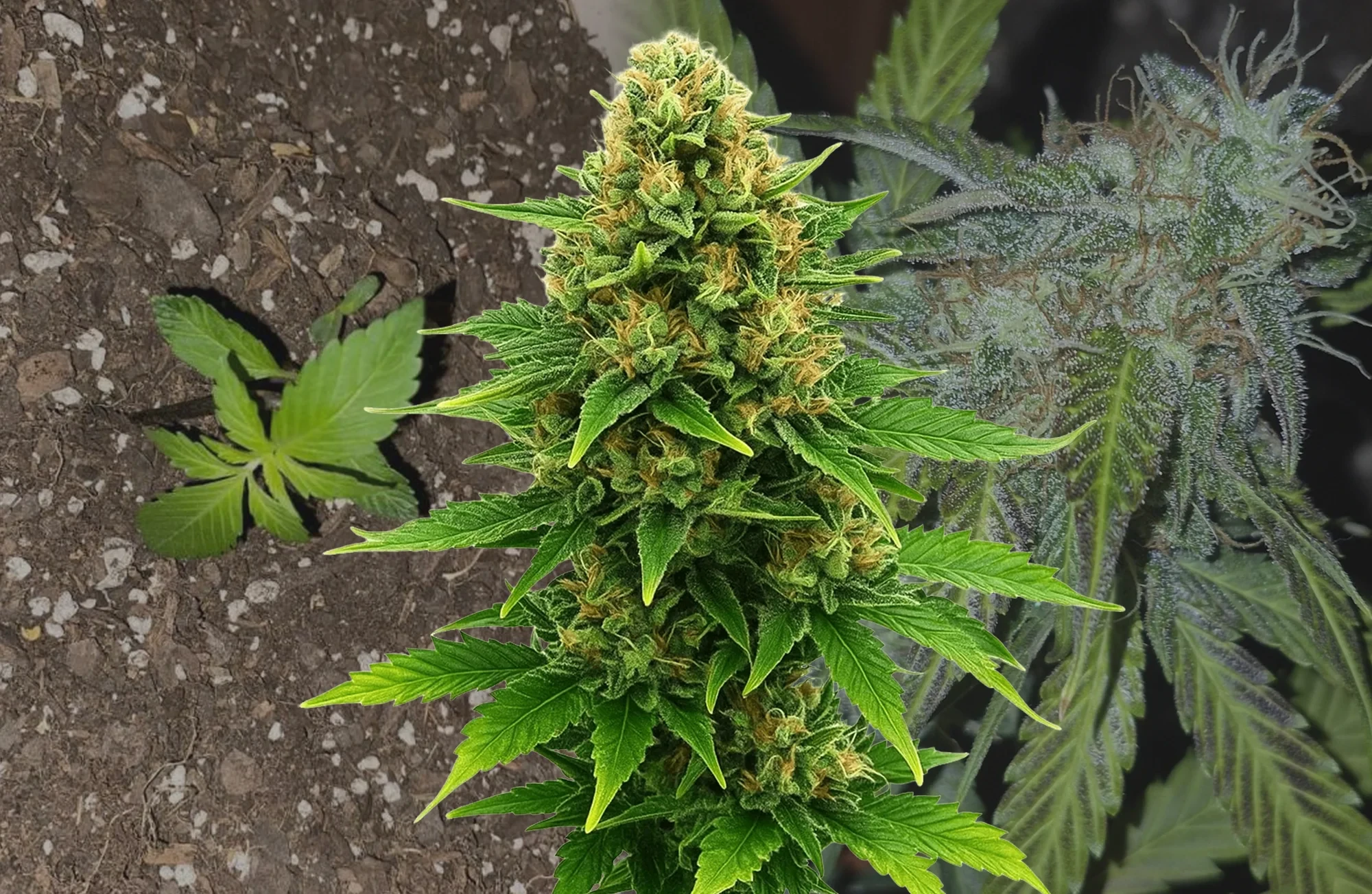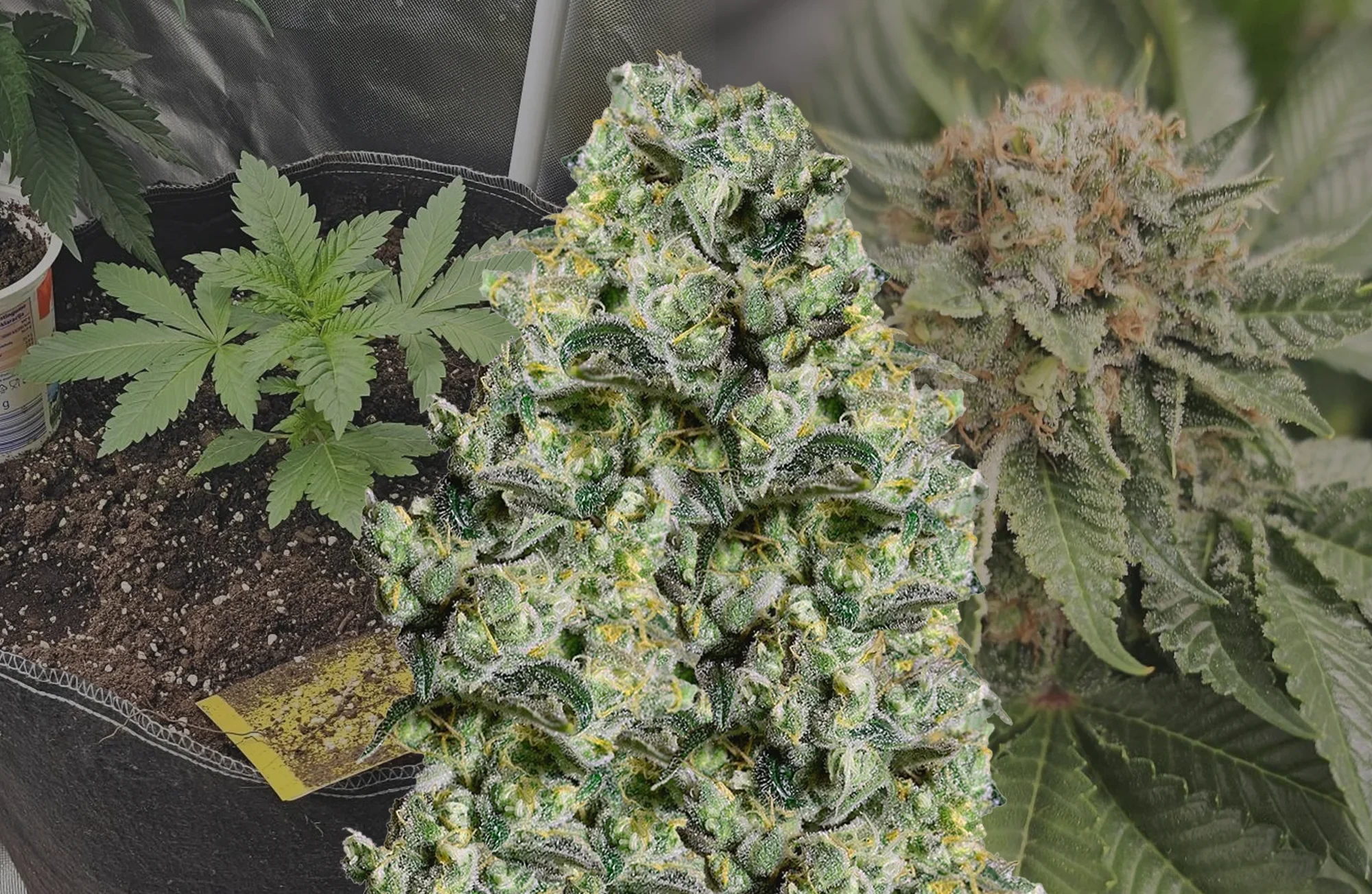


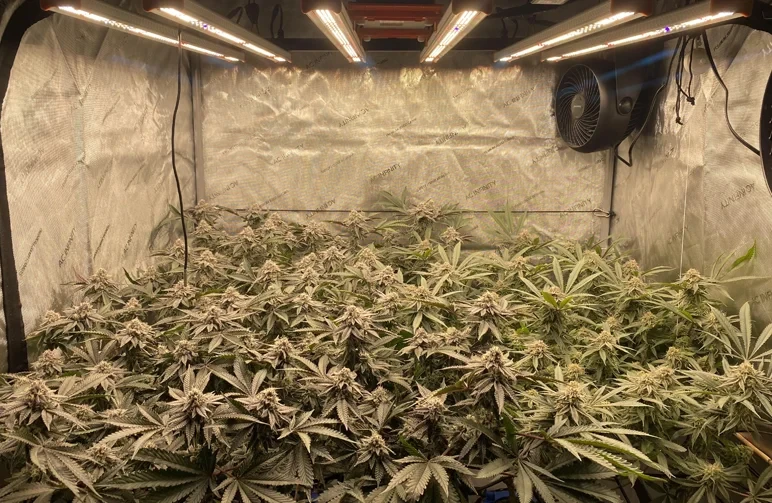
Let's be totally honest. There is nothing worse than spending months growing a weed plant, only to harvest a few decent tops and a bunch of fluffy popcorn buds.
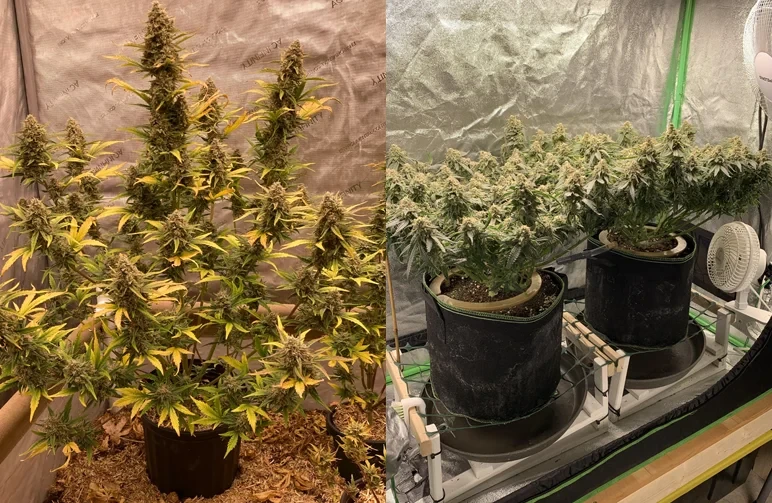
If you let nature take its course, a cannabis plant grows just like a tall Christmas tree. It pushes all its energy into one main stem. The top bud hogs all the light, and the lower branches are left in the dark.
But what if you could flatten that shape out?
That is exactly what cannabis plant training does. By bending or cutting your plants, you create a wide, even canopy. Every bud gets blasted with direct light, and your yield goes through the roof.
I was terrified the first time I took scissors to my plants. Good lord, I thought I ruined them. But a few weeks later, I had eight massive colas instead of one.
Ready to stop leaving free weed on the table? Let's chat about how to train your plants like a pro.
Key Takeaways
- Training flattens the canopy: Bending or cutting your plant stops it from growing like a tall tree. This allows your grow light to hit every single bud site evenly.
- LST is perfect for beginners: Low-Stress Training involves gently bending and tying branches. It is totally safe and does not shock the plant.
- HST brings massive yields:High-Stress Training involves cutting or crushing stems (like Topping or Super Cropping) to force explosive new growth.
- Timing is everything: Always do your heavy training during the vegetative stage. Your plants need time to heal before they start making buds.
What Exactly Is Cannabis Plant Training?
Plant training sounds like you are sending your weed to boot camp. But it is actually very simple. It is just the act of bending, tying, or carefully cutting your plants to change the way they grow.
You are stepping in and taking control of the plant's shape.
To understand why we do this, you need to know a little secret about how weed grows. Cannabis plants have a built-in habit called apical dominance.
That is just a fancy way of saying the plant wants to focus all its energy on growing one single, massive top bud. It sends all the best growth hormones straight up the main stem. The lower branches? They just get the leftovers.
If you leave the plant alone, you get that classic Christmas tree shape we talked about earlier. But when we train the plant, we break that natural habit. We bend that tall main stem down, or we snip it off completely.
When you do this, the plant panics just a little bit. It thinks the main top is gone or damaged. So, what does it do? It starts sending all those amazing growth hormones to the lower side branches instead.
Suddenly, all those little side branches shoot up to the exact same height. You end up with a flat, even canopy of buds that all get the exact same amount of light from your grow lamp.
And as any seasoned grower will tell you, an even canopy is the absolute best way to get a massive yield. It really is that simple.
Low-Stress Training (LST) vs. High-Stress Training (HST)
When you dive into the world of plant training, you will quickly realize there are two main camps. You have Low-Stress Training (LST) and High-Stress Training (HST). Both methods have the exact same goal of flattening out your canopy.
They just take very different paths to get there.
Low-Stress Training is exactly what it sounds like. You are being gentle. With LST, you never cut or break the skin of the plant. Instead, you are just bending and tying the branches down to change their direction.
Think of it like yoga for your weed plants. You are stretching them out and opening them up to the light. Because you are not doing any real damage, the plant does not need time to heal. It just keeps right on growing.
High-Stress Training is the exact opposite. This is where things get a little rough. With HST, you are intentionally damaging the plant. You might cut the top off, pinch the stems until the insides crush, or snap branches to force a specific shape.
I know, it sounds absolutely crazy to hurt the plants you spent so much time caring for. But weed is incredibly tough. When you damage the plant on purpose, it bounces back thicker, stronger, and ready to hold some seriously heavy buds.
So, which one should you choose?
If you are a total beginner and the thought of cutting your plant makes you sweat, start with LST. It is safe, easy, and very hard to mess up.
But if you have a grow or two under your belt and want to see some explosive results, grab your scissors and try a little HST.
The Best Low-Stress Training Techniques
Let's start with the gentle stuff. These LST methods are perfect for beginners because they do not shock the plant, meaning you do not have to worry about slowing down your grow cycle.
The Tie-Down Method
First up is the classic tie-down method. This is the simplest way to get your feet wet with LST.
Before you start, you need the right tools. Do not use thin metal wire, sewing thread, or rubber bands. These thin materials will slice right through the skin of your plant like a hot knife through butter.
Instead, grab some soft, rubber-coated garden wire or thick garden twine.
Here is how you do it, step-by-step:
- Prep your pot: Drill some small holes around the plastic rim of your pot. If you are using fabric pots, you can use safety pins or binder clips instead. These holes are where you will tie your strings.
- Bend the main stem: Wait until your plant has about four or five nodes (the places where branches meet the main stem). Gently take the very top of the main stem and bend it to one side until it is almost parallel to the soil. Be gentle. You want a bend, not a snap.
- Secure the tie: Loop your soft plant tie around the stem and anchor the other end to one of the holes in your pot.
- Anchor the base (Pro Tip): To keep the roots from pulling out of the soil, tie another string around the very bottom of the main stem. Pull this tie in the opposite direction of your bend. This keeps the plant anchored safely in the dirt.
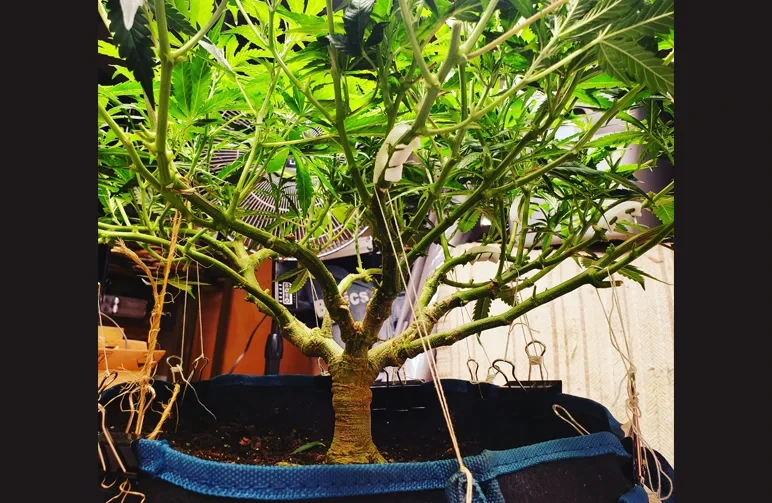
LST in Action: Notice how user u/sillyskunk uses binder clips on the rim of a fabric pot to create anchor points. By tying the branches down and pulling them away from the center, you change the plant’s architecture and force it to grow wider, not taller. - Train the side branches: As the side branches grow upward toward the light, tie them down to the rim of the pot too.
Screen of Green (ScrOG)
Next is the Screen of Green, or ScrOG for short. If you are growing indoors in a tent, this is the absolute king of LST.
A ScrOG setup is just a net or mesh screen placed horizontally over your plants. You can buy ready-made elastic nets online, or you can build your own using PVC pipes and string.
Here is how it works:
You place the screen about 8 to 12 inches above the base of your plants. As the plants grow upward, they will start poking through the holes in the net.
Instead of letting them grow straight up, you gently tuck those branches back under the screen and direct them to the next empty hole.
This process is called weaving. By constantly tucking the branches down and outward, you force the plant to grow sideways across the net.
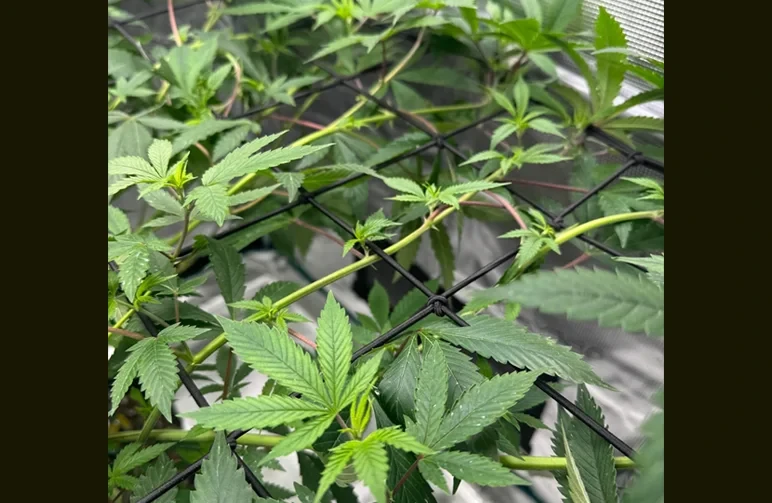
By the time your plants start flowering, the entire screen will be filled with a perfectly flat carpet of green. Every single bud site will be the same distance from your light, leading to a massive harvest of top-shelf buds.
But is a net the only way to maximize a small tent? Check out my full breakdown on ScrOG vs. SOG to see which canopy method actually yields more weed.
The Best High-Stress Training Techniques
Now it is time to get your hands dirty. High-Stress Training means we are going to intentionally hurt your weed babies to make them grow back stronger. It feels completely wrong the first time you do it, but the results speak for themselves.
If you are not sure which method fits your grow room, read my guide on Super Cropping vs. Topping to see how the two heavyweights compare. Otherwise, let's look at the basics
Topping Your Plants
Topping is the most popular HST method in the world, and for good reason. It is incredibly easy and highly effective.
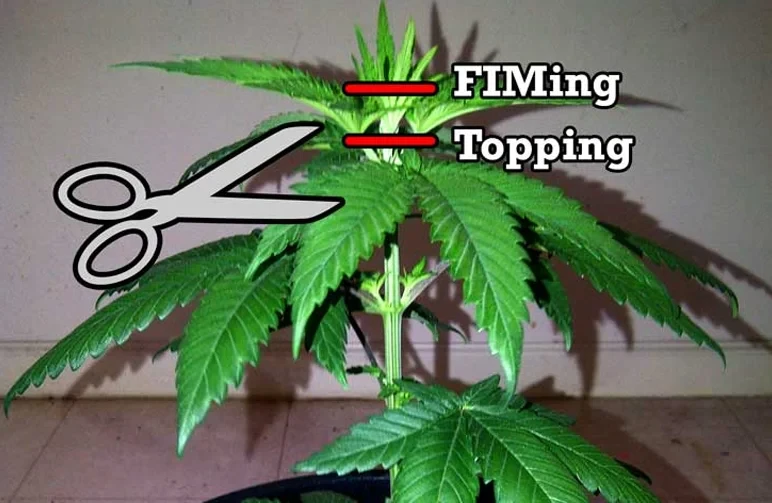
Topping is exactly what it sounds like. You are going to cut off the very top of the main stem. When you do this, you destroy that apical dominance we talked about earlier.
The plant can no longer grow straight up. Instead, it takes the two side branches sitting just below your cut and turns them into two brand new main stems.
Here is how to do it. Wait until your plant has about three to five nodes. A node is just the joint where the side branches meet the main stem.
Take a pair of sterile scissors and snip the main stem cleanly, right above the node. That is it. You just doubled your main colas.
FIMming (F I Missed)*
Yes, that is the real name. Legend has it that a grower was trying to top his plant, messed up the cut, and yelled out that exact phrase. But his mistake turned into an absolute banger of a training technique.
FIMming is very similar to topping, but instead of making a clean cut on the stem, you pinch off the top growth. You want to grab the very top cluster of new leaves and pinch or snip off about 75% of them.
Because you leave a little bit of that top growth behind, the plant reacts differently than a clean top. Instead of giving you two new main branches, a successful FIM can give you up to four new tops.
It looks a little messy for a few days, but the extra yield is totally worth it.
Super Cropping
Think of super cropping as a deep tissue massage for your plant. You are not cutting anything off. Instead, you are crushing the inside of the stem to bend it over.
Find a branch that is growing way too tall. Pinch the stem firmly between your thumb and pointer finger. Now, gently roll the stem back and forth. You are trying to crush the inner core of the stem without breaking the outer skin.
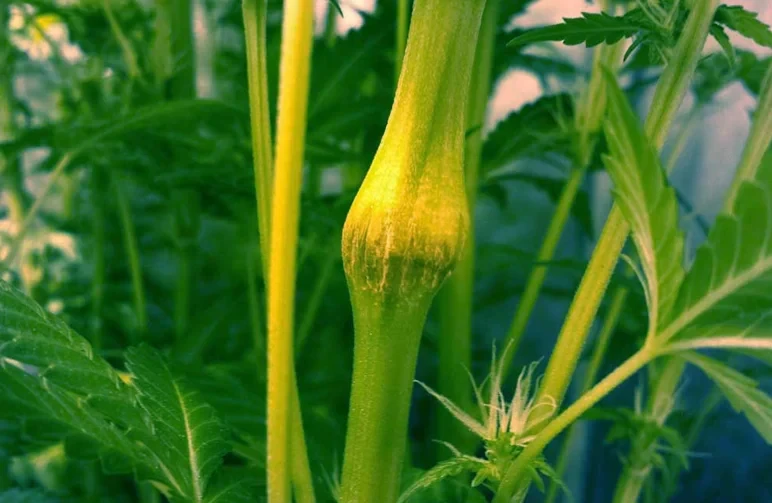
After a few seconds of rolling, the stem will feel soft and mushy. Gently bend the branch over at a 90-degree angle. It will look like you just killed that branch.
Good lord, it looks scary. But give it a few days. The plant will heal that bend by forming a thick, wooden knuckle. That knuckle acts like a superhighway for nutrients, making the branch stronger and the buds much fatter.
Mainlining (Manifolding)
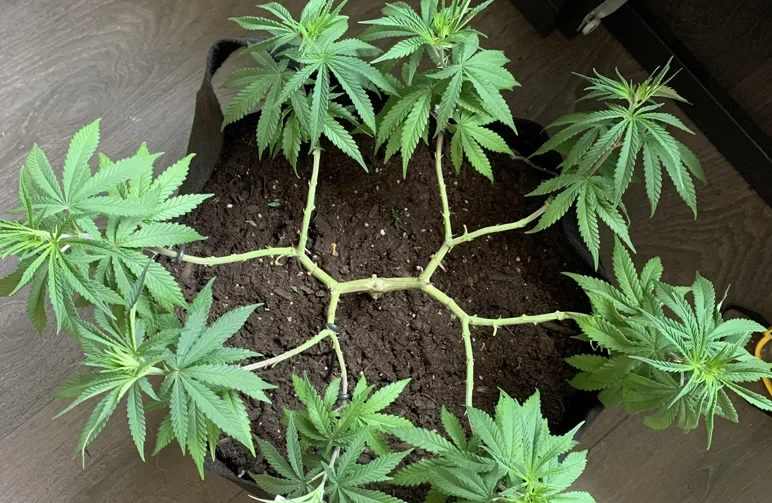
Mainlining is the ultimate mix of topping and tying down. It takes a little more time, but it creates a perfectly symmetrical plant that looks like a candelabra.
To mainline a plant, you top it down to the third node.
You strip away all the lower growth so you only have two branches left. Then, you tie those two branches down completely flat. As they grow out, you top them again.
This creates a thick, perfectly balanced main hub at the base of the plant. Because the plant is perfectly symmetrical, nutrients flow evenly to every single bud site.
You will not find any fluffy popcorn buds on a mainlined plant. Every single flower will be a heavy, top-shelf nugget.
If you want to see exactly where to make these cuts without ruining your plant, check out our step-by-step visual guide to mainlining cannabis.
When Is the Best Time to Train Your Plants?
Timing is everything when it comes to growing weed. If you start bending and cutting too early, you will stunt your tiny seedling. But if you wait too long, you could ruin your entire harvest.
So, when is the magic window?
Almost all of your plant training needs to happen during the vegetative stage. This is the period when your plant is just focusing on growing leaves and stems.
For a solid timeline, wait until your plant has three to five sets of true leaves. We call these nodes. At this size, the root system is finally strong enough to handle a little bit of stress.
If you top a plant before it hits that third node, it might just stop growing completely. Nobody wants that.
But knowing when to stop is just as important as knowing when to start.
You must stop all High-Stress Training before the flowering stage begins. Once your plant starts making buds, its entire mission in life changes. It wants to push every single ounce of energy into creating massive, sticky flowers.
If you take a pair of scissors to your plant during flower, it has to stop making buds and use that energy to heal its wounds instead. That means smaller yields and airy buds.
Can you still do Low-Stress Training during flower? Yes, but only for the first week or two.
When you flip your indoor lights to a 12/12 schedule, your plants will go through a massive growth spurt called the flowering stretch. You can gently tuck those new branches under your ScrOG net during this time.
This is also the absolute best time to strip away the bottom growth so your plant focuses on the top colas. You can learn exactly how to do that in my guide to lollipopping cannabis.
But once you see actual buds forming, it is time to put your hands in your pockets and let the plant do its thing.
How to Help Your Plants Recover from Training
Let's be totally honest. When you chop the top off a plant or crush its stems, it gets stressed out. High-Stress Training puts your weed into a temporary state of shock. The plant needs a minute to catch its breath and heal.
If you just hack away and then ignore your plants, they will sulk. Growth will stall out completely. But if you treat them right after a heavy training session, they will bounce back faster than ever.
Here is a simple checklist to help your plants recover:
Give them time to rest: Never train your plants and then flip your lights to the flowering stage the very next day. That is a recipe for disaster. Give your plants at least a full week to recover and grow new leaves before you change the light schedule.
Do not overwater: When a plant is in shock, it stops drinking as much water. If you flood the pot right after a heavy topping session, the roots will sit in mud and choke. Wait until the top inch of your soil is completely dry before you water again.
Keep the environment stable: Your plant is already dealing with enough stress. Now is not the time to let your grow tent get too hot or too cold. Keep your temperatures steady around 75 degrees Fahrenheit. Keep your humidity right around 50 to 60 percent.
Treat your plants like they just had surgery. Give them a comfortable room, a little bit of water, and plenty of rest. They will reward you with explosive new growth in just a few days.
Frequently Asked Questions (FAQs)
We covered a lot of ground today. But if you are new to growing, you probably still have a few questions bouncing around in your head. Let's clear up the most common worries new growers have about plant training.
Can I train autoflowering cannabis plants?
Yes, but you have to be careful. Autoflowering strains are a totally different beast. They have a built-in genetic timer. They will switch to the flowering stage after a few weeks no matter what you do.
Because their vegetative stage is so short, they do not have time to recover from heavy stress. If you top an autoflower, you might stunt it for good. Your yield will suffer.
So, stick to Low-Stress Training for autos. Tying down branches is perfectly fine and works great. Just put the scissors away.
Will cutting my plant kill it?
It feels like murder, right? The first time you chop the top off a perfectly healthy plant, your stomach drops. But do not panic. It is called weed for a very good reason.
Cannabis is incredibly resilient. As long as your plant is healthy, has a good root system, and has a few nodes left below your cut, it will bounce back.
It might look sad for a day or two, but you are not going to kill it by topping or super cropping.
Can I train a plant that is already flowering?
As a general rule, you should never train a flowering plant. It stresses them out and ruins your yield. But there is one crazy exception.
If you find an amazing plant in your tent and want to save its genetics, you can actually take a clone from it while it is making buds. It is an advanced trick called monster cropping, and it results in some of the bushiest plants you will ever see.
Do I have to train my plants?
Absolutely not. You can just put a seed in the dirt, give it some water, and watch it grow into that classic Christmas tree shape. You will still get some great weed to smoke.
But why settle for less? If you skip plant training, you are literally leaving free weed on the table. A little bit of bending and tying can easily double your harvest weight without costing you an extra dime in nutrients or electricity.
Why wouldn't you want that?
The Wrap Up
So, there we go. That is the magic of cannabis plant training in a nutshell.
We took that tall, natural Christmas tree shape and flattened it out. By doing that, we made sure every single bud site gets blasted with direct light. More light means heavier, fatter buds. It really is that simple.
If you are still feeling nervous, just start small. You do not have to super crop your entire grow tent on day one. Take just one plant and try topping it. Watch how it reacts.
Once you see those two massive colas form where there used to be one, you will be hooked. You will never grow a wild, untrained weed plant again.
Now that you have the training skills to maximize your yield, you need the right genetics to match. Head over to the WeedSeedsExpress shop and check out our high-yielding seeds.
Grab a pack, get your soft plant ties ready, and let's grow some absolute monsters.