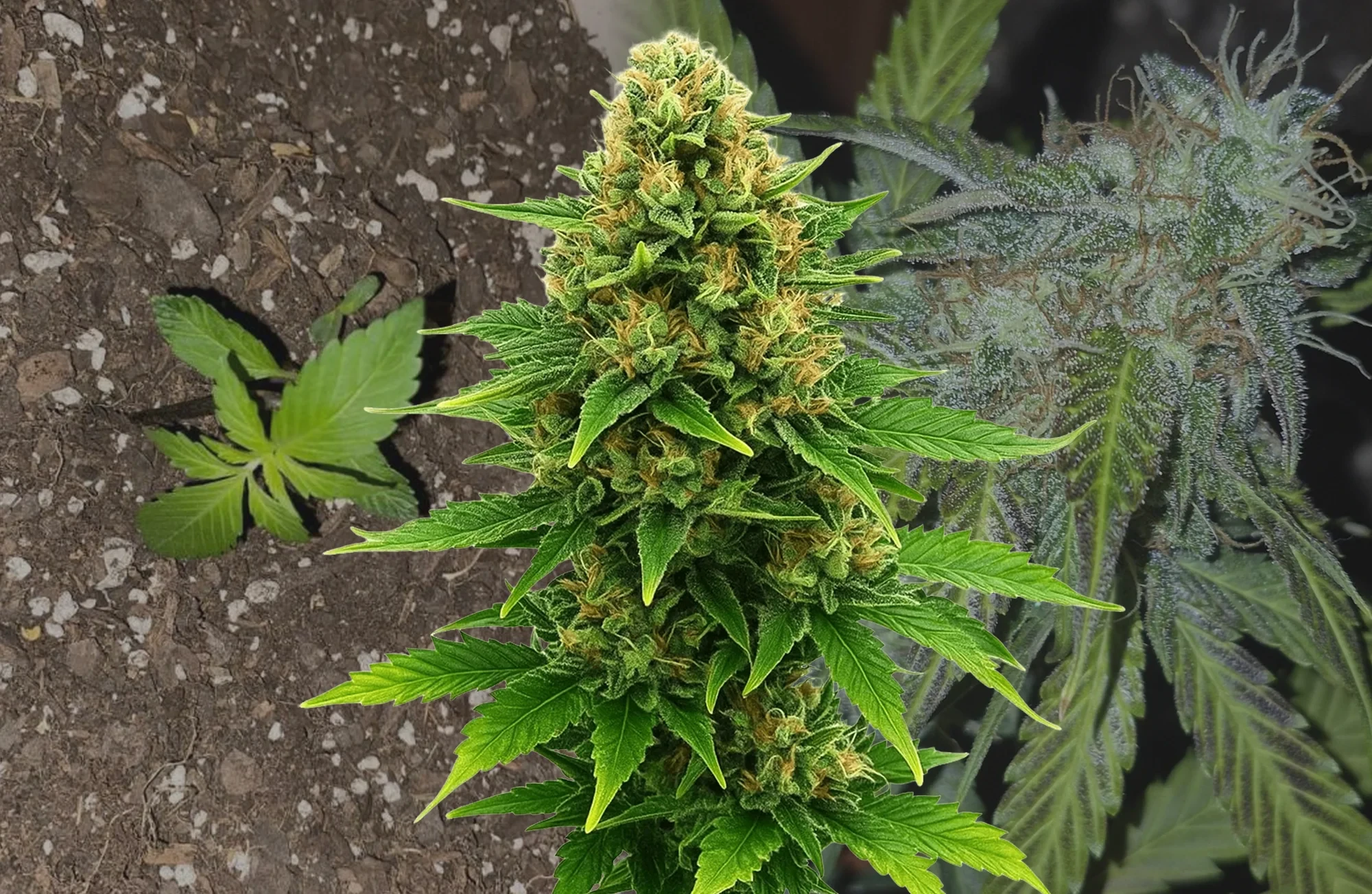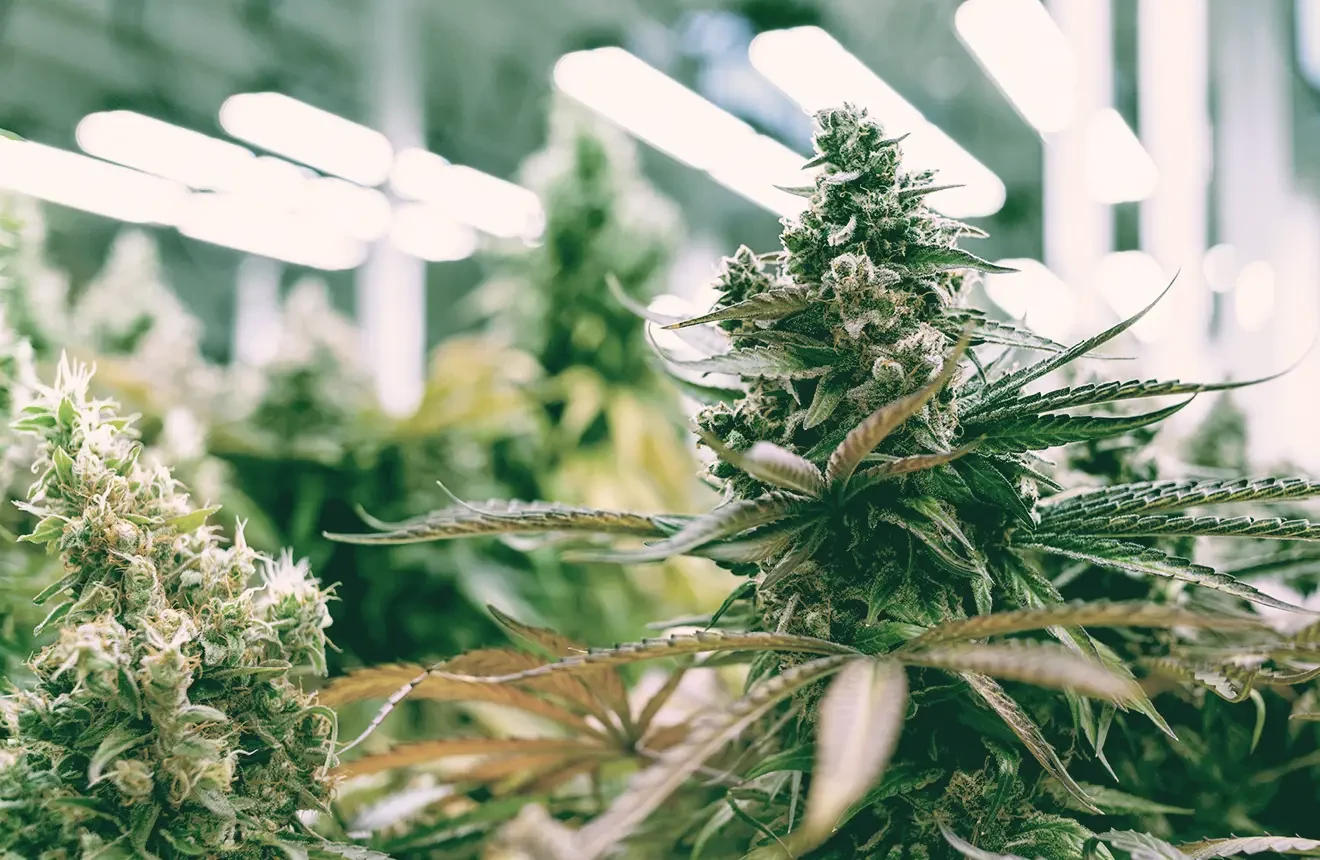


We all love big buds and loud terps. But we definitely do not love heat spikes, soggy humidity, or a house that smells like Week 7 funk.
Plants need to breathe just like we do. If you leave them sitting in stagnant air, you are asking for bud rot and stunted growth.
Setting up fans and carbon filters might look like rocket science at first glance. I promise you it is not.
I have built out everything from tiny micro tents to massive sealed rooms. The rules never really change. You just need to move air with a purpose.
Let me show you exactly how to get your grow tent breathing perfectly and smelling like absolutely nothing outside the door.
Key Takeaways
- The main goal: Good airflow controls your heat, lowers your humidity, and gives your plants fresh CO2 to eat.
- Negative pressure is magic: You want your exhaust fan to pull slightly more air out than your intake brings in. This keeps all the smells trapped inside the tent.
- Scrub the stink: A high quality carbon filter is your best friend. It erases the weed smell before it ever leaves the room.
- Do the math: You need to calculate your room size to buy the right fan. We will keep the math super simple so you get exactly what you need.
Why Ventilation Makes or Breaks Your Grow
Healthy plants are greedy. They want the perfect balance of temperature, humidity, and fresh air. Your ventilation system is the absolute best tool to give them exactly what they want.
Here is what good airflow actually does for your grow room.
Temperature Control
Grow lights get incredibly hot. If you do not pull that heat out of the tent, your plants will fry. You want to aim for a sweet spot between 72 and 80 degrees Fahrenheit. Your exhaust fan pulls that hot air out so your room stays cool.
Humidity Control and mould Prevention
Plants sweat constantly. If that wet air just sits there, your buds will turn to mush from mould and powdery mildew. Stagnant air is a mould party. You want your humidity around 55 to 65 percent in the vegetative stage, and 40 to 50 percent in flower. Your exhaust fan sucks that wet air right out of the building.
Fresh CO2
Plants eat CO2 to grow. Once they eat all the CO2 in the tent, they stop growing. Your exhaust fan pulls the old, stale air out so fresh air can rush in through the bottom vents.
Stronger Stems
A gentle breeze from your fans mimics the outdoor wind. This tells the plants to build thick, sturdy stems. You need strong branches to hold up heavy buds later on.
The Gear: What You Actually Need
You do not need a million gadgets to get this right. You just need a few basic pieces of gear to build a bulletproof airflow system.
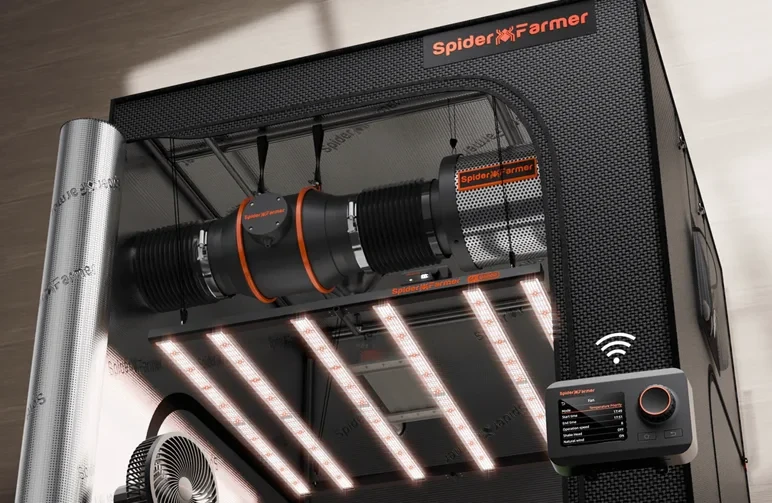
Inline Exhaust Fans
These are the heavy lifters. They sit at the top of your tent and pull the hot, stale air out. Always buy an inline fan with a speed controller so you can turn the power up or down.
Carbon Filters
This is your smell eraser. It is a heavy metal tube filled with activated carbon. It scrubs the skunky smell out of the air. You attach this directly to your inline fan. Make sure the filter size matches your fan size.
Ducting
These are the shiny, flexible tubes that connect your filter and fan to the outside world. Keep your ducting as short and straight as possible. Sharp bends will kill your airflow.
Oscillating Clip Fans
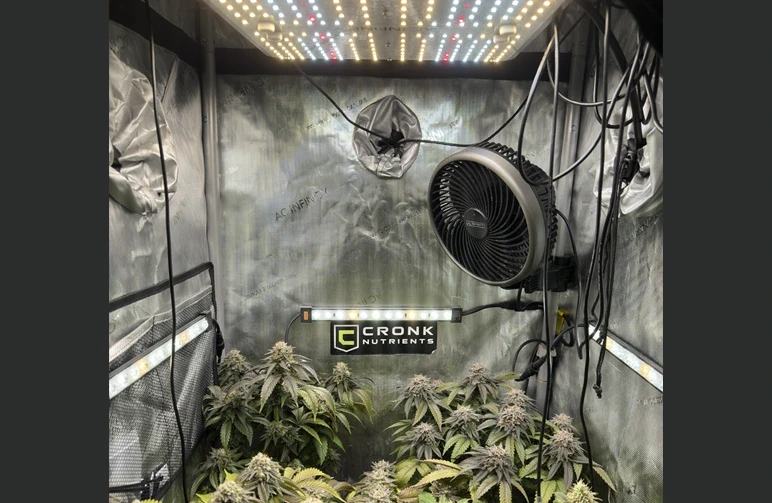
These are the small fans that attach to your tent poles. They blow a gentle breeze across your plant canopy to build those strong stems we just talked about. Two small fans are usually better than one big one.
Controllers
A good controller is an absolute game changer. Smart controllers use a probe to read the temperature and humidity. They automatically speed your fan up or slow it down to keep your room in the perfect zone.
How to Set Up Your Exhaust System
Before you hang anything, you need to understand negative pressure. This just means your fan is sucking enough air out to make the tent walls bow inward slightly.
When the walls suck in, you know no smelly air is leaking out of the zippers. Everything is forced to go through the filter.
Here is how to set it up like a pro.
Step 1: Hang your carbon filter high up at the very top of your tent. Use ratchet straps to secure it. Heat rises, so you want to pull air from the hottest spot.
Step 2: Connect your inline fan directly to the carbon filter. The fan should pull air through the filter.
Step 3: Attach your shiny ducting to the other side of the fan. Use foil tape and metal clamps to seal the connections tight.
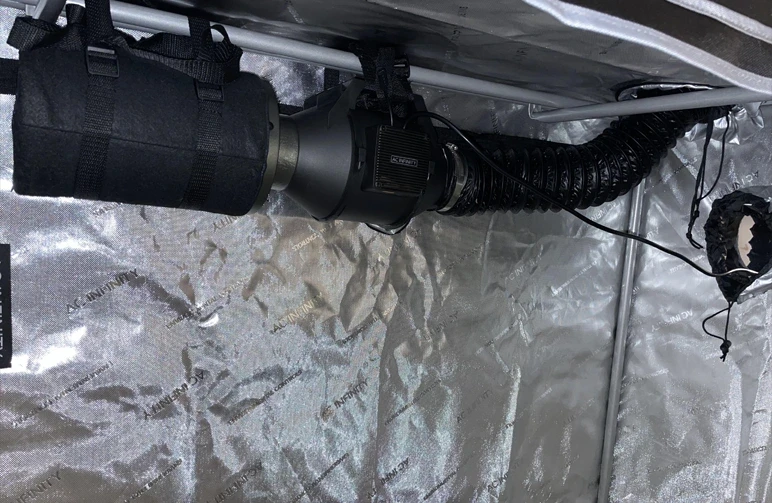
Step 4: Run that ducting out of the top hole of your grow tent.
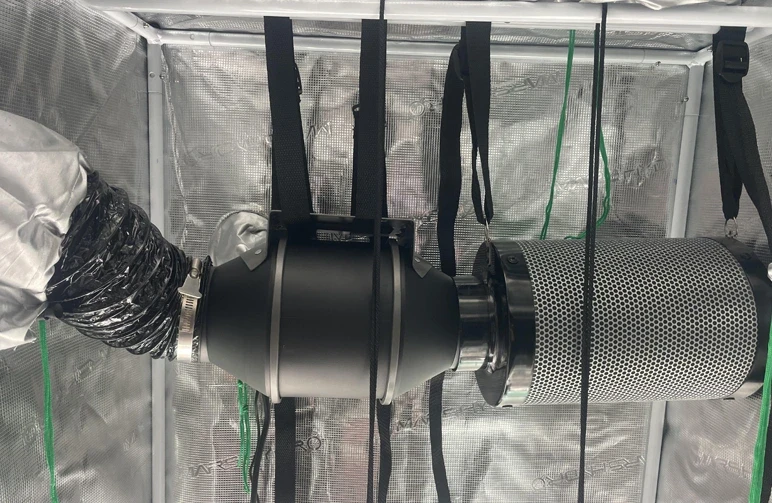
Step 5: Open a bottom vent on your tent. This is your intake. Fresh air will get sucked in through the bottom, flow up through the plants, and exit through the filter at the top.
Step 6: Turn the fan on and look at your tent walls. If they pull inward, you nailed it.
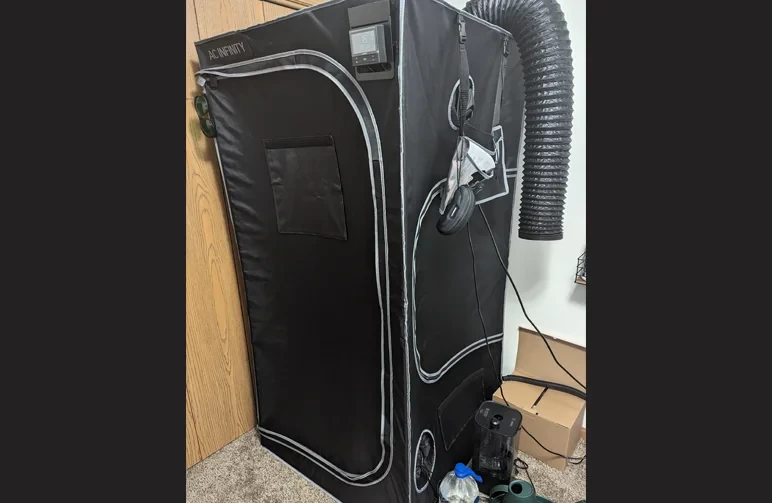
Odor Control: How to Keep Things Stealthy
We love loud weed. Your neighbors probably do not. Discretion is the best way to protect your grow.
Activated carbon is basically a sponge for smells. As the smelly air passes through the filter, the carbon traps the odor molecules. Clean air blows out the other side.
But carbon filters do not last forever. Depending on how much you grow, a filter will last about 12 to 24 months. Wash the white cloth sleeve on the outside of the filter every few months to keep it working hard.
If you notice a faint weed smell leaking into your hallway, it is time to buy a new filter. Do not risk it.
You might see products like odor gels or ozone generators online. Keep things simple. Odor gels only mask smells. You can put them in the hallway outside your tent, but never put them inside with your plants.
And stay far away from ozone generators. They are dangerous for your lungs and they will hurt your plants.
Finally, keep your room clean. Wipe up water spills and pick up dead leaves. A clean grow room simply smells less.
Simple Math: How to Choose the Right Fan Size (CFM)
Fans are rated by CFM. That stands for Cubic Feet per Minute. It just means how much air the fan can move in sixty seconds. You need an exhaust fan that can replace all the air in your tent at least once a minute.
Do not let the math scare you. Here is the simple formula for a standard 4x4 grow tent that is 7 feet tall.
Step 1: Multiply Length x Width x Height to find your room volume. (4 x 4 x 7 = 112 cubic feet).
Step 2: Your base target is 112 CFM.
Step 3: Add 25 percent to that number. Carbon filters and ducting slow the air down. You need extra power to push through them. (112 + 25 percent = 140 CFM).
Step 4: Buy a fan rated for around 200 CFM.
Why buy a bigger fan? I always buy an oversized fan and run it at half speed. It gives you extra power for really hot days, and it keeps the room incredibly quiet.
Troubleshooting Common Airflow Problems
Sometimes things get out of whack. Here is how to fix the most common airflow headaches.
The tent is too hot or humid: Your exhaust fan is too weak or your bottom intake vent is blocked. Turn your fan speed up. Make sure your ducting is straight. Sharp bends kill your airflow.
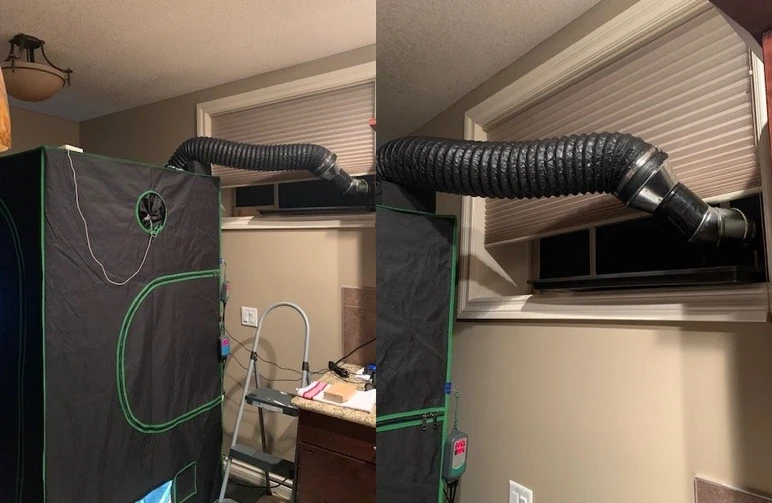
The room smells like weed: First, check your tent walls. Are they sucking inward? If not, you lost negative pressure. Turn your fan up and tape up any leaks in your ducting.
If the walls are sucking in and it still smells, your carbon filter is dead. Buy a new one.
My fan is too loud: The best fix is the one we just talked about. Buy a bigger fan and run it on a low speed. You can also use insulated ducting to muffle the sound.
My tent walls are sucking in too much: A little suction is perfect. But if your tent looks like it is going to collapse, your intake is too small. Just open another bottom vent or slightly unzip a lower door to let more air in.
Frequently Asked Questions
How long should my exhaust fan run each day?
You should run it 24/7. Plants need fresh air and humidity control around the clock. Use a smart controller to speed the fan up or slow it down, but never turn it completely off.
How often do I need to replace my carbon filter?
Plan on buying a new one every 12 to 24 months. If you live in a really dusty or humid area, it might die faster. Wash the white cloth cover regularly to help it last longer.
Do I really need a clip fan if I have a good exhaust fan?
Absolutely. Your exhaust fan handles the air for the whole room. Your clip fans handle the air right around the leaves. You need both to stop mould and build strong stems.
The Wrap Up
Dialing in your ventilation and odor control is the final step to becoming a master grower. It protects your harvest from mould, keeps your house smelling clean, and unlocks the true potential of your plants.
Once you lock in that perfect environment, the real fun begins. If you are building out your room for the very first time, make sure to check out our complete guide on how to grow weed indoors to map out your next steps.
At Weedseedsexpress, we are growers first. When you are ready to pop something special, check out our hand picked lineup of premium seeds. Keep your room clean, keep it stealthy, and happy growing!