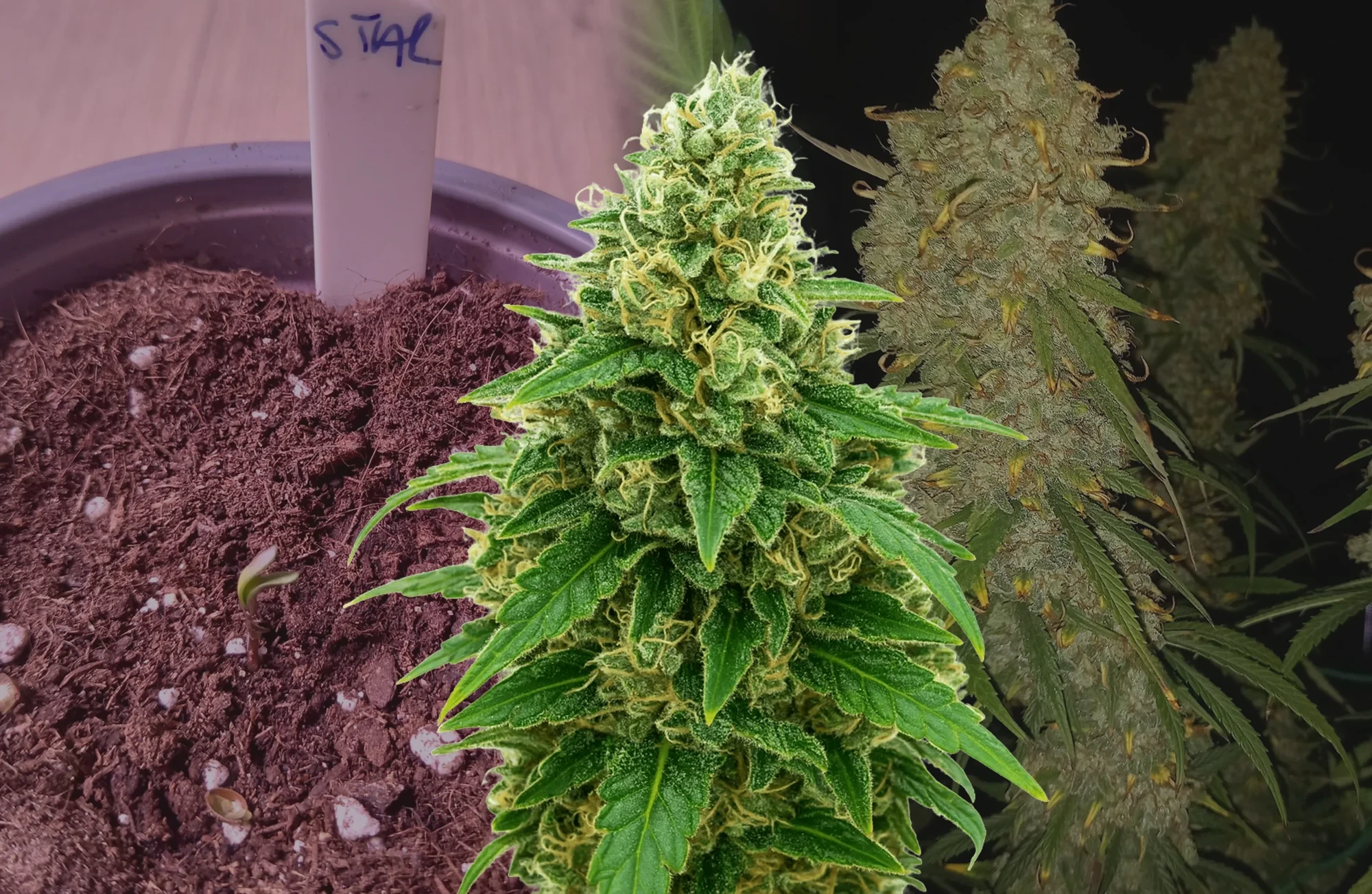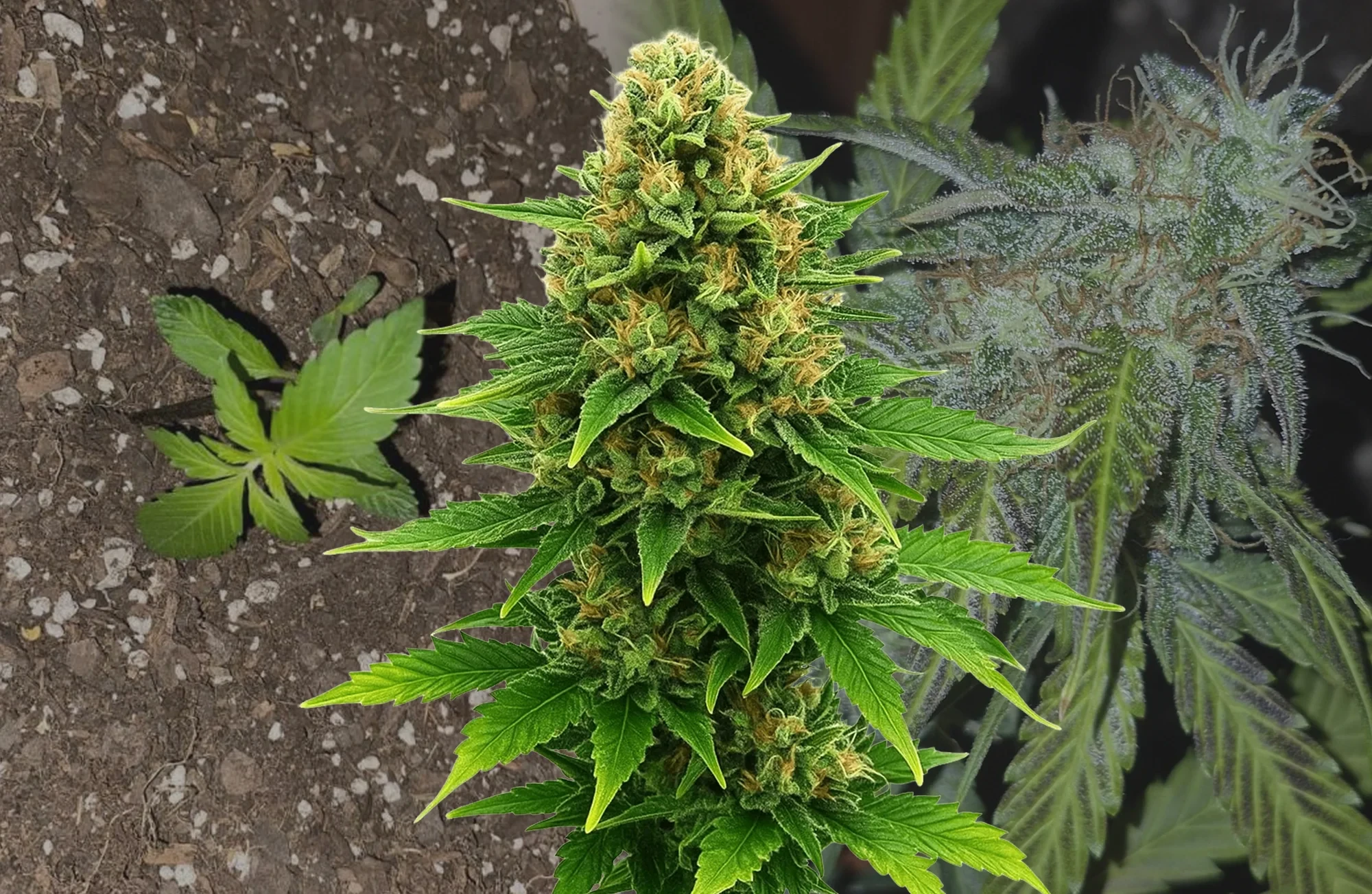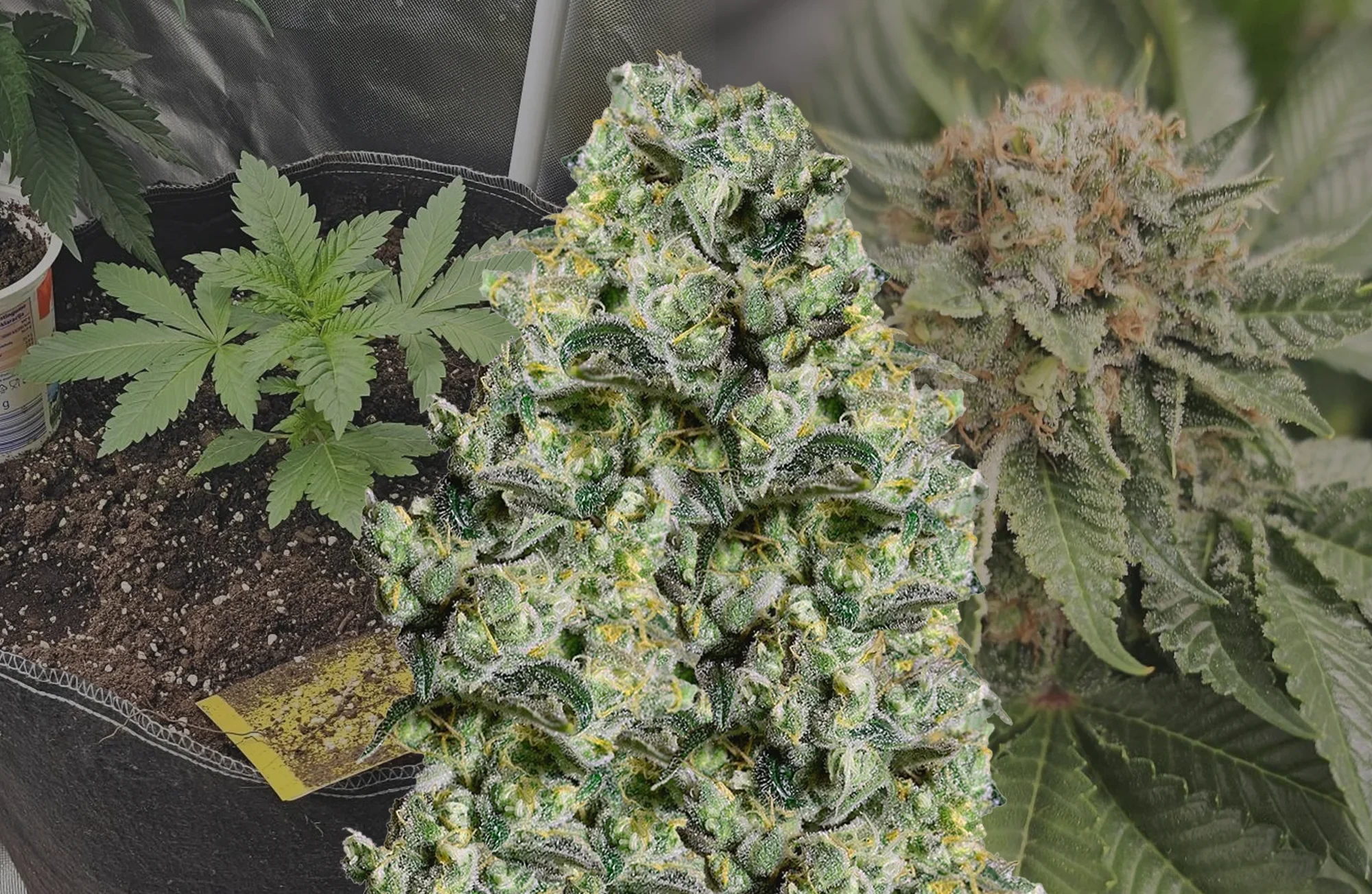


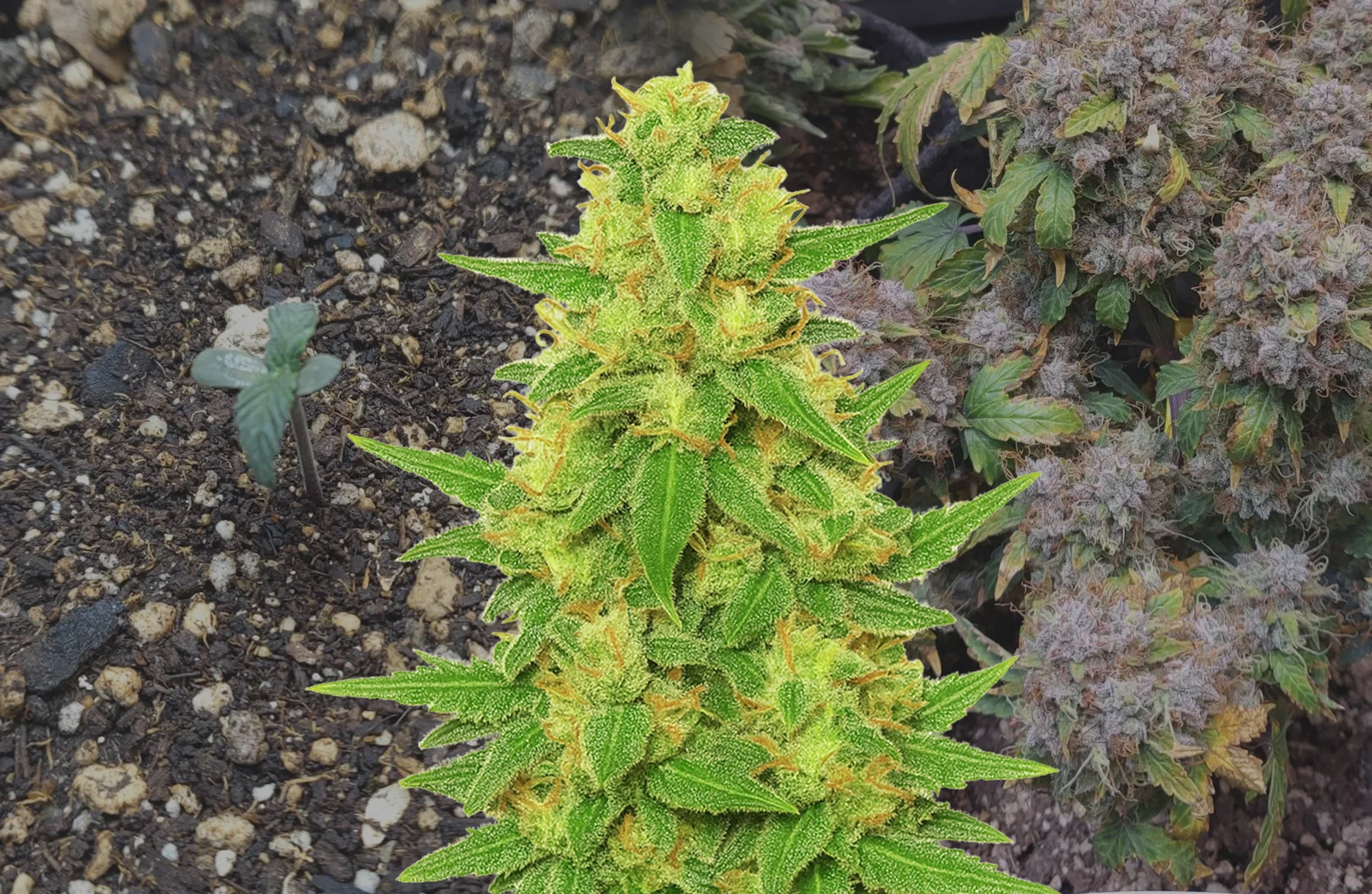
DeepRootsGrowTrees didn’t dress this run up to be anything special, and that’s the point. C. Banana Autoflower went into a soil mix that had already seen life before, under a COB that’s more than capable, in a tent that didn’t need proving.
The goal wasn’t to force speed or flex yield. It was to keep the plant comfortable and see how it behaved when it wasn’t rushed.
Autos will tell you early if they don’t like the plan. This one didn’t complain. It just moved at its own pace and kept going.
Ready to grow this strain? Buy C. Banana Autoflower seeds here at WeedSeedsExpress.
Grow Setup
| Parameter | Details |
|---|---|
| Strain Name | C. Banana Autoflower Seeds by WeedSeedsExpress |
| Grower | DeepRootsGrowTrees |
| Grow Medium | Reworked soil with perlite, vermiculite, and coco coir |
| Grow Environment | Indoor grow tent |
| Tent Size | 4 × 4 Cloudlab 844 Advance |
| Lighting | Optic 4 Gen4 COB LED (370 W) |
| Light Schedule | 20/4 early growth, 18/6 from transition |
| Nutrients | Botanicare Fulvex, FOOP Organic Biosciences |
| Ventilation | AC Infinity inline fan with carbon filter |
| Training Techniques | Low Stress Training (LST) |
| Total Grow Time | 13 weeks |
Grow Diary
Weeks 0 & 1 — Germination & Early Vegetation
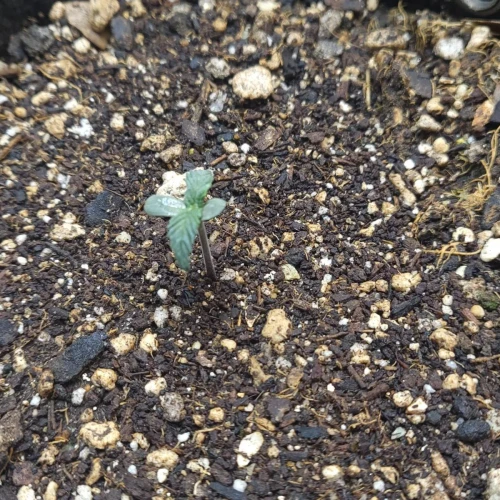
The seed went straight into soil. Not because it’s fancy, but because it works when the medium is right. The mix had already been amended and rested, and the seed cracked without drama.
It surfaced cleanly and stood up on its own. No helmet head, no delays.
Early conditions were steady and comfortable. Daytime temperatures sat around 24 °C, dropping to about 21 °C at night, with the root zone holding close to that as well.
The plant stayed compact and upright, focused on establishing itself rather than reaching.
Weeks 2 & 3 — Vegetation
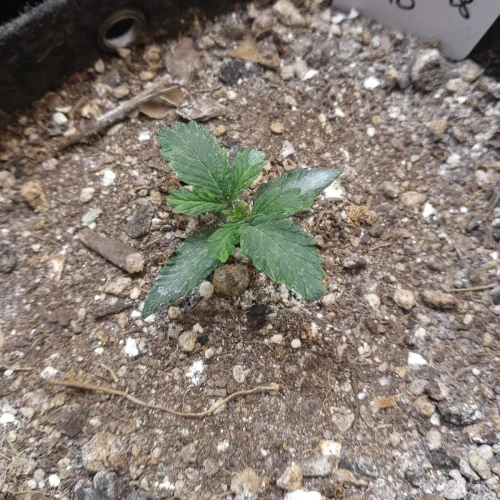
Growth through weeks two and three was deliberate. The plant wasn’t racing, but it was consistent. Leaves stacked cleanly, structure tightened up, and nothing looked stressed or overfed.
Temperatures stayed in that same comfortable range, and the steadiness showed. This was a plant building a base, not chasing height, and the slower pace early didn’t raise any red flags.
Weeks 4 & 5 — Vegetation to Transition
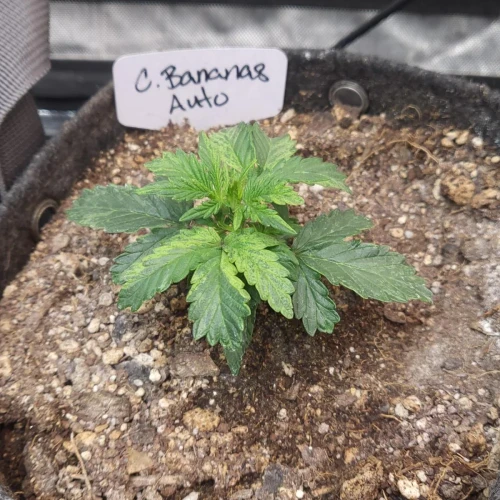
Week four kept the same calm rhythm. The canopy started hinting at its eventual shape, but nothing was forced. The environment stayed stable, and the plant responded by continuing to grow evenly.
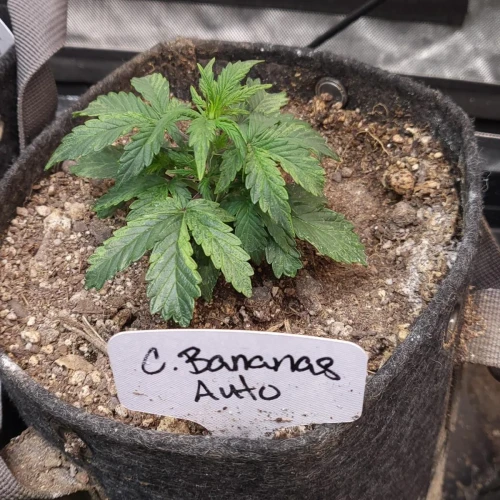
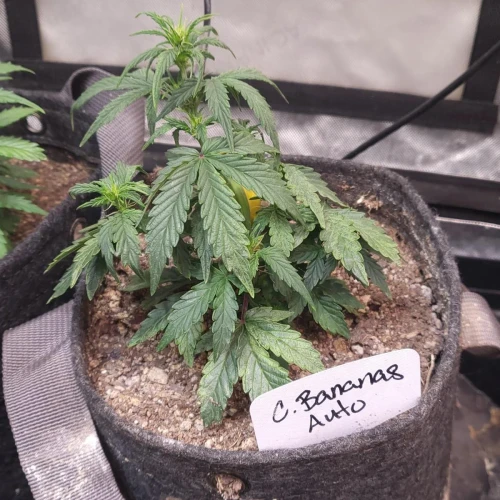
By week five, pre-flowers appeared and the light schedule shifted. With temperatures still sitting comfortably in the low-20 °C range, the transition into flower didn’t come with any shock or stall.
It was a quiet handoff from veg to bloom.
Weeks 6 & 7 — Transition to Early Flower
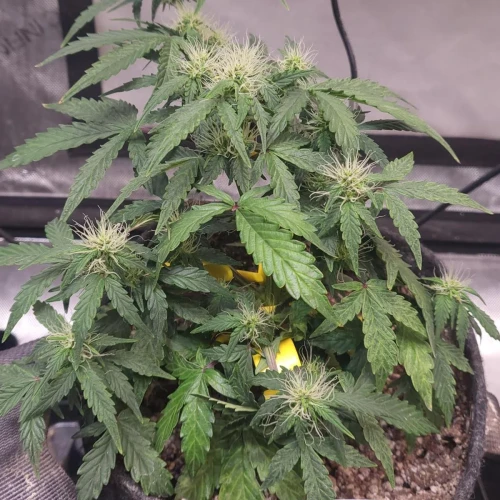
Flowering became obvious here. Pistils showed up across multiple sites and the plant began its natural autoflower stretch.
This was the point where low stress training was introduced, opening things up without bending the plant into submission.
Nothing about the leaf posture or growth suggested stress, and the stable temperatures helped keep the stretch controlled rather than chaotic.
Weeks 8 & 9 — Flowering
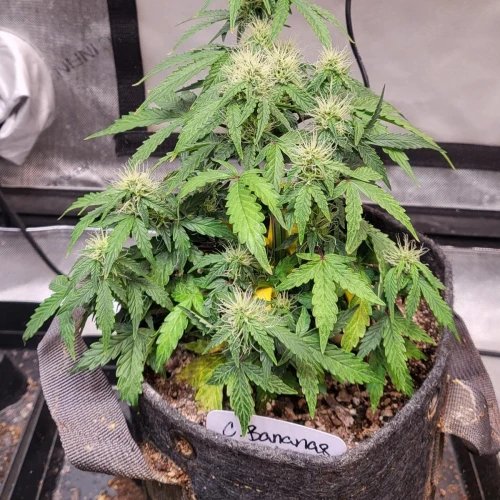
This is where the structure started paying rent. Bud sites lined the branches instead of stacking at the top, and the canopy stayed even thanks to earlier training.
The plant looked settled into flower now. Temperatures stayed consistent, and with no environmental swings, energy went straight into bud development instead of recovery.
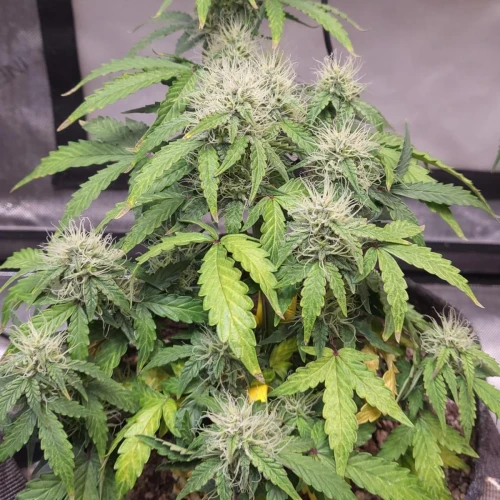
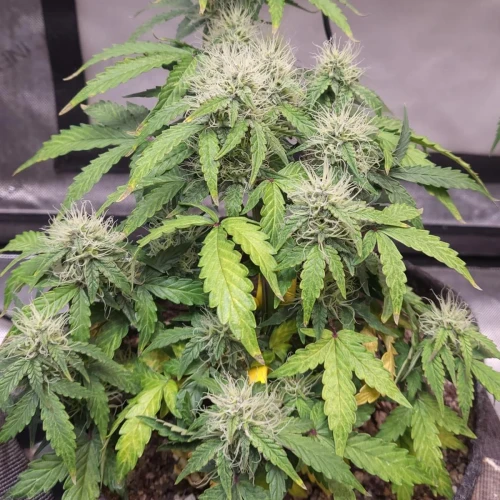
Weeks 10 & 11 — Mid to Late Flower
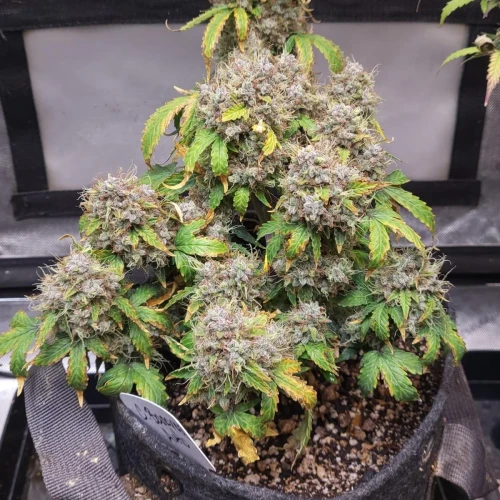
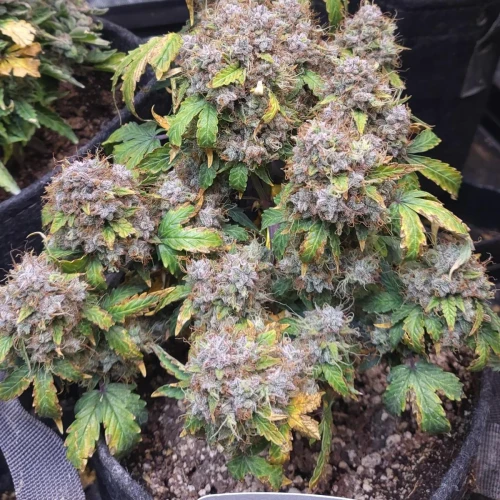
Vertical growth slowed to a stop. From here on out it was all about density and resin. Buds thickened, calyxes swelled, and trichomes became more noticeable by the week.
The environment stayed boring in the best way. Mid-20s during the day, cooler nights, nothing drifting far enough to force adjustments. The plant just kept stacking.
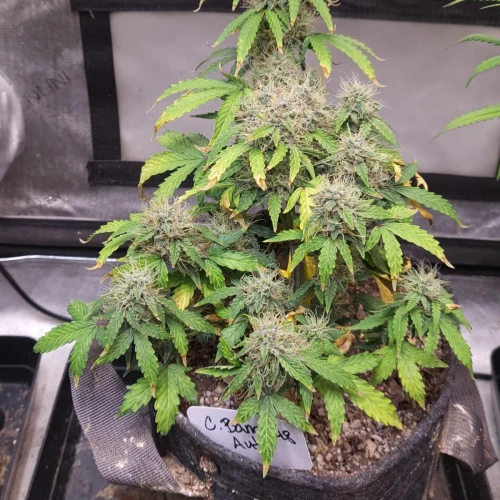
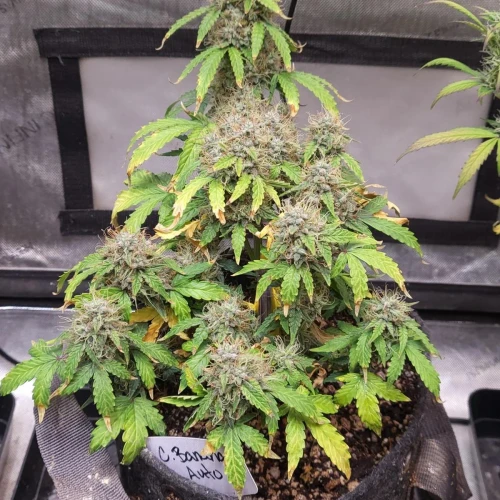
Weeks 12 & 13 — Late Flower & Harvest
By week twelve, everything slowed naturally. Buds shifted from stacking to ripening, and the plant’s posture said it was close. Temperatures stayed steady right through the finish, which helped avoid any late-flower stress.
Harvest came in week thirteen. The plant finished cleanly, without panic or collapse, closing out a full 13-week run that stayed controlled from start to finish.
Detailed Observations & Grower’s Reflections
This grow rewarded restraint. Early progress was slow, but stable temperatures and a hands-off approach kept the plant stress-free. Once flowering kicked in, everything lined up and stayed there.
Training was applied when it mattered, not when it was tempting, and the plant never looked like it was fighting the environment.
Challenges & Solutions
Cooler conditions early on slowed vegetative growth slightly, but consistency prevented problems. Rather than chasing faster growth, the grower held the line on environment and feeding, and the plant adapted on its own.
No pests, deficiencies, or emergency fixes were documented during the run.
C. Banana Auto: Final Result and Strain Review
No harvest weight was recorded publicly, wet or dry, so no yield claims are made.
What’s clear is that the plant completed the full cycle healthy, structured, and evenly developed, finishing exactly where a well-run autoflower should.
| Parameter | Result |
|---|---|
| Total Grow Time | 13 weeks |
| Training Used | Low Stress Training (LST) |
| Yield | Not publicly recorded |
| Difficulty | Easy |
| Overall Style | Calm, low-intervention indoor autoflower run |
Ready to get these results? Buy C.Banana Auto Seeds Here.