

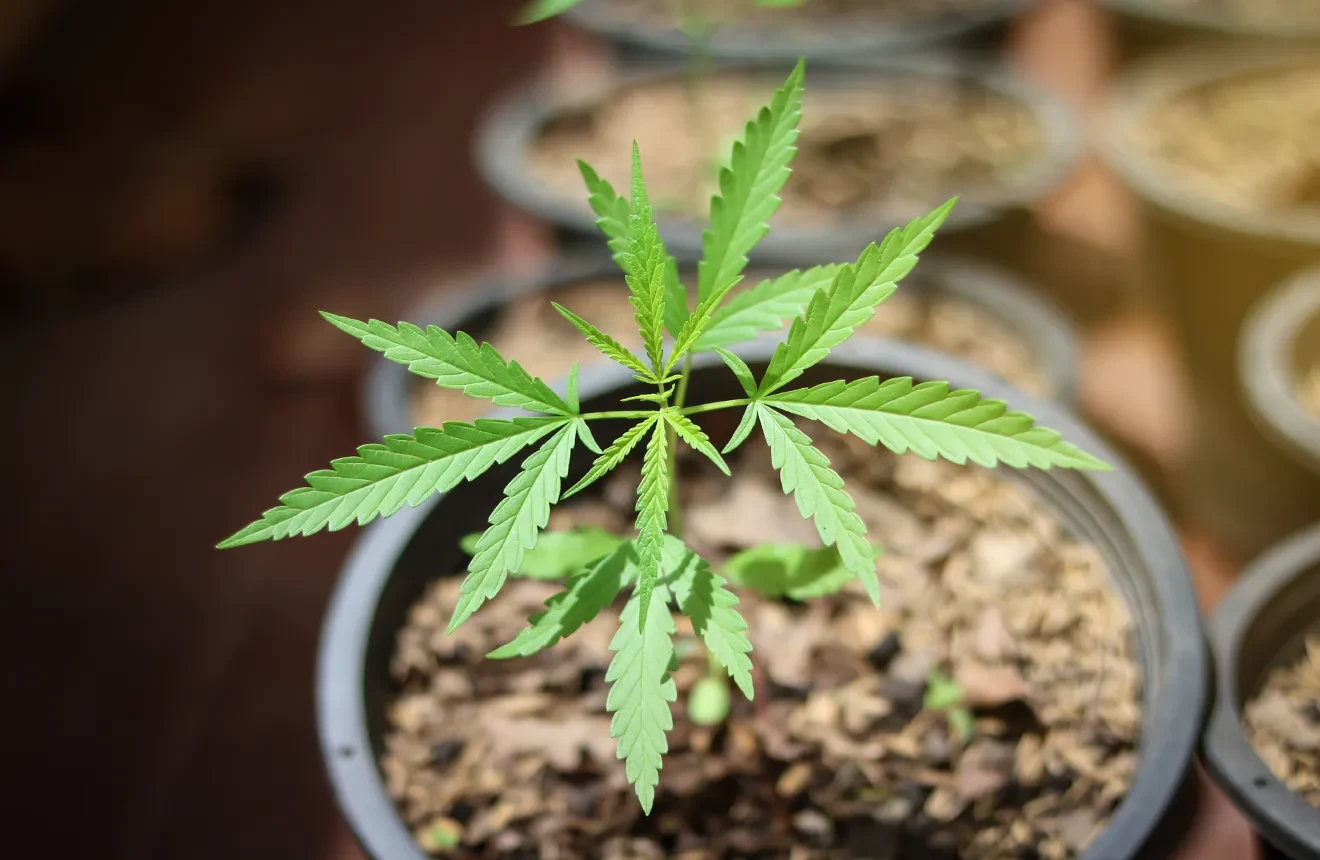
You walk into a grow shop and see a massive stack of pots. There are ten different sizes. Which one do you actually buy? It is a confusing moment for every new grower.
Picking the wrong pot can ruin your harvest before the seed even sprouts. If your pot is too small, your plant will stay tiny. If your pot is too big, the dirt stays wet for too long. You will drown the roots and kill the plant.
If you are just learning how to grow autoflowers, you need to get this right from day one.
By the end of this guide, you will know exactly what size and type of pot to buy today. No more guessing. Let's get your roots set up for a massive harvest.
Key Takeaways
- The sweet spot: A 3-gallon or 5-gallon pot is the perfect size for almost every indoor autoflower.
- Always choose fabric: Fabric pots let the roots breathe and stop you from overwatering your plants.
- Never transplant: Moving an autoflower shocks the roots. Always plant your seed directly into its final pot.
- Bigger is not better: A massive pot just holds too much water. It will slow down your plant and cause root rot.
Why Pot Size Matters So Much for Autoflowers
Autoflowers run on a very strict timer. Most of them only stay in the vegetative stage for three or four weeks. After that, they start making buds no matter what you do.
Because you have such a short window, the roots have to grow fast. There is a golden rule in weed growing. The size of the plant above the dirt always matches the size of the root ball below the dirt.
If you want a massive canopy full of heavy colas, you need a massive root system.
If you put your seed in a tiny pot, the roots will hit the walls in just a few days. When roots run out of room, they start circling the bottom of the pot. They choke themselves.
The plant panics, stops growing, and stays tiny forever. We call this being rootbound.
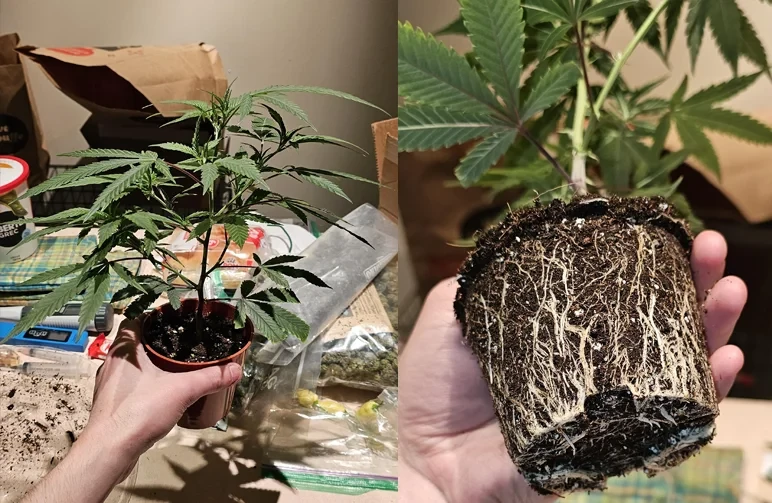
But you cannot just use a giant bathtub either. If the pot is way too big, the roots cannot drink all the water in the dirt. The soil stays cold and wet for days. The roots drown, suffocate, and rot away.
You have to find the perfect middle ground.
The Best Pot Size for Autoflowers (The Sweet Spot)
Stop guessing. The absolute best pot size for an autoflower is between 3 and 5 gallons (11 to 19 liters).
This is the Goldilocks zone. It gives the roots plenty of room to stretch out and build a strong engine for the plant. But it is also small enough that the dirt dries out quickly, which keeps fresh oxygen flowing to the roots.
Which one should you pick? That depends on your setup.
When to Use a 3-Gallon Pot
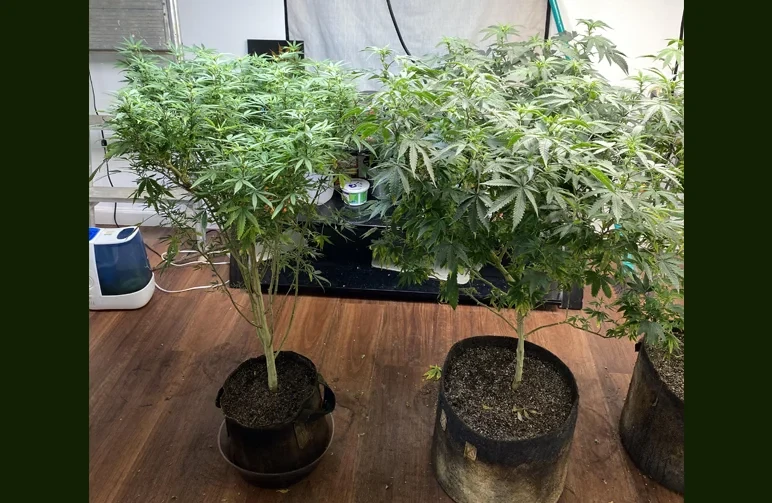
A 3-gallon pot is the proven champion for indoor growers.
It is perfect if you have a small grow tent or a closet setup. It is also the best choice if you want to grow three or four plants in the same space without crowding them.
Because the pot is smaller, the soil dries out faster. This means you get to water and feed the plant more often. More frequent feeding usually leads to faster, explosive growth.
When to Use a 5-Gallon Pot
A 5-gallon pot is great if you want to push a single plant to its absolute maximum size.
If you are growing a tall, sativa-heavy strain, it will need this extra room. It is also a very smart choice if you are growing outdoors.
The extra dirt holds more water, so the hot summer sun will not bake your roots and dry out your plant while you are at work.
Just remember that a 5-gallon pot takes up a lot of space. Do not try to cram four of these into a tiny beginner tent.
Does Your Soil Change the Pot Size?
What you put inside your pot actually changes the rules. Dirt and coco coir are not the same thing, and they treat roots very differently.
Growing in Soil
If you are growing in regular potting soil, your plant has to work for its meals. The nutrients are trapped in the dirt. The roots need room to stretch out, dig deep, and search for that food.
Because the roots need to explore, soil growers need bigger pots. If you are using soil, stick to the 3 to 5-gallon rule we just talked about.
Growing in Coco Coir
Coco coir is totally different. It looks like dirt, but it has absolutely zero food in it. You have to pour liquid nutrients over the roots every single day.
Because you are bringing the food right to the plant, the roots do not need to go searching for it. They can stay compact and still get everything they need.
If you grow in coco coir, you can easily use a smaller 2 or 3-gallon pot and still grow a massive plant.
Fabric Pots vs. Plastic Pots: Which is Better?
Let me save you a lot of headaches right now. Fabric pots absolutely destroy plastic pots when it comes to growing weed.
If you put a weed plant in a cheap plastic bucket, the roots grow outward until they hit the hard wall. With nowhere else to go, they start circling the bottom of the pot.
They wrap around each other and eventually choke the plant.
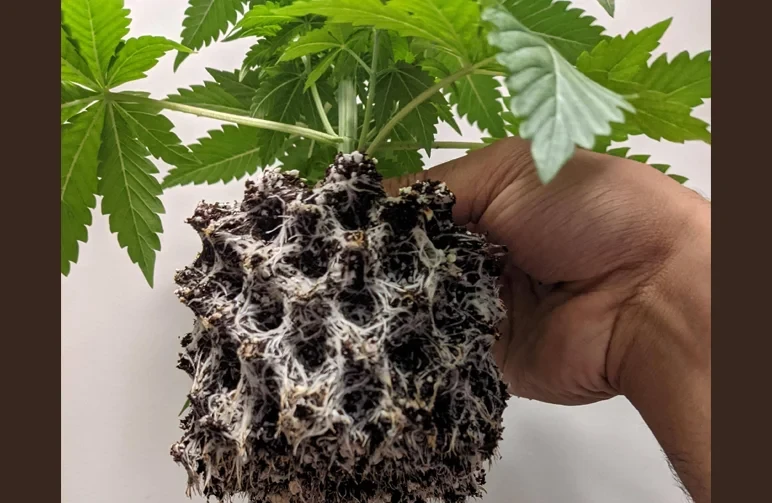
Fabric pots fix this problem completely through a trick called air pruning.
Because the pot is made of breathable felt, air passes right through the sides. When a root reaches the edge of the pot, it hits that dry air and stops growing.
The plant responds by shooting out dozens of new, tiny feeder roots from the center. Instead of one long, choking root, you get a massive, dense root ball.
Fabric pots also drain much faster. Overwatering is the number one way beginners kill their plants. A fabric pot lets the extra water run right out the bottom and evaporate through the sides.
It makes it incredibly hard to drown your roots.
Should You Transplant Autoflowers?
Absolutely not.
A lot of growers like to start their seeds in small plastic cups. When the plant gets a little bigger, they move it into a large pot. That works great for regular weed plants. It is a terrible idea for autoflowers.
When you move a plant from one pot to another, you disturb the roots. The plant goes into shock. It will completely stop growing for three or four days while it tries to heal.
Regular plants can handle this because you control their schedule. Autoflowers are on a strict timer. They do not have three days to waste. If you stunt an autoflower early on, it will stay small forever.
You will lose a massive chunk of your final yield.
The rule here is simple. Always plant your autoflower seed directly into its final pot. Fill your 3-gallon or 5-gallon fabric pot with dirt, make a small hole in the center, and drop your seed right in.
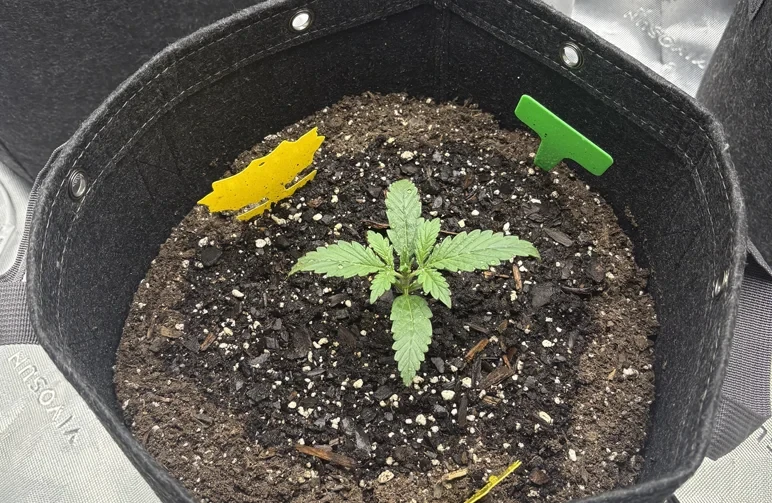
Leave it alone and let it grow.
Frequently Asked Questions
I get a lot of questions from new growers standing in the garden aisle. Let's clear up a few common worries so you can buy your pots and get to growing.
Can I grow an autoflower in a 1-gallon pot?
Yes, you can. But you will end up with a tiny micro-plant. The roots will run out of room in just a week or two. You will also have to water the plant every single day just to keep it alive.
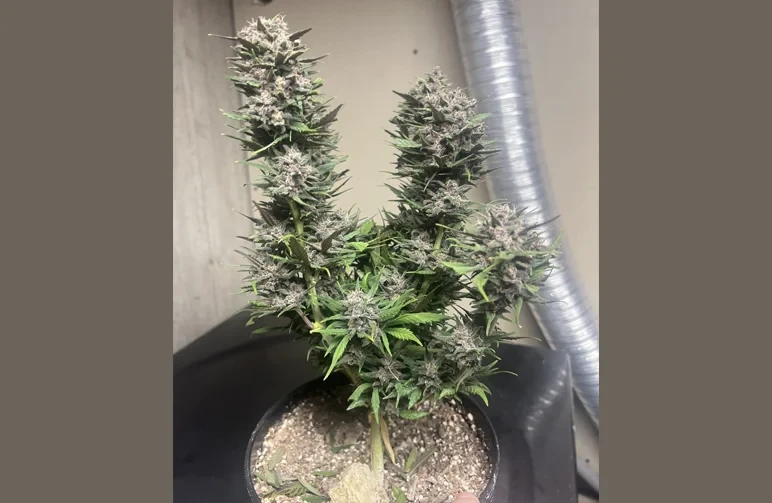
It is a fun experiment, but it is a terrible idea if you want big yields.
Is a 7-gallon pot too big?
Yes, it is way too big for an indoor autoflower. The plant will never live long enough to fill that much dirt with roots. The bottom half of the soil will stay wet and soggy for weeks.
This is a fast track to root rot. Save the massive pots for outdoor photoperiod plants. Stick to 3 or 5 gallons for your autos.
Do I need to put rocks at the bottom of the pot?
No. A lot of old-school gardeners do this to help with drainage. If you are using a fabric pot, it already drains perfectly. Putting rocks at the bottom just steals valuable space where your roots could be growing.
Fill the whole pot with your soil mix.
The Wrap Up
Picking the right pot size does not have to be a headache. Keep things simple.
Buy a 3-gallon or 5-gallon fabric pot.
Fill it with a light, airy soil mix, and plant your seed right in the center. Do not move it, and do not overwater it.
If you give your roots the perfect amount of space to breathe and grow, your plant will reward you with a massive, heavy harvest.
You have got this.