

Growing your own weed is an absolute blast. You pop a seed, dial in your lights, and a few months later, you are staring at jars full of sticky, homegrown buds. But what happens when you want to take things a step further?
What if you want to create your very own custom strain?
I know what you are probably thinking. Cannabis genetics and plant breeding sound like complicated science. You picture guys in white lab coats squinting through microscopes.
To be totally honest, it can feel a little overwhelming for a normal home grower.
But here is the good news. You do not need a biology degree to breed your own cannabis. You just need a basic understanding of how the plants actually work.
I have spent years tinkering in the grow room, and I promise you, it is a lot easier than it looks.
I am going to break down exactly how weed genetics function, explain the real difference between genotypes and phenotypes, and show you exactly how to breed your very own cannabis seeds right at home.
Key Takeaways
- Genetics are the blueprint: They dictate whether your plant will grow tall like a Sativa, short like an Indica, or flower automatically like a Ruderalis.
- Genotype vs. Phenotype: A genotype is the hidden genetic code inside the seed. A phenotype is how the plant actually looks and grows based on its environment.
- Breeding is simple: You do not need a lab. You just need to collect pollen from a strong male plant and brush it onto the buds of a female plant.
- Backcrossing locks it in: Breeding your new hybrid back with one of its parents stabilizes the genetics, ensuring every future seed grows exactly the same way.
What Are Cannabis Genetics?
Think of genetics as the DNA blueprint for your weed plant. Before you even put a seed in the dirt, its genetics have already decided what it can become.
This blueprint controls how tall the plant will grow, what the buds will smell like, and how much THC it can produce.
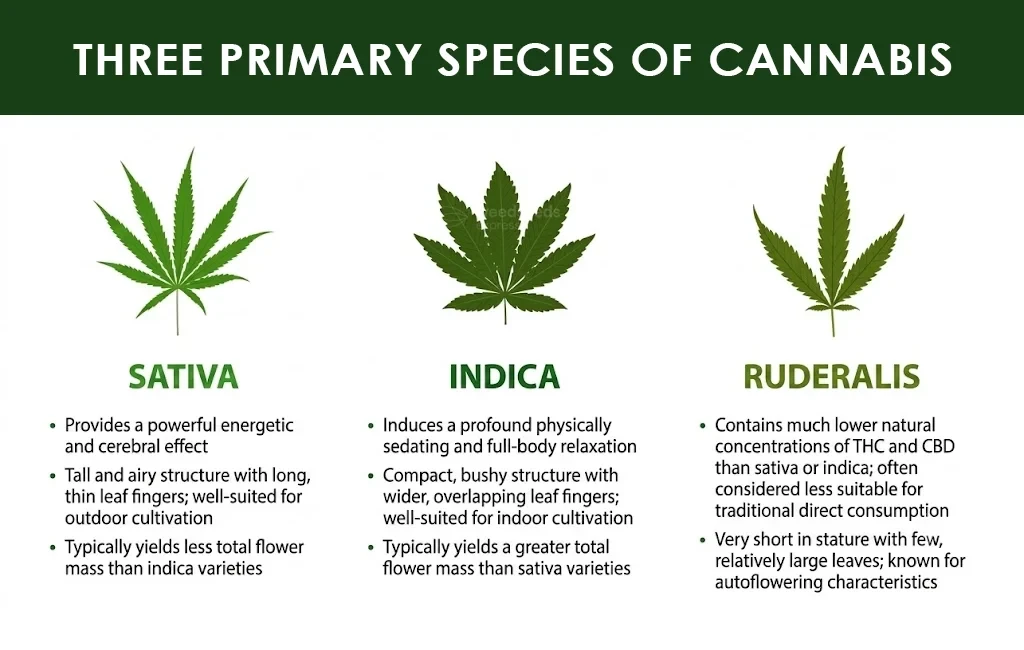
To understand weed genetics, you need to know the three main branches of the cannabis family tree. Every strain you have ever smoked comes from these three groups.
- Sativa: Sativa plants are the giants of the weed world. They grow tall and skinny with long, thin leaves. They take a long time to finish flowering. Growers love them because they produce a very heady, energetic high.
- Indica: Indica plants are the exact opposite. They grow short, fat, and bushy with wide leaves. They flower much faster than Sativas. The buds are dense and deliver a heavy, relaxing body stone. If you want to get glued to the couch, you want an Indica.
- Ruderalis: Ruderalis is the weird cousin of the cannabis family. These plants are tiny and do not produce much THC on their own. But they have a superpower. They flower automatically based on how old they are, no matter what your light schedule is doing.
Every strain you have ever smoked comes from these three core groups.
If you want to trace these traits back to their roots and look at the wild, untouched ancestors of modern cannabis, you can explore our deep dive into what landrace cannabis strains are and why they are so special.
Here is the reality of modern growing. If you buy seeds today, you will almost never find a pure Sativa or a pure Indica. Almost all modern weed strains are hybrids.
Breeders mix these families together to get the best traits of each, which is especially important if you are breeding or shopping for high-CBD or high-THC genetics for your medicine.
They might cross a Sativa with an Indica to get a plant that grows short but still gives you an energetic high. And when they mix in some Ruderalis genetics, that is exactly how we get autoflowering seeds.
Genotype vs Phenotype: What is the Difference?
This is where a lot of new growers get confused. You hear these two words thrown around on weed forums all the time. Let's make it crystal clear.
What is a Genotype?
A genotype is the hidden genetic code inside your seed. Think of it like a menu at a restaurant. The menu shows you all the possible meals you can order, but it is not the actual food.
A seed's genotype holds the potential for everything the plant can become. It carries all the traits passed down from the mother and the father.
What is a Phenotype?
A phenotype is how the plant actually looks and grows in the real world. It is the physical expression of that hidden genetic code.
There is a simple rule to remember here:
Genotype + Environment = Phenotype
Let's look at a real example. Say you buy a pack of ten seeds of the exact same strain. They all have the same parents. You plant them all in your grow tent. But as they grow, you notice they do not look exactly identical.
One plant turns purple because it is sitting near a cold air vent. Another plant stretches a foot taller because it is directly under your main grow light. Another one might smell a little more like lemons than the rest.
Those physical differences are the phenotypes.
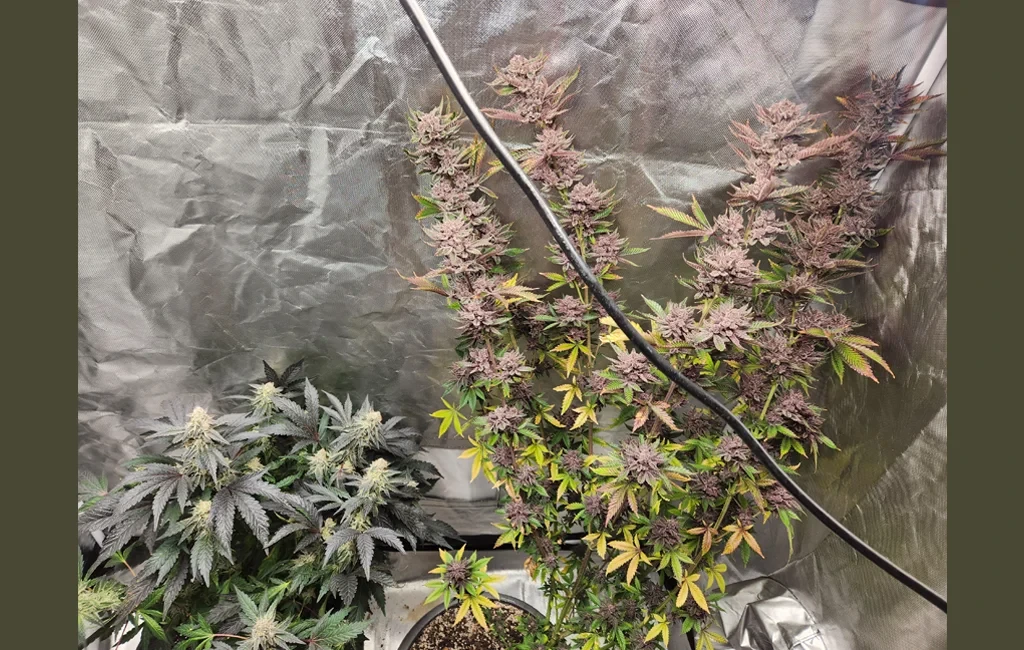
The environment pulled different traits out of the genetic menu. This is exactly why growers hunt for the perfect phenotype.
When they find that one special plant that grows perfectly in their specific room, they take clones of it to keep those exact traits forever.
Why Do Growers Breed Cannabis?
Why go through the trouble of making seeds when you can just buy them online? It is a fair question. But once you get a few successful harvests under your belt, you start wanting more control over your garden.
Breeding your own weed gives you that power.
Here is why so many growers take the leap into breeding.
- Chasing flavors and smells: You might have a strain that tastes like sweet berries, but you want to give it a heavy gas kick.
Breeding lets you mix those terpene profiles to create something totally unique, though you will also need to dial in your grow room environment if you want to grow the best tasting strains by maximizing those flavors. - Boosting yields: Maybe you have a plant that tastes amazing but produces tiny buds. You can cross it with a heavy yielder like Big Bud. The goal is to get that top-shelf taste on massive, heavy colas.
- Building resistance: Every grow room and outdoor climate is different. If you struggle with high humidity, you can breed plants that naturally fight off mold and bud rot. You are building a strain custom-made for your exact setup.
- Saving money: Buying premium seeds can get expensive. Once you learn how to breed, a single successful run can give you hundreds or even thousands of seeds. You will never have to pay for seeds again.
The Basics of Cannabis Breeding
Let's keep the biology super simple. You do not need to be a scientist to understand how weed plants reproduce.
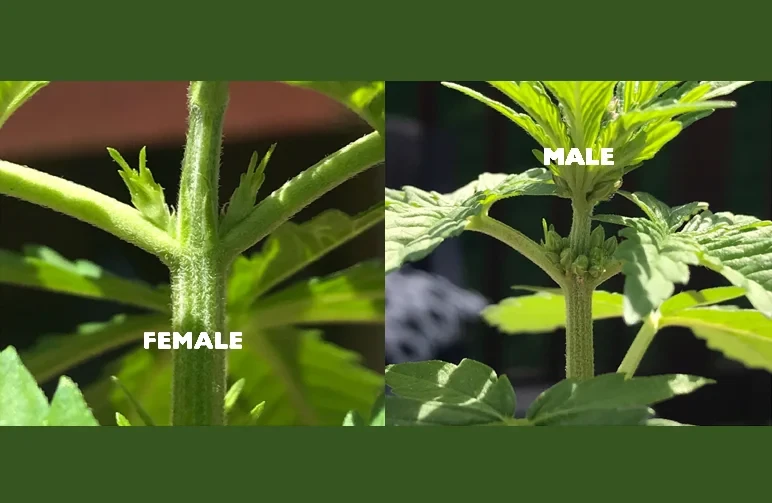
Cannabis is a dioecious plant. That is just a fancy word that means the plants are either male or female.
Female Plants
These are the plants we all know and love. Female plants grow the big, sticky buds that we want to harvest and smoke. If a female plant never sees a male, it will spend all its energy making THC and resin. This is called sinsemilla, which just means weed without seeds.
Male Plants
Male plants do not grow buds. Instead, they grow little balls called pollen sacs. When a male plant gets old enough, these sacs pop open. They release a fine yellow dust into the air. That dust is the pollen.
Here is how the breeding process works. If male pollen floats through the air and lands on the white hairs of a female bud, the female plant gets pollinated.
Once a female is pollinated, her goals change. She stops focusing on making THC and sticky resin. Instead, she puts all her energy into growing seeds right inside her buds.
That is the entire secret to breeding. You are just taking the pollen from a male and putting it on a female.
How to Breed Your Own Weed Strain (Step by Step)
Let's get ready to play Mother Nature. You do not need any fancy lab equipment to do this. Here is exactly how to make your own seeds at home.
Step 1: Pick your parent plants
You need a great mom and a great dad. The female plant is easy to pick. Just find the one with the biggest, tastiest buds. But how do you pick a good male since he doesn't grow buds?
You want to look for thick stems, fast growth, and a tight structure. You should also rub his stem with your fingers. If it leaves a strong, stinky smell on your hands, that is a keeper.
Step 2: Separate the male
This is a massive rule. The second you see those male pollen sacs forming, get that plant out of your main grow room. Put him in a totally different room or a separate small tent.
If you leave him with the girls, his pollen will blow everywhere. Your entire crop will turn into seeds, and your smokable harvest will be ruined.
Step 3: Collect the pollen
When the male pollen sacs look like they are about to pop open, it is time to harvest the dust. Carefully place a clean ziplock bag over the branch. Give the branch a gentle shake. The yellow pollen will fall right into the bag.
Step 4: Pollinate the female
Here is a great trick. You don't need to seed your whole female plant. You can grow seeds on just one branch and keep the rest of the plant as seedless weed to smoke. First, turn off all your fans so the pollen doesn't blow around.
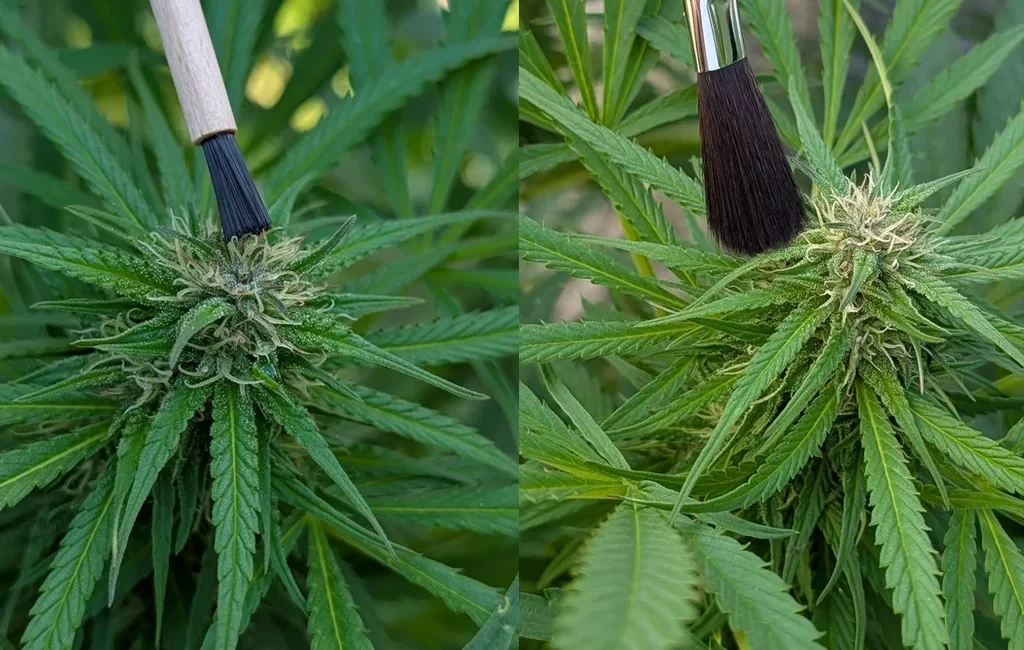
Take a small, dry paintbrush and dip it into your bag of pollen. Gently paint the pollen onto the white hairs of a few lower buds.
Step 5: Harvest your new seeds
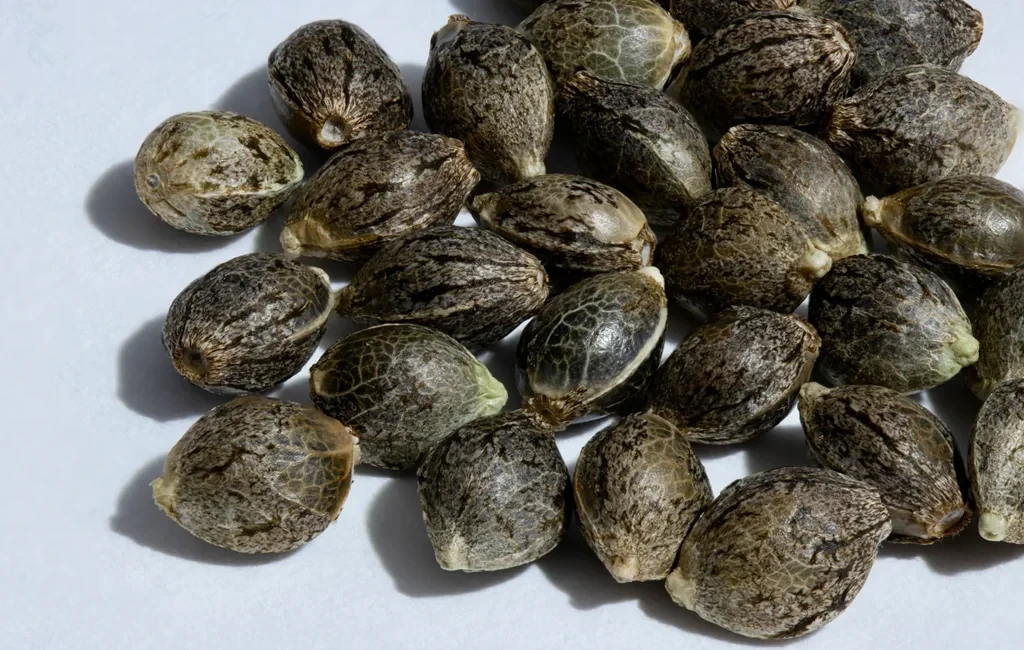
Now you just wait. It usually takes about 4 to 6 weeks for the seeds to fully develop inside the buds. You will know they are ready when the calyxes (the little seed pods) start to split open.
The seeds should look dark brown, often with dark stripes, and they should feel hard to the touch. If they are pale green or soft, they need more time.
Once you master this basic pollination process and start harvesting regular seeds, you can take things a step further by learning how to make your own feminized seeds at home so you never have to deal with male plants again.
What is Backcrossing? (Making Your Strain Stable)
When you plant those new seeds you just made, you might get a surprise. They will not all look the same.
This first batch of seeds is called the F1 generation. Because you just mixed two totally different plants together, the genetics are all over the place. You will see a whole bunch of different phenotypes.
Some plants might look exactly like the mom. Some might look like the dad. Some might look like a weird mix of both.
If you want every single seed to grow exactly the same way, you need to stabilize the genetics. This is where a trick called backcrossing comes in.
Backcrossing is exactly what it sounds like.
You take one of your new hybrid plants and breed it back with one of its original parents.
Why do we do this? It locks in the specific traits you want. Let's say your new hybrid has the exact fruity taste you wanted, but it grows a little too tall. You can breed it back with the short Indica parent.
This reinforces that short height trait in the genetic code.
Professional breeders do this a few times over several generations. By the time they are done, the genetics are completely locked in.
That means every time you pop a seed from that batch, you know exactly what kind of plant is going to grow.
Once you start crossing plants and saving seeds, it helps to understand how those generations are classified, from standard crosses to complex variations covered in our guide on understanding F1, F2, and polyhybrid cannabis seeds.
Cannabis Genetics and Breeding FAQ
Let's clear up a few of the most common questions new growers ask when they start making their own seeds.
Can I breed autoflowers?
Yes, you absolutely can. But it takes some careful timing. Autoflowers are on a strict genetic timer. You cannot force them to stay in the vegetative stage like normal photoperiod plants.
You have to time your grow so the male plant drops his pollen right when the female plant is growing her white hairs. It takes a little practice, but it is definitely doable.
How long do cannabis seeds take to mature?
Once you paint the pollen onto your female buds, the clock starts. It usually takes about 4 to 6 weeks for the seeds to fully ripen. Do not rush this step. You want to wait until the seeds are hard and dark brown.
If you pick them too early, they will be pale and squishy, and they will never sprout.
How should I store my new seeds?
Seeds are living things. Heat, light, and moisture will ruin them fast. You want to keep them in a cool, dark, and dry place. Putting them inside a glass mason jar in the back of your fridge is the perfect setup.
Just drop a small silica gel packet into the jar to soak up any extra moisture, and those seeds will stay good for years.
The Wrap Up
Breeding your own cannabis might seem a little scary at first. But once you get your hands dirty, you will see how fun it really is. It is the ultimate way to take control of your grow room.
Just remember that breeding takes patience. You will probably make a few mistakes along the way. Maybe you miss the pollen window, or maybe a batch of seeds does not sprout.
That is totally fine. Every mistake makes you a better grower.
The best way to learn is by doing. Grab a pack of regular seeds for your next run. Find a strong male, pick out your favorite female, and start experimenting in your own garden today.
You might just create the next legendary weed strain.