

You can nail the basics and still end up with mid if one piece of the potency puzzle is off. We've all been there, sticky buds that smell promising, but the effect? Meh.
The good news: what determines weed potency isn't magic. It's a chain of controllable factors that starts with genetics and runs through light, climate, nutrition, training, harvest timing, drying, curing, and storage.
Miss a link and you cap your results. Dial the chain and you get top-shelf. In this guide, we'll translate lab-speak into plain English and give you hard targets you can actually hit at home.
No bro-science, no hand-wavy "more light bro." Real numbers, real methods, and our go-to safety rails so you can grow confidently.
And yes, we'll also show you how to pick cannabis seeds that can actually reach high THC and rich terpenes, because you can't tune a minivan into a race car.
Key Takeaways
- Weed potency starts with genetics, so choose proven photoperiod or modern autoflower seeds from reputable sources and expect phenotype variation.
- Dial light correctly: target 300–600 PPFD in veg and 800–1,000 PPFD in flower (higher only with CO₂ and sealed rooms), and balance blue/red spectrum without causing light stress.
- Run climate by the numbers: keep flower temps 68 °F–75.2 °F, RH 45–55%, and VPD around 1.0–1.4 kPa with slightly cooler nights to preserve terpenes.
- Feed for resin: maintain medium-specific pH (soil ~6.5, coco 5.7–6.1, hydro 5.6–6.0), sensible EC, and don’t neglect sulfur, magnesium, calcium, and root oxygenation.
- Train for an even canopy (topping, LST, ScrOG) to put more buds in the PPFD sweet spot and avoid bad stress like heat spikes, overwatering, light burn, and light leaks.
- Harvest on trichomes (mostly cloudy with 5–15% amber), then dry slow at 60°F (15:celsius]–60.8 °F)/60% RH for 7–14 days and cure at 58–62% RH to lock in weed potency and terpene-rich flavor.
What “Potency” Really Means
Cannabinoids, Terpenes, And The Entourage Effect
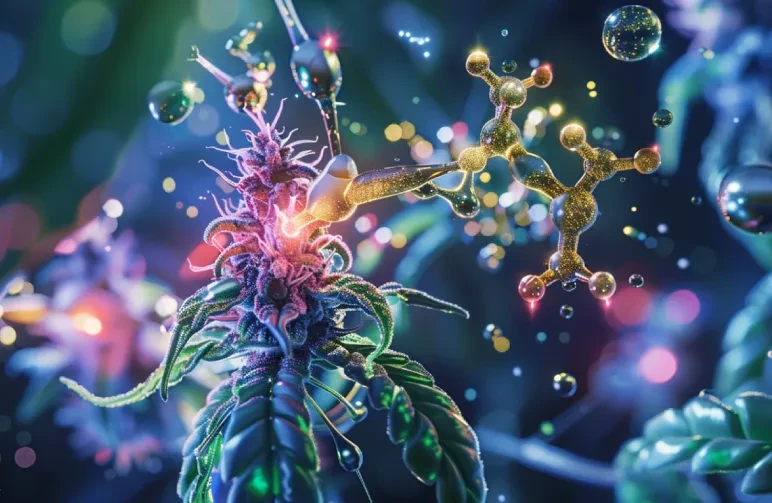
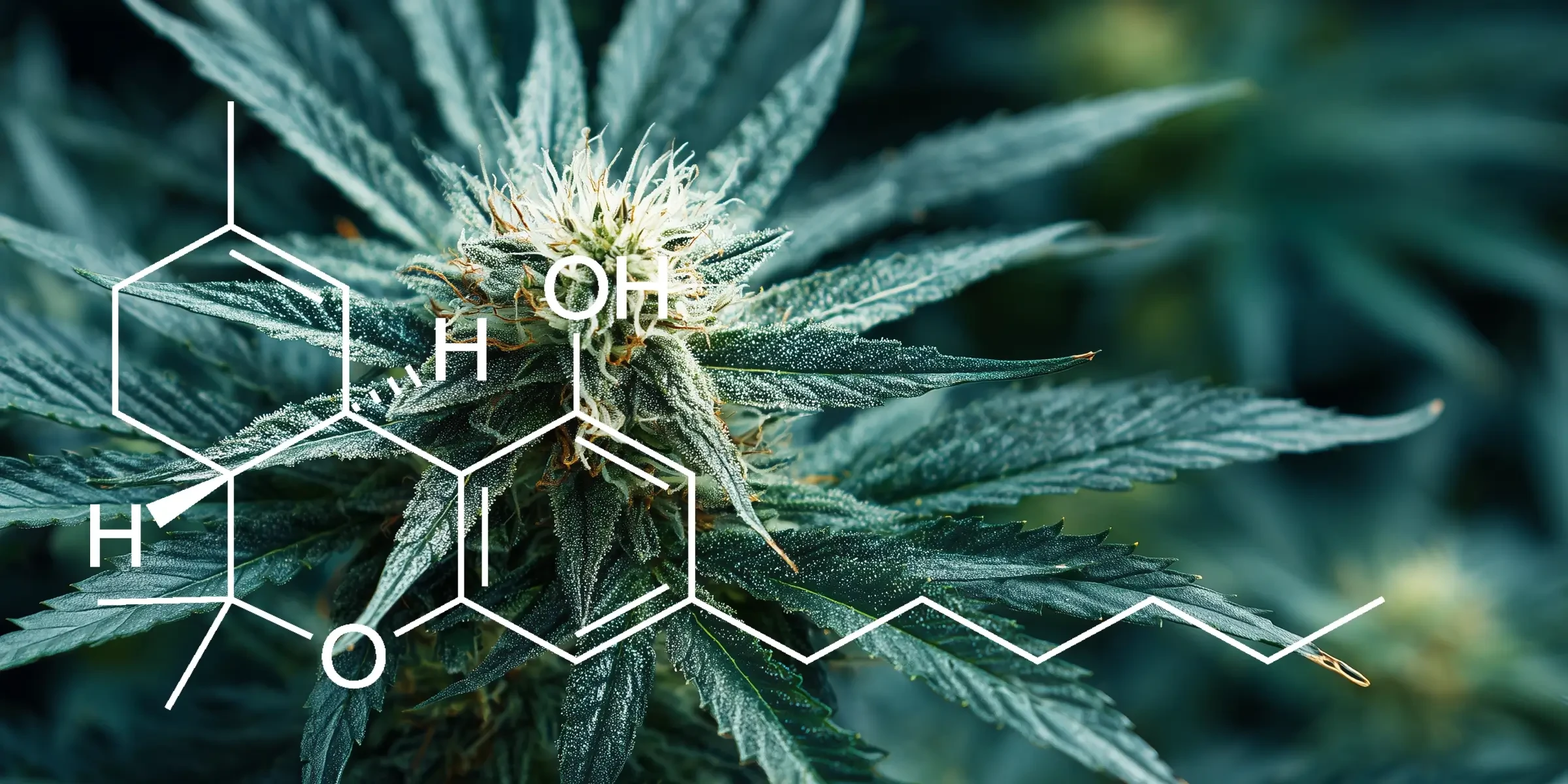
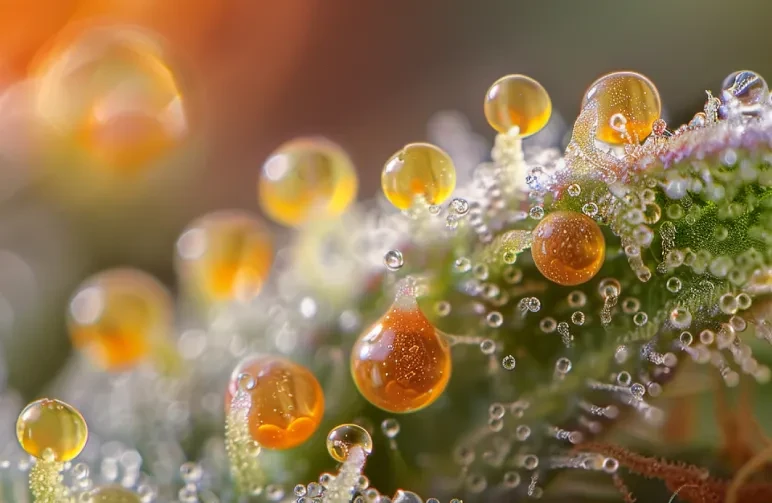
When people say "potent," they usually mean the bud hits hard and lasts. On paper, that's mostly THC (delta-9-tetrahydrocannabinol), the main psychoactive cannabinoid.
But potency isn't just THC%. Other cannabinoids like CBD, CBG, and CBN modulate the ride, and terpenes (the aromatic oils, think myrcene, limonene, caryophyllene) shape how that THC feels.
The "entourage effect" is the idea that cannabinoids and terpenes work together, like a band. THC is the lead singer, but without the drummer (terpenes) and the bass (minor cannabinoids), the song falls flat.
That's why a 22% THC strain can feel stronger than a 28% one if its terpene profile is richer and better preserved.
How Potency Is Measured (THC%, Total Cannabinoids, And Limits Of Home Tests)
Lab potency is typically reported as THC% by weight, total cannabinoids (THC + others), and sometimes terpene %. Labs use chromatography, advanced machines, to separate and measure compounds. Home testers and color strips exist, but they're rough estimates at best, handy for curiosity, not decisions. The best at-home "test" is a proper grow and post-harvest protocol, then sending a sample to a reputable lab if you need exact numbers.
Quick note: THC exists in flowers mostly as THCA (the acid form). Heat (smoking, vaping, decarbing) converts THCA to THC. Labs often report "Total THC," which accounts for this conversion. If you see surprisingly low numbers on a home test, you likely ran into measurement limits, not a weak plant.
Potency Versus Perceived Strength (Why Aroma And Tolerance Matter)
Perceived strength is the experience. Two main variables skew it: terpenes and tolerance. Terpenes guide onset and character, myrcene can be sedating, limonene bright and euphoric, caryophyllene spicy and grounding.
Your tolerance also matters, a daily heavy user might shrug at 25% THC, while a new user might find 18% "too much." That's why we focus on maximizing cannabinoids and safeguarding terpenes.
If your dry/cure nukes terps, your "strong" flower can smoke flat. Preserve aroma, and the same THC% suddenly feels like a rocket.
Genetics Set The Ceiling: Choosing Seeds That Can Actually Hit Top-Shelf
Photoperiod Vs. Autoflower: Potency Trade-Offs And Use Cases
Think of genetics as the engine. Nutrients are fuel, light is throttle. You can't race-fuel a lawnmower into a Ferrari.
Photoperiod strains (they flower when you change the light cycle to 12 hours of darkness) generally have the highest potential for THC and complex terpene profiles.
Autoflowers (they flower by age, not light cycle) have caught up a lot, modern autos can hit 20–27% THC, but the absolute ceiling still tends to favor elite photoperiods.
Autos shine for speed, stealth, and ease: 10–12 weeks seed-to-harvest, single light schedule, and smaller size.
Use cases:
- Want max control and the highest ceiling? Photoperiod feminized seeds.
- Need fast, forgiving runs or limited height? Autoflower feminized seeds.
Phenotypes, Stabilization, And Hunting Winners
A "strain" is a family: a phenotype is a specific child from that family. Even with stabilized genetics, plants can vary in structure, aroma, and potency.
Breeders stabilize lines through selection over generations, but phenotype variation is normal. If you start 3–5 seeds and pick the best performer, you're "pheno hunting."
Beginners don't need a huge hunt, just know some variation is expected. If one plant outshines its sisters in frost and aroma, that's your keeper.
Seed Source Matters: How To Vet A Legit Seed Bank
Seed source can make or break potency. Look for:
- Proven breeders and transparent lineage info.
- Germination guarantee (real replacement policy, not fluff).
- Fresh stock and proper storage.
- Customer reviews with grow pics and lab results when possible.
WeedSeedsExpress checks those boxes: vetted breeders, feminized and autoflower options, a robust germination guarantee, and clear strain data (expected THC%, terpene notes, flowering time).
If you're chasing top-shelf, start with legit genetics, don't gamble on shady listings with stolen photos.
Light Intensity And Spectrum: The Biggest Potency Lever Indoors
PPFD And DLI, In Plain English (Targets For Veg And Flower)
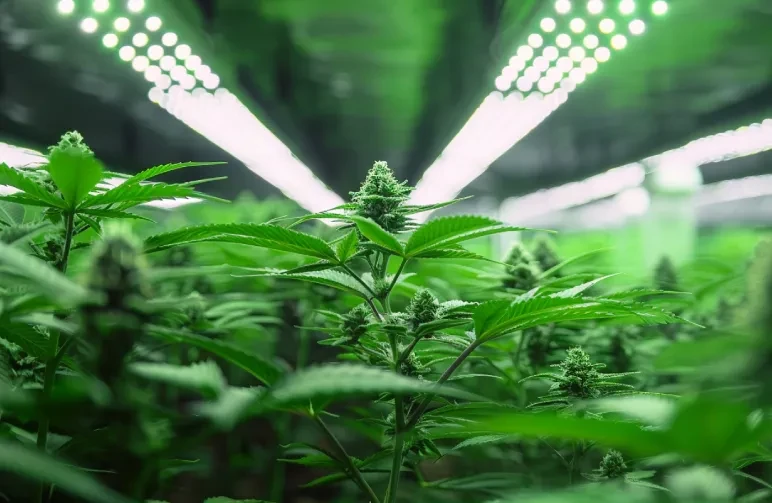
- PPFD (Photosynthetic Photon Flux Density): how many useful light photons hit a square meter each second, measured in µmol/m²/s. Think of it as "brightness plants can use."
- DLI (Daily Light Integral): total photons per day. It's your plant's daily calorie count from light.
Targets:
- Veg: 300–600 µmol/m²/s PPFD, DLI around 15–30 mol/day (18 hours on).
- Early flower (weeks 1–3): 600–800 PPFD.
- Mid-to-late flower: 800–1,000 PPFD for most home grows without added CO₂.
If you add CO₂ (we'll cover when), you can push 1,100–1,200 PPFD safely with correct temps and feeding.
More light than the plant can process leads to bleaching or foxtailing, white tops that aren't more potent. Watch the plant, not just the meter.
Practical LED Setup: Real-Watt Guidelines, Hanging Height, And Dimming
Ignore inflated "equivalent" claims. Use real watts from the wall and PPFD maps from the manufacturer.
- Small tent (2×2 ft): 150–200 real watts.
- 2×4 ft: 240–320 watts.
- 3×3 ft: 240–350 watts.
- 4×4 ft: 400–500 watts (high-efficiency LEDs) up to ~600 watts for dense canopies.
Hanging height: start high in veg (24–30 inches), drop to 14–18 inches in flower depending on intensity. Use a dimmer, keep canopy PPFD within targets, not your ego.
Leaf-edge tacoing, bleaching, or crispy tips with normal EC often means light stress, not nutes.
Spectrum Notes: Blue For Structure, Red For Yield, UV/Deep Blue For Resin
- Blue light (400–500 nm): tighter internodes, stronger structure, better stomatal control. Great for veg and early flower.
- Red light (600–700 nm): drives photosynthesis hard, think yield and flower mass.
- Far-red (700–750 nm): influences shade response, can extend leaf expansion and speed transition to flower when used carefully.
- UV-A/deep blue: small doses can nudge resin and terpene production. Don't cook your plants, 5–10% UV-A exposure for 2–3 hours near midday cycle is plenty with consumer bars.
If you don't have UV, don't stress: intensity + correct climate are the primary potency movers.
Climate Control: Temperature, Humidity, And VPD Drive Resin Production
Ideal Ranges By Stage (Veg, Early Flower, Late Flower)
- Veg: 75.2 °F–80.6 °F, 55–65% RH.
- Early flower (stretch): 71.6 °F–78.8 °F, 50–60% RH.
- Mid/late flower: 68 °F–75.2 °F, 45–55% RH. Aim a touch cooler nights (by [1.5:celsius]-37.4 °F) to preserve terpenes.
These ranges keep stomata happy and metabolism humming. Too hot cooks terps: too cold slows enzymes and can stunt resin production.
VPD Explained Simply And How To Hit 1.0–1.4 kPa
VPD = Vapor Pressure Deficit. Think of it as the plant's comfort zone for water movement. Low VPD (air too humid) means leaves can't transpire well, nutrients stall.
High VPD (air too dry) means plants lose water too fast, stress, clawing, and crispy edges. For flower, a VPD of 1.0–1.4 kPa is your sweet spot. How to get there:
- Set room temp first.
- Adjust RH with a humidifier or dehumidifier until your VPD chart says 1.0–1.4 kPa.
- Use oscillating fans to prevent microclimates: keep leaves gently dancing, not flapping.
CO2: When It Helps Potency And When To Skip It
CO₂ lets plants process more light, like upgrading the engine's air intake. It shines when:
- You've dialed everything else (light, temp, RH, nutrition, pH).
- You can keep temps 77 °F–82.4 °F and PPFD 900–1,100.
- You can seal the space and hold 900–1,200 ppm CO₂ safely.
Skip CO₂ if your environment drifts, you can't seal the room, or your PPFD is under ~800. Otherwise you're buying premium fuel for a stock engine idling at a red light.
Nutrition, pH, And Root Health: Fuel The Chemistry, Avoid Lockout
NPK And Micronutrients For Potency (Sulfur, Magnesium, And Friends)
NPK = Nitrogen (N), Phosphorus (P), Potassium (K). Easy memory:
- Veg: more N for leaf/stem growth.
- Flower: more P and K for bud development and enzyme activity.
But potency leans heavily on the supporting cast:
- Sulfur (S): critical for terpene synthesis, sulfur helps build those smelly molecules we love.
- Magnesium (Mg): core of chlorophyll: low Mg leads to pale interveinal yellowing and lower energy production.
- Calcium (Ca): cell walls and stress resistance: helps prevent bud rot-prone tissue.
- Micronutrients (iron, manganese, zinc, boron, copper, molybdenum): tiny amounts, big roles in enzyme reactions.
Use a complete cannabis nutrient line and don't skip Cal-Mag if you grow under LEDs or in coco.
EC/PPM And pH Targets (Soil, Coco, Hydro) To Keep Nutrients Available
- EC/PPM measures solution strength (how much fertilizer is dissolved). Too low = hungry plants. Too high = salt buildup and lockout.
- pH controls what nutrients are actually available at the root. Wrong pH = elements are present but locked away.
Targets:
- Soil: pH 6.2–6.8 (sweet spot ~6.5). EC in flower typically 1.6–2.0 mS/cm (800–1,000 ppm 500-scale) depending on strain.
- Coco: pH 5.7–6.1. EC often 1.8–2.2 (900–1,100 ppm 500-scale). Feed every watering to 10–20% runoff.
- Hydro (DWC): pH 5.6–6.0. EC ranges 1.6–2.2 depending on plant size and light level. Keep water temps 64.4 °F–68 °F to hold oxygen.
If leaves claw and tips burn with a high runoff EC, you're overfeeding. If pale and slow with low runoff EC, feed up. Always adjust in small steps.
Roots And Microbes: Oxygen, Drainage, And Beneficial Biology
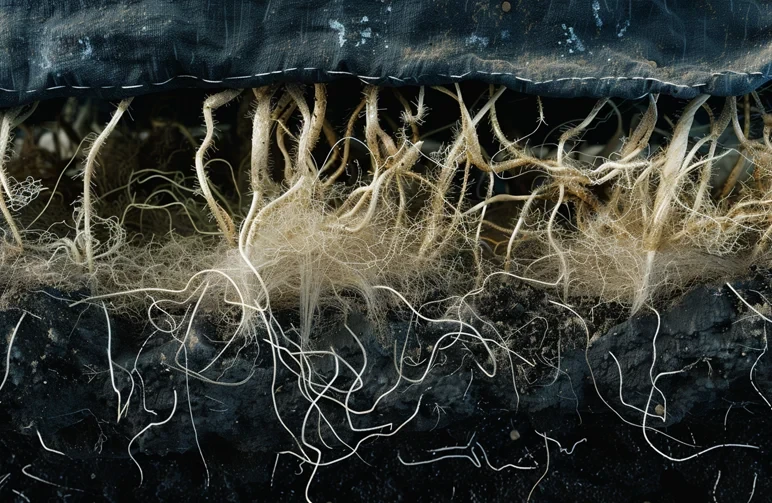
Potency starts in the roots. Oxygenated, healthy roots drive the chemistry that builds cannabinoids and terps.
- Pots: Fabric pots or air-pots prevent overwatering and boost oxygen.
- Medium: Light, airy mix, add 20–30% perlite to soil or use buffered coco.
- Watering: Fully saturate, then let the top inch dry in soil. In coco, irrigate little-and-often to runoff.
- Microbes: Mycorrhizae and beneficial bacteria help nutrient uptake and stress resilience. In living soil, don't sterilize, feed the soil with compost teas or balanced dry amendments. In hydro, keep it clean or run sterile, pick a lane, don't mix.
Training, Canopy Management, And Stress: More Light On More Buds
LST, Topping, And ScrOG Basics For Even Canopies
Training spreads light across more bud sites. That's free potency because more flowers sit in the PPFD sweet spot.
- Topping: Cut the main tip above node 3–5 in veg to create more mains.
- LST (Low-Stress Training): Gently bend and tie branches to open the plant and level the canopy.
- ScrOG (Screen of Green): Use a net 10–12 inches above the pots: weave branches to fill 70–80% before flip. You'll get uniform tops bathing in equal light, chef's kiss.
Autos? You can LST, but be gentle and early (days 14–28). Skip topping unless you're experienced: autos don't have time to recover.
Defoliation Timing Without Tanking Yield Or Potency
Leaves are solar panels. Remove too many, and you cut power. Smart defol rules:
- Veg: Light thinning to expose sites and boost airflow.
- Day 21 of flower: Moderate strip of large fans blocking multiple sites.
- Day 42 (optional): Light cleanup if canopy is dense.
Never go ham on autos. And if a plant looks stressed, postpone defol, health first.
Avoiding Bad Stress: Heat, Overwatering, Light Burn, And Herms
Bad stress wrecks resin production:
- Heat: Over 82.4 °F–84.2 °F late flower degrades terps: buds can get airy.
- Overwatering: Roots suffocate: leaves droop like overcooked pasta.
- Light burn: Bleached tops, brittle sugar leaves.
- Light leaks: Can trigger hermaphrodites (male flowers on female plants). Check tent zippers and indicator LEDs.
Use a timer for lights, a hygrometer at canopy level, and keep a gentle breeze. If something goes sideways, stabilize environment first before blaming nutrients.
Harvest Timing: Trichomes, Flush, And Pre-Chop Decisions
Reading Trichomes: Clear, Cloudy, Amber And What They Mean
Trichomes are the resin glands, tiny crystals where cannabinoids and terps live. Use a 60× loupe:
- Clear: Not ready. THC hasn't peaked.
- Mostly cloudy/milky: Peak THC and bright, euphoric effect.
- 10–20% amber: Slightly heavier, more sedating as THC begins to oxidize to CBN.
We usually harvest when trichomes are ~5–15% amber for balanced punch. Don't judge by pistil color alone: it's unreliable.
To Flush Or Not: What The Science And Taste Tests Say
"Flushing" = feeding plain water at the end. Research is mixed on whether it changes mineral content in buds. Our take after blind taste tests: a gentle taper beats a hard, two-week water-only flush.
Last 7–10 days, reduce EC 25–50% and ensure healthy runoff so salts don't accumulate. Plants still need some nutrients to keep finishing enzymes running, starving can mute terpenes.
Pre-Harvest Darkness, Ice, And Other Myths
48 hours of darkness, ice baths, stem splitting, fun to debate, low evidence. If anything, a mild night-temp drop ([1.5:celsius]-37.4 °F) the final week helps preserve terps.
Focus your energy on an accurate harvest window and a perfect dry. That's where potency is won or lost.
Drying, Curing, And Storage: Lock In Potency And Preserve Terpenes
Drying Targets: 60°F/60% RH, 7–14 Days, And Stem-Snap Tests
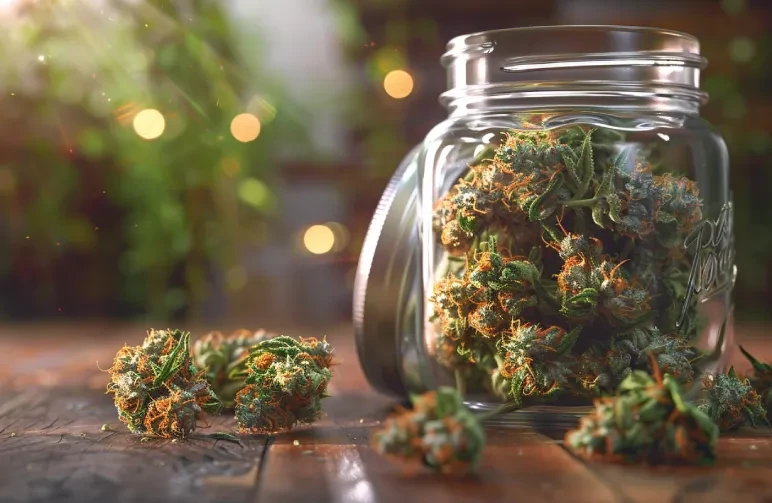
Drying too fast is the number-one terps killer. Aim for the 60/60 rule: 59 °F–60.8 °F and 60% relative humidity for 7–14 days. Keep gentle airflow in the room, not directly on buds.
Whole-plant or large branches dry slower and smoother than small nugs. When small stems bend then softly snap, you're ready to trim and jar.
Curing Protocol: Jar Size, Burping, And Ideal RH (58–62%)
Curing = controlled slow finish. Use glass jars filled 70–75% full. Place a small digital hygrometer in at least one jar per strain.
- Days 1–7: Burp daily for 10–15 minutes. Keep internal RH 58–62%. If RH rises above 70%, leave lids off longer and add more airflow: if below 55%, a 58–62% humidity pack can help.
- Weeks 2–4: Burp every other day.
- After 4 weeks: Burp weekly or store sealed.
Flavor deepens and harshness fades during cure as chlorophyll breaks down and terps stabilize. Many flowers hit peak aroma around week 3–6.
Long-Term Storage: Light, Heat, Oxygen, And THC Degradation
THC degrades with light, heat, and oxygen. Protect your work:
- Store in the dark at 59 °F–68 °F.
- Keep jars sealed: consider vacuum-sealed mason lids or nitrogen flushing if you're fancy.
- Avoid constant fridge/freezer cycling, condensation can ruin buds. If freezing, vacuum seal once, thaw sealed to room temp before opening.
Common Panic Moments And Quick Fixes Without Hurting Potency
Yellow Leaves In Late Flower, Nutrient Burn, And Foxtailing
- Yellow leaves late flower: Usually normal senescence (the plant is reallocating nutrients). If buds look happy and runoff EC isn't sky-high, don't panic. If yellowing shows mid-flower with pale interveins, think magnesium deficiency, add Cal-Mag and check pH.
- Nutrient burn: Crispy tips and dark, clawed leaves. Back EC down 20–30%, water to runoff, and resume lighter feeding.
- Foxtailing: Spiky new growth on buds. Often from high heat or too much light. Lower PPFD, drop temps 33.8 °F-[1.5:celsius], and improve airflow. Existing potency isn't ruined: just prevent more.
Pests And Mold: Catch Early, Treat Gently, Save The Resin
- Spider mites/aphids: Confirm with a loupe under leaves. In veg, use neem or insecticidal soap. In flower, use gentle options like targeted biologicals (e.g., predatory mites) and increase airflow.
Avoid oily sprays on developed buds, they can trap moisture and affect taste. - Powdery mildew (PM): Looks like flour dust. Reduce RH, increase airflow, remove affected leaves, and treat with potassium bicarbonate in veg. In late flower, prune carefully and control climate: heavy PM may force an early harvest.
- Bud rot (botrytis): Gray, mushy centers. Immediately remove infected buds and lower RH to 45–50% with strong air exchange.
When To Ride It Out Versus When To Act Fast
Act fast when: you see bud rot, severe PM, widespread pests, or light leaks in flower. Ride it out when: late-flower fade, a few burnt tips, or mild foxtailing appears, stabilize environment and finish strong.
Remember, every drastic fix can cause new stress. Small, steady corrections protect potency.
Conclusion
Potency isn't a mystery: it's a system. Start with legit genetics that can actually hit high THC and rich terpenes.
Feed the engine with correct light intensity and spectrum, steady climate (target VPD 1.0–1.4 kPa), balanced nutrition at the right pH, and smart canopy management.
Then stick the landing: harvest by trichomes, dry slow at 60/60, and cure to 58–62% RH. Do that, and even your first or second grow can smoke like a dispensary top-shelf jar, maybe better.
If you're choosing seeds, we've handpicked feminized and autoflower lines at WeedSeedsExpress with clear THC targets and full grow specs. Start strong, stay steady, and let the resin speak for itself.
Frequently Asked Questions
What determines weed potency from genetics to harvest?
Weed potency is a chain: genetics set the ceiling, then light intensity/spectrum, climate (temp, RH, VPD), nutrition and pH, canopy training, harvest timing, and careful drying/curing preserve it.
Miss a link and you cap results. Dial them all and you’ll maximize cannabinoids and terpenes for stronger effects.
How is cannabis potency measured, and why do home tests vary?
Labs report THC%, total cannabinoids, and sometimes terpene percentages using chromatography. In flower, THC mostly starts as THCA, so labs calculate “Total THC” after conversion.
Home kits give rough estimates and often under-read. For accuracy, grow and process correctly, then send a sample to a reputable lab.
What light and climate targets boost weed potency during flower?
Aim for 800–1,000 PPFD (up to 1,100–1,200 with added CO₂), temps around 68 °F-75.2 °F mid/late flower, 45–55% RH, and a VPD of 1.0–1.4 kPa.
Keep gentle airflow, avoid heat spikes, and use blue/red-balanced LED spectra; small UV-A doses can help resin, but intensity and climate matter most.
When should I harvest for maximum potency?
Use a 60× loupe and read trichomes, not pistils. Clear = not ready. Mostly cloudy/milky = peak THC and bright effect.
About 5–15% amber gives a balanced punch; 10–20% amber leans heavier and sedating as THC oxidizes to CBN. Time it, then dry slow and cure to lock it in.
Does curing increase THC or just improve flavor and aroma?
Curing doesn’t create more THC; it preserves what you grew and refines the experience. Slow curing at 58–62% RH lets chlorophyll break down, stabilizes terpenes, and smooths smoke, which can make potency feel stronger.
Poor cures volatilize terpenes and can dull perceived strength despite the same THC%.
How can I increase outdoor weed potency without CO₂ or high-end gear?
Choose high-potential genetics, maximize sun exposure (full-day light, south-facing), manage canopy for even light, and maintain plant health: balanced nutrients with sufficient sulfur and magnesium, proper soil aeration, and consistent watering.
Control microclimate with spacing and airflow, harvest by trichomes, then dry cool and slow and cure properly.