

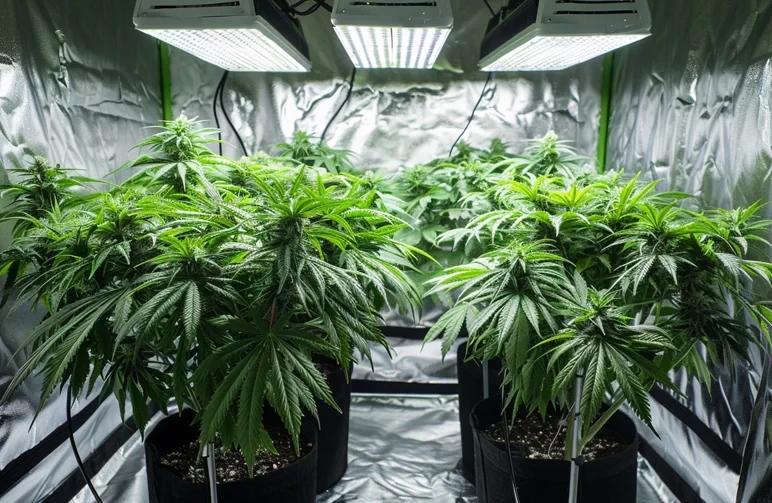
You just bought a brand new grow tent and a ten-pack of seeds. The temptation is to fill up some pots and plant every single seed you have.
Do not do it.
Cramming too many plants into a small tent is a classic rookie mistake. When you pack weed plants together like sardines, they fight each other for light.
The air gets wet and stagnant. Instead of getting a massive harvest, you end up with fluffy popcorn buds and a terrible case of mold.
If you are just setting up your space and learning how to grow autoflowers, getting your plant count right is your first big test.
By the end of this guide, you will know exactly how many pots fit in your specific tent. Let's make sure your plants have the room they need to grow fat and heavy.
Key Takeaways
- Quality over quantity: Four happy plants with plenty of room will always yield more weed than eight stressed, crowded plants.
- Pot size matters: If you grow in large 5-gallon pots, you have to run fewer plants.
- Watch your light: If your grow light cannot reach the corners of your tent, extra plants are just growing in the shade.
- Leave room for air: Plants need breathing room. If the leaves are laying on top of each other, you will get bud rot.
Why Cramming More Plants Ruins Your Yield
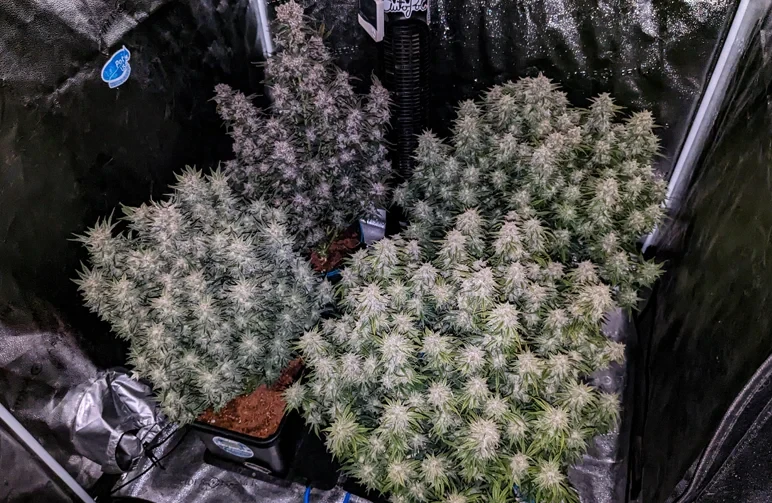
More plants do not automatically mean more weed. In fact, packing your tent too full will actually lower your final harvest weight. Here is why.
First, weed plants need direct light to grow dense buds. If your plants are squished together, the top leaves act like a giant umbrella. They block the light from reaching the bottom half of the plants.
Those lower branches will just produce fluffy, airy popcorn buds that weigh almost nothing.
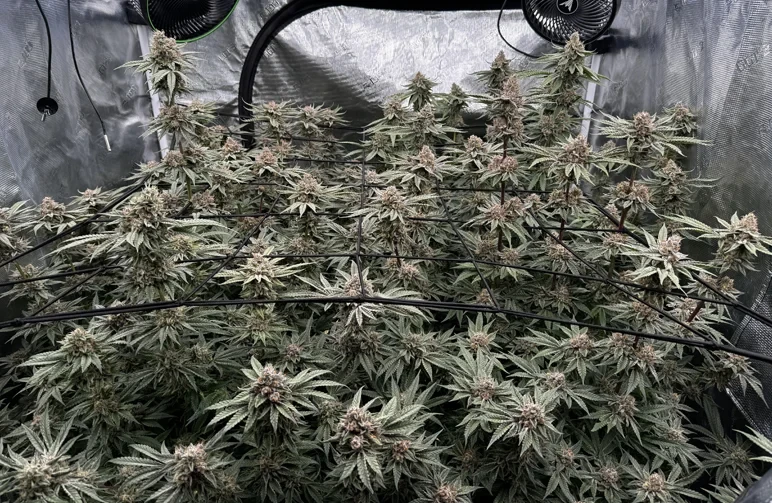
Second, you have to worry about mold. Weed plants sweat a lot of water into the air. If the leaves are laying right on top of each other, that moisture gets trapped. The air stops moving.
This is an open invitation for bud rot, which will ruin your entire crop overnight.
The Golden Rule: Pot Size Changes Everything
The number of plants you can fit depends entirely on the size of the pots you use.
If you read our guide on autoflower pot sizes, you know that the roots control the size of the plant. If you use large 5-gallon pots, your plants are going to grow wide and tall.
You will only be able to fit a few of them in your tent.
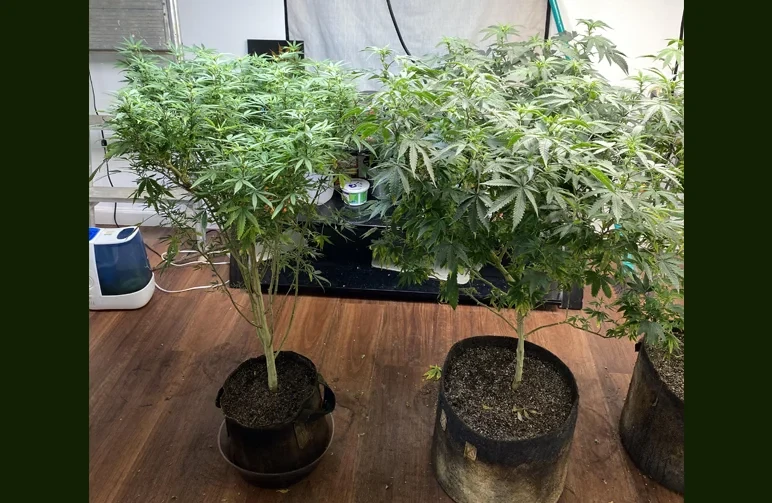
If you use smaller 2-gallon pots, the plants will stay compact. You can pack a lot more of them into the exact same space. You have to decide if you want a few massive plants or a bunch of smaller ones.
The Grow Tent Cheat Sheet: How Many Plants Fit?
Here is the exact breakdown for the most popular tent sizes. For these numbers, we are going to assume you are using standard 3-gallon pots. If you use bigger pots, run fewer plants.
If you use smaller pots, you can add a few more.
2x2 Grow Tent
This is a very small space. Your best move is to grow just 1 plant and train it to fill the whole tent. You can squeeze 2 plants in here if you use small pots, but it will get crowded very fast.
2x4 Grow Tent
This is a great tent for tight spaces like closets. The sweet spot here is 2 to 4 plants. You can line them up in a single row. This layout gives you great airflow and makes watering incredibly easy because you can reach every single pot.
3x3 Grow Tent
The rule for a 3x3 tent is 3 to 4 plants. Four plants arranged in a square is the absolute perfect setup for a beginner. You have enough room to let them grow wide without their leaves laying all over each other.
4x4 Grow Tent
This is the classic home grower setup. You can comfortably fit 4 to 6 plants in here. A 4x4 gives you plenty of room to work, set up fans, and move around.
If you use small pots and do not train your plants, you can push it up to 9, but 4 to 6 is much safer.
4x8 Grow Tent
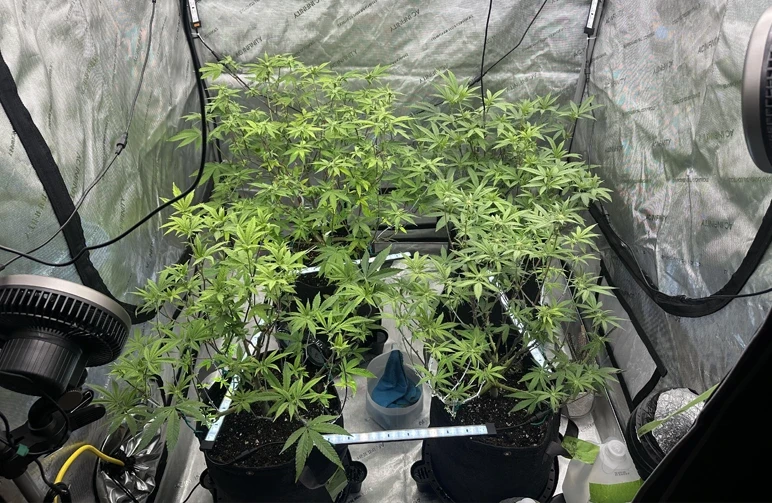
This is a massive space. It is basically two 4x4 tents pushed together. You can easily run 8 to 12 plants in here.
You can pack up to 16 if you keep them small, but 12 is the sweet spot for keeping the canopy manageable and the airflow clean.
How Your Grow Light Changes the Math
Your grow tent might have the floor space for six plants, but your grow light is the real boss.
Light equals yield.
If you have a small, weak light hanging in the middle of a 4x4 tent, the corners of that tent are going to be dark. If you put a plant in a dark corner, it will just grow fluffy, useless buds. You are basically just growing shade.
Always check the footprint of your LED light. The manufacturer will tell you exactly how much space the light covers. If the box says the light only covers a 3x3 area, do not put plants outside of that square.
Match your plant count to your light, not your floor space.
How Training Changes the Math
The way you treat your plants also changes how many you can fit.
If you use Low Stress Training (LST) to bend your branches down, your plant will grow very wide and flat. A trained autoflower can easily take up twice as much space as a normal plant.
If you train your plants to get those massive, flat canopies, you have to run fewer pots.
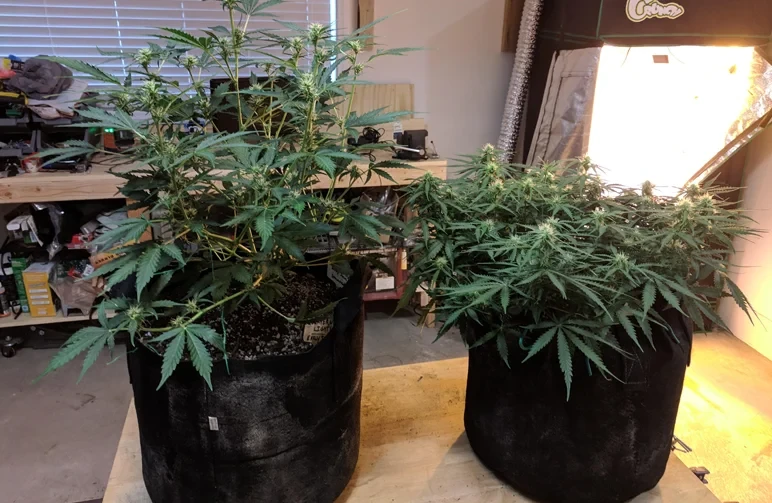
But what if you just let them grow straight up naturally like a tall Christmas tree? We call this the Sea of Green method. Because the plants stay skinny, you can pack a lot more of them into the tent.
Just remember that packing them tight means you have to watch your airflow like a hawk.
Managing Humidity and Airflow in a Full Tent
Weed plants sweat. It is just a fact of nature. When you pack a tent full of plants, all that moisture gets trapped in the air.
If the humidity spikes and the air stops moving, you are going to get mold. You have to manage your airflow. Put at least one oscillating clip fan in your tent to keep the air moving over the leaves.
You also need a good exhaust fan pulling the old, wet air out of the tent.
Look at your canopy. If the leaves are gently dancing in the breeze, your airflow is perfect. If they are sitting perfectly still, you need to turn your fans up.
Frequently Asked Questions
I get a lot of questions from growers trying to plan out their first tent. Let's clear up a few common worries.
Can I mix different strains in one tent?
You can, but it is a massive headache for beginners. Different strains grow at different heights. One plant might grow two feet taller than the other.
This makes hanging your grow light a total nightmare. Stick to just one strain for your first few runs to keep your canopy perfectly even.
What should I do if my tent gets too crowded?
If your plants explode and run out of room, you need to act fast. Grab your scissors and do some light defoliation. Snip off the big fan leaves that are blocking the light and touching each other. Then, add an extra clip fan to make sure the air is still moving through the crowded branches.
The Wrap Up
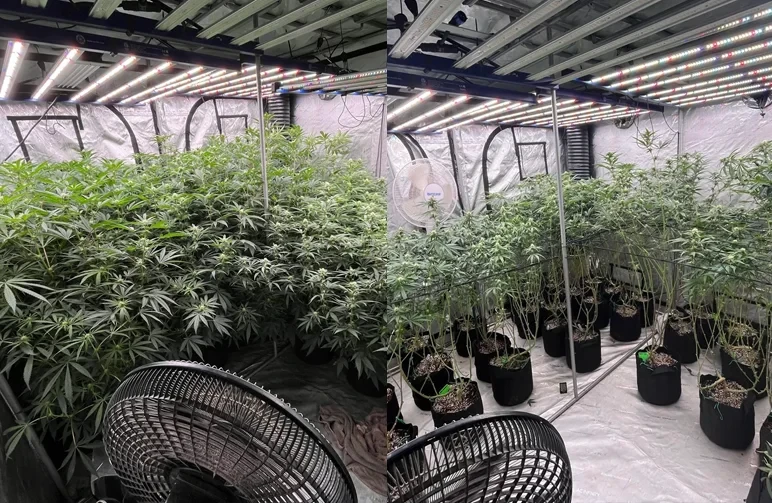
Figuring out how many autoflowers to grow is a simple balancing act. You just have to match your tent size with your pot size and your grow light.
Always remember that quality beats quantity every single time. Giving four plants plenty of room to breathe will always give you a better harvest than choking out eight plants.
Start with a small plant count, keep your airflow strong, and enjoy watching those buds stack up. You have got this.