

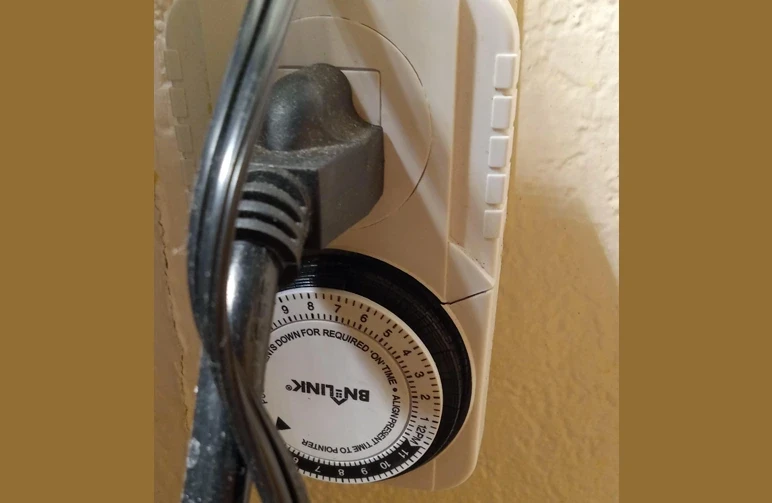
You just hung up your new grow light. You have your timer in your hand. But what do you actually set it to? 18/6? 20/4? Do you just leave it on 24 hours a day?
If you go on the internet, you will get ten different answers. It is incredibly confusing for a new grower.
Light is literally food for your plants. If you give them too little, your buds will be tiny. If you give them too much, you will stress the plant and jack up your power bill.
If you are just setting up your tent and learning how to grow autoflowers, getting your light schedule right is one of the easiest ways to boost your yield.
By the end of this guide, you will know exactly which light schedule fits your room, your budget, and your goals. Let's get your timer set.
Key Takeaways
- The Gold Standard: Running your lights for 18 hours on and 6 hours off is the absolute best balance for beginners.
- Maximum Yield: Pushing your lights to 20 hours on and 4 hours off will give you bigger buds, but it creates more heat in the tent.
- Plants need rest: Just like people, plants use the dark period to recover from stress.
- Intensity matters: The number of hours does not matter if your light is weak. You need strong light intensity to grow dense flowers.
Why Autoflowers Do Not Need a 12/12 Light Flip
Regular weed plants wait for the days to get shorter before they make buds. If you grow them indoors, you have to flip your light timer to 12 hours on and 12 hours off. This tricks the plant into thinking winter is coming.
Autoflowers do not care about the sun or the seasons. Thanks to their wild Ruderalis genetics, they are on a strict biological timer. They will start flowering based entirely on their age, usually around week three or four.
This is a massive advantage for you. Because you do not have to force them into 12 hours of darkness, you can leave your grow lights on much longer.
More light hours mean more photosynthesis. More photosynthesis means the plant creates more energy to build fat, heavy buds.
The Top Autoflower Light Schedules at a Glance
Before we break down the details, here is a quick cheat sheet. This table shows you the pros and cons of the most popular light schedules so you can compare them instantly.
| Schedule | Best For | Pros | Cons |
|---|---|---|---|
| 18/6 | Beginners, Warm Rooms, Balanced Grows | Excellent growth, lower energy costs, less heat, plant gets to rest | Potentially slightly lower yield than 20/4 |
| 20/4 | Experienced Growers, Cool Rooms, Max Yield | Faster growth, higher yields | Higher energy costs, more heat, can stress weaker plants |
| 24/0 | Cold Environments, Experimentation | Maximum growth potential, keeps tent warm | High energy cost, no rest period, high risk of plant stress |
| 12/12 | Growing with Photoperiods, Budget Grows | Lowest energy cost | Significantly reduced yield, much slower growth |
The 3 Best Light Schedules for Autoflowers
Let's break down the three main options so you can pick the perfect rhythm for your grow tent.
The 18/6 Schedule (The Gold Standard)
This means your lights are on for 18 hours and off for 6 hours. You leave the timer on this exact setting from the day the seed sprouts until the day you harvest.
This is the absolute best choice for most home growers. It gives the plant plenty of light to grow massive buds, but it keeps your power bill low. It also makes heat management incredibly easy. You can set your 6 hours of darkness to happen during the hottest part of the afternoon.
Best of all, it gives your plants a chance to rest. Plants use the dark period to run maintenance and recover from stress.
The 20/4 Schedule (The Heavy Yielder)
This means your lights are on for 20 hours and off for 4 hours.
If your environment is perfectly dialed in, this schedule will give you bigger buds. We actually ran a test in our lab with two identical autoflowers.
The plant on the 18/6 schedule yielded 97 grams. The plant on the 20/4 schedule yielded 108 grams.
The trade off is heat and money. Running your lights for 20 hours creates a lot of extra heat in the tent, and it drives your electricity bill up. If your tent already gets hot, stick to 18/6.
The 24/0 Schedule (For Cold Rooms Only)
This means your lights stay on 24 hours a day with zero darkness.
We rarely recommend this. Leaving your lights on all day and night is a massive waste of electricity. It also stresses the plant out. Just like people, plants get tired and look much happier when they get a few hours of sleep.
The only time you should use a 24/0 schedule is if you are growing in a freezing cold basement or a winter garage. In that specific situation, leaving the light on acts as a heater to keep your plants from freezing to death.
What About the 12/12 Schedule?
If you talk to old-school growers, they might tell you to flip your lights to 12 hours on and 12 hours off. Do not do this to an autoflower.
Yes, the plant will survive and it will make buds. But remember, light is food. By dropping your timer to 12 hours, you are literally cutting the plant's daily food supply in half.
Your yield will be tiny, and the plant will grow very slowly.
The only time you should ever use a 12/12 schedule for an autoflower is if it is sharing a grow tent with a photoperiod plant. If the photoperiod plant needs 12 hours of darkness to flower, the autoflower just has to deal with it. But if the auto is by itself, keep the lights on for at least 18 hours.
Light Intensity (PPFD) is Just as Important as Hours
Leaving a weak, cheap light on for 24 hours a day will not give you massive buds. The number of hours does not matter if the light itself is weak. You need intensity.
Growers measure light intensity using a term called PPFD. That sounds like a scary science word, but it is actually very simple. PPFD just measures how many particles of light are actually hitting the leaves.
Think of it like the strength of the sun.
If the light is too weak, the buds will be fluffy. If the light is too strong, the leaves will burn.
Here are the exact PPFD numbers you want to hit for each stage of your autoflower grow:
- Seedling Stage: 200 to 300 (Dim the light or raise it high above the plant).
- Vegetative Stage: 300 to 500.
- Early Flower: 500 to 700.
- Mid to Late Flower: 600 to 800.
Autoflowers rarely need more than 800 PPFD. If you push the light past that, you risk stressing the plant.
You can check your light intensity by downloading a free light meter app on your smartphone, or by checking the manual that came with your LED grow light.
Frequently Asked Questions
I see the same panic questions pop up all the time from new growers. Let's clear the air so you can set your timer and relax.
Do autoflowers need complete darkness at night?
Plants do not sleep exactly like humans do, but they do need to rest. During the dark period, the plant runs internal maintenance and recovers from the stress of the day.
This is why plants on an 18/6 schedule look so healthy. Also, unlike photoperiod plants, a tiny light leak in your tent during the dark hours will not ruin an autoflower.
Can I change my light schedule mid-grow?
Yes, you can. Autoflowers are incredibly tough. If you start your grow on a 20/4 schedule and realize your tent is getting way too hot, you can absolutely drop the timer down to 18/6.
The plant will adjust just fine. Just pick a new schedule and stick to it. Do not flip-flop your timer back and forth every single day.
Why are my leaves curling up like a taco?
If the edges of your leaves are curling upward, your plant is trying to protect itself. This is a classic sign of light stress or heat stress. The plant is folding its leaves to hide from the light.
To fix this, you need to dim your LED or raise the light a few inches higher. If you are running a 24/0 schedule, drop it down to 18/6 to give the plant a break.
The Wrap Up
Picking the best light schedule for your autoflower does not have to be a headache.
If you are a beginner, or if you just want a reliable and cheap way to grow fat buds, set your timer to 18 hours on and 6 hours off.
If your room is perfectly dialed in and you want to push for maximum yield, bump it up to 20/4. Save the 24/0 schedule for freezing cold winter grows.
Watch your plants, not the calendar. If the leaves are a rich green and pointing gently up toward the light, you picked the perfect schedule.
Grab some good seeds, set your timer, and let your plants shine. You have got this.