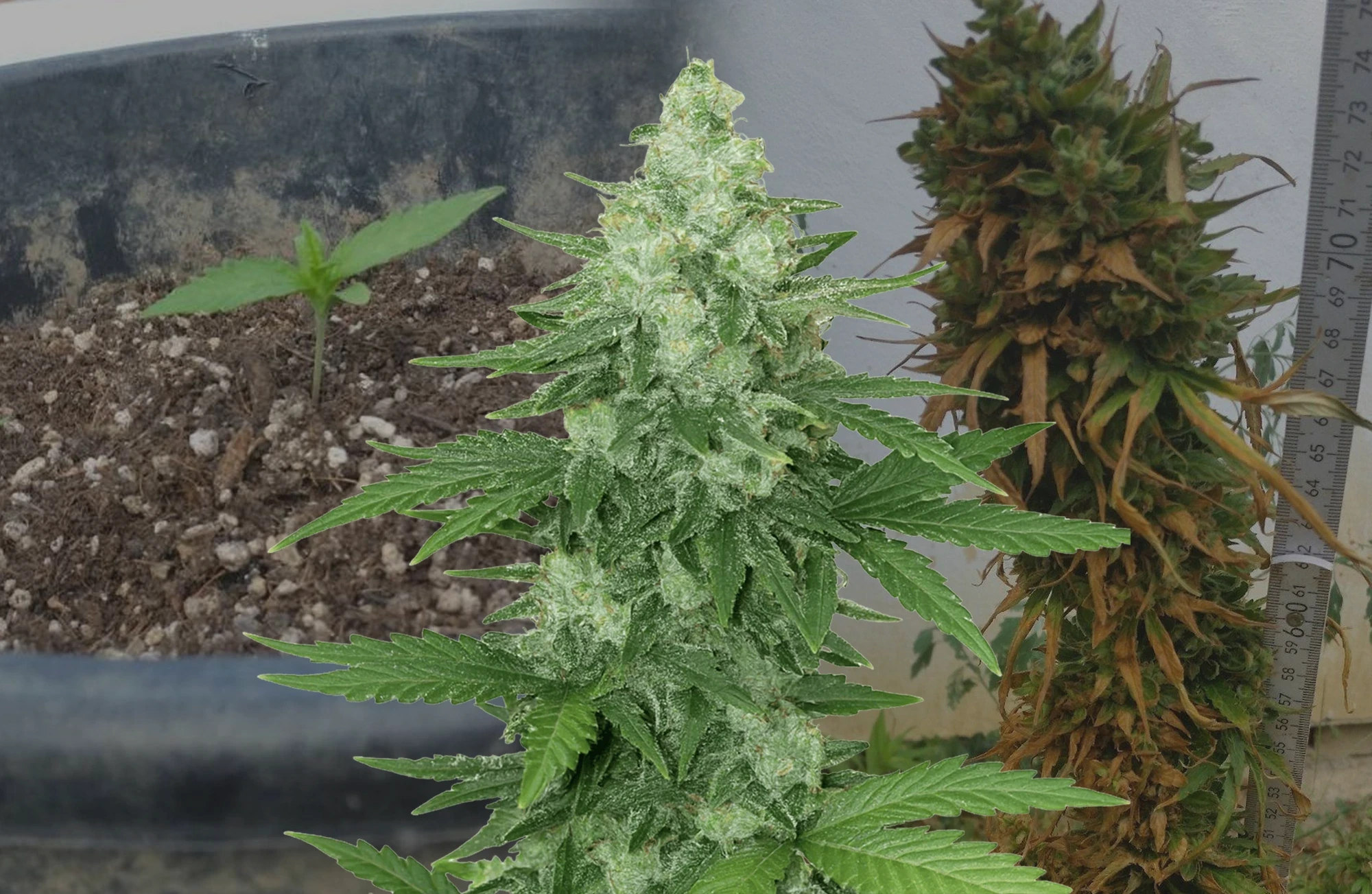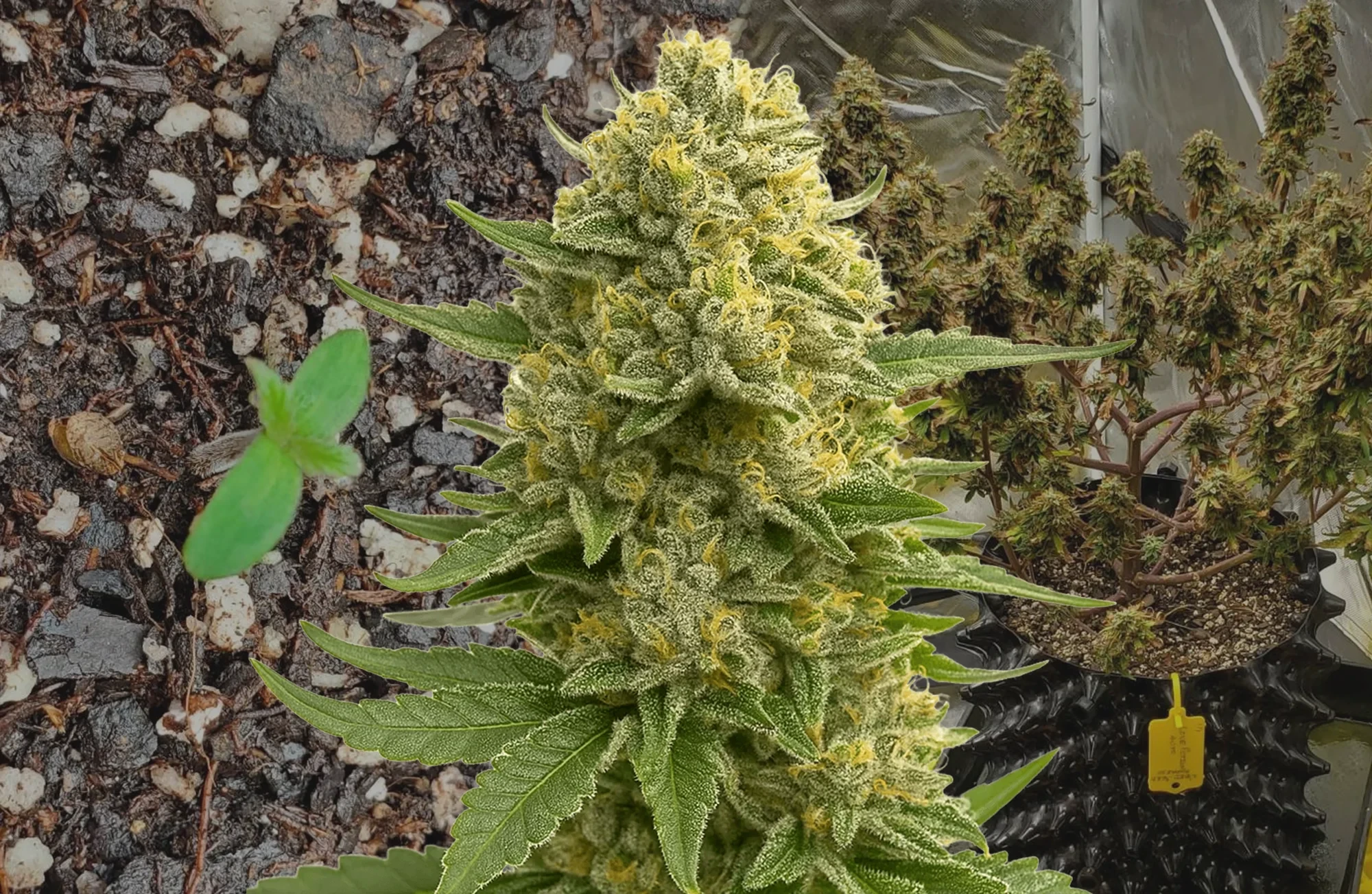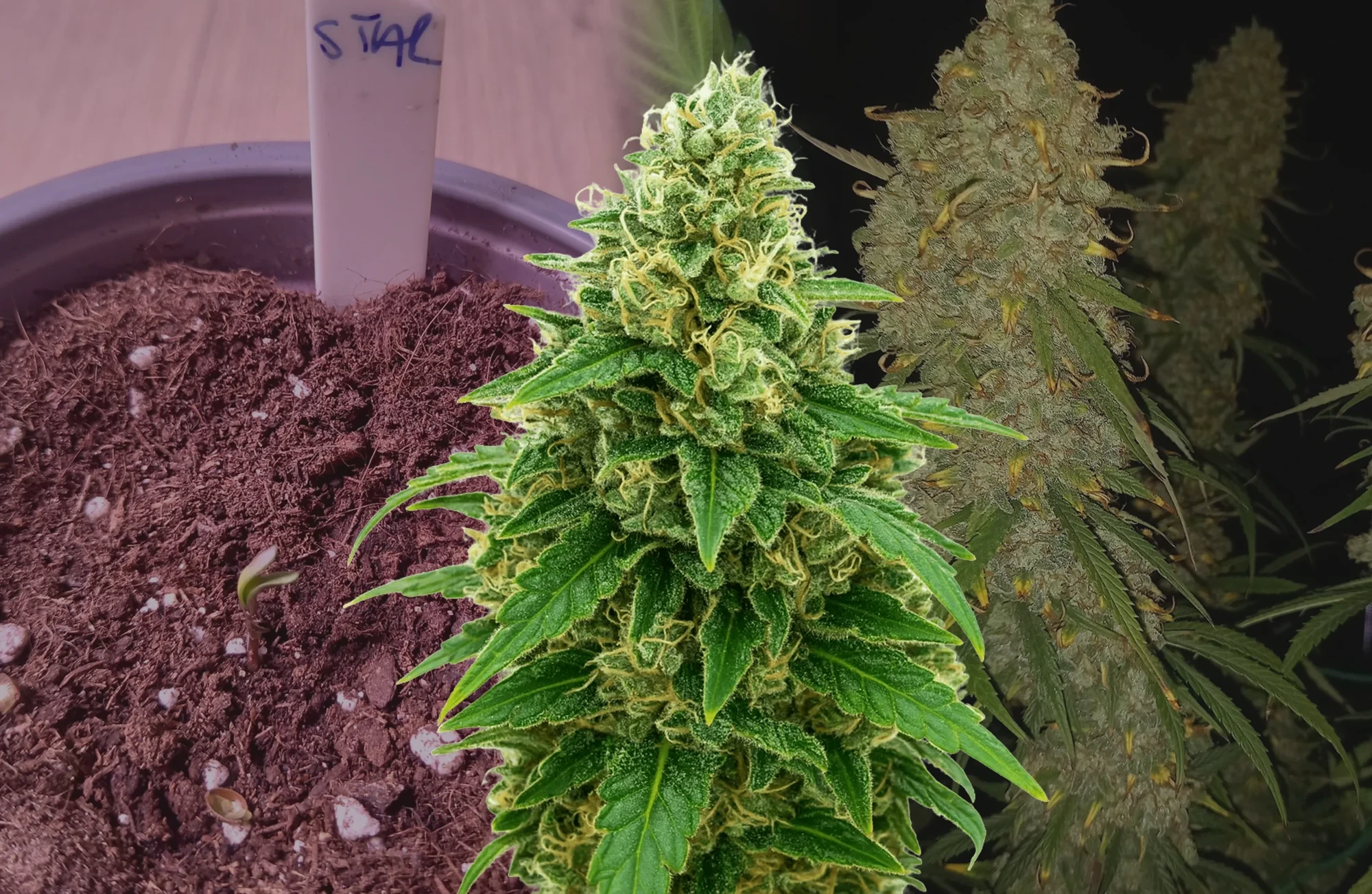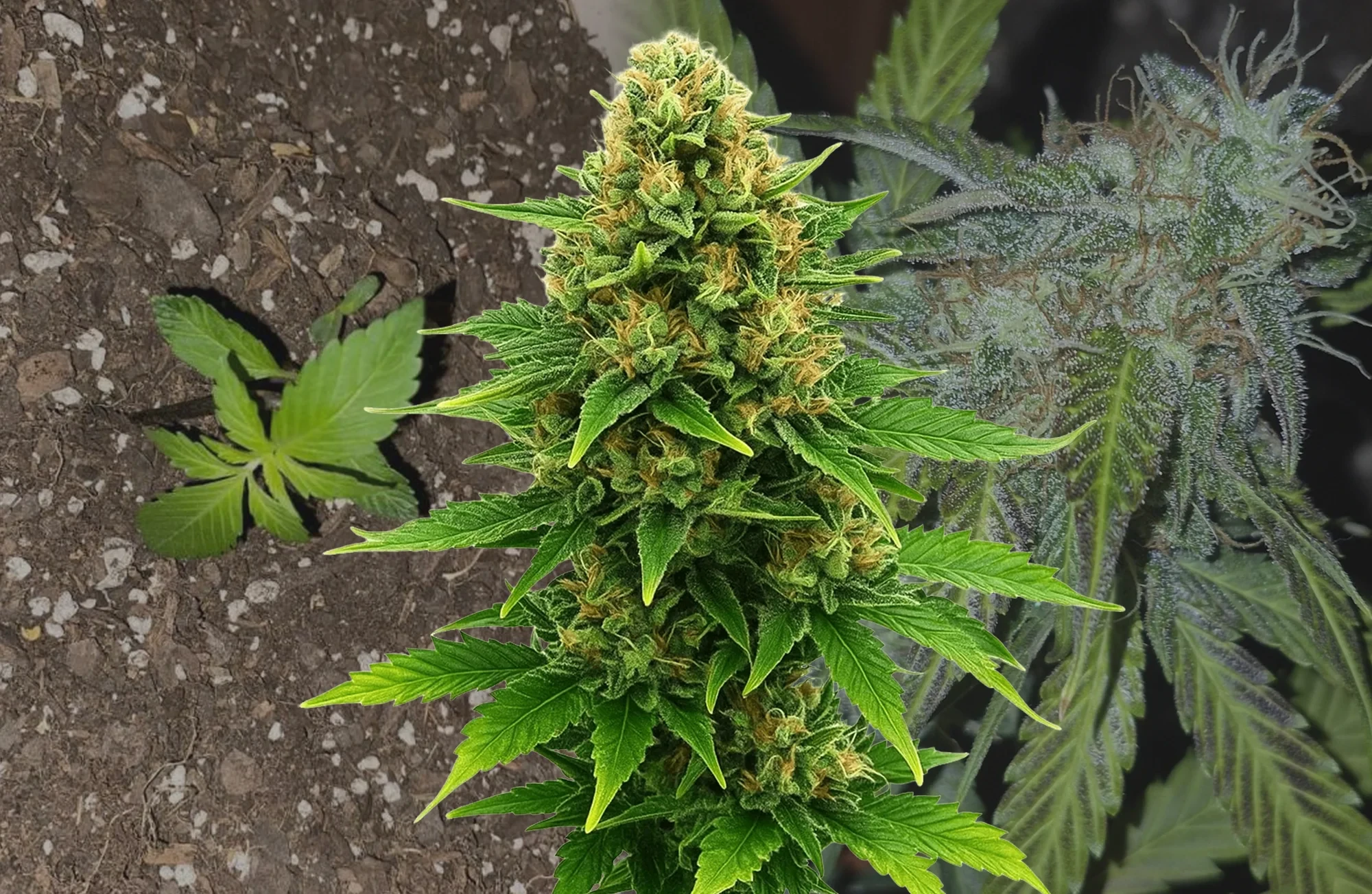


Every grower wants a massive harvest. But when you grow autoflowers, you are working with a small plant on a very tight schedule. How do you get huge yields from a short plant? You bend it.
Regular weed plants have time to heal. If you want them to grow wide, you just chop the top off. Good lord, do not do that to an autoflower.
They grow way too fast. If you chop them, they will stunt and give you a handful of tiny popcorn buds.
Instead, you need to use Low Stress Training. We call it LST. It is the absolute best way to turn a small plant into a flat table full of fat, top-shelf colas.
If you are just starting out and need to learn the basics of how to grow autoflowers, make sure to read our full guide first. But if your seeds have popped and you are ready to train your plants for bigger yields, you are in the right place.
By the end of this guide, you will know exactly how to bend your plants safely. I will give you a step-by-step plan to flatten your canopy without snapping a single branch.
Key Takeaways
- Start early: Begin training around week 3 when the stems are still green and flexible.
- Anchor the base: Always tie the bottom of the stem in the opposite direction first so you do not rip out the roots.
- Use the right gear: Only use soft rubber ties or pipe cleaners. Never use thin string or zip ties.
- Know when to stop: Stop bending the plant as soon as you see white hairs and the vertical stretching stops.
What is LST (Low Stress Training)?
Low Stress Training is exactly what it sounds like. It is a gentle shaping technique. Instead of letting your weed plant grow straight up like a tall Christmas tree, you bend the branches and tie them down.
This forces the plant to grow flat and wide.
Why do we do this? It all comes down to a science term called apical dominance.
Cannabis plants naturally want to push all their energy into the very top tip of the main stem. That top tip hoards all the best growth hormones.
When you gently bend that main stem down and tie it below the rest of the branches, you trick the plant. It actually thinks it lost its main head.
Because of this trick, the plant sends all those VIP growth hormones to the lower side branches.
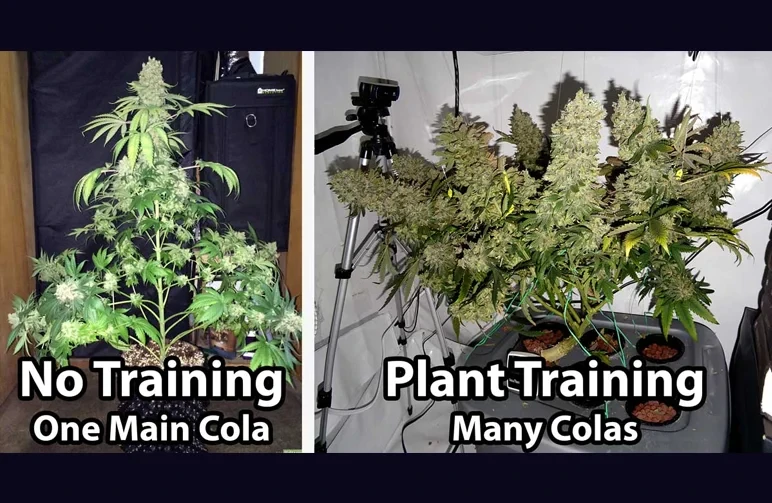
Suddenly, every single side branch wakes up and starts growing like a main stem. Instead of getting one big cola at the top, you get a whole table full of them.
Why LST is the Best Choice for Autoflowers
If you grow regular photoperiod plants, you can use High Stress Training. This means actually cutting the top of the plant off (topping) or crushing the stems (super cropping).
Regular plants have plenty of time to heal from that kind of damage.
Autoflowers do not have that kind of time. They usually stay in the vegetative stage for just three or four weeks. If you cut the top off an autoflower, it will stop growing for a week to heal.
That is a massive waste of time. You will end up with a tiny plant and a disappointing yield.
LST is the perfect solution. You get all the benefits of a wide, flat canopy, but you do not actually damage the plant. The plant keeps growing without skipping a beat.
You get better light on your bud sites, better airflow through the leaves, and a much heavier harvest.
When to Start (and Stop) LST on Autoflowers
Timing is everything when it comes to training autoflowers.
You want to start your LST around week 3 from sprout. Look closely at your plant. You should see 3 to 4 nodes. A node is just a set of leaves growing out of the main stem.
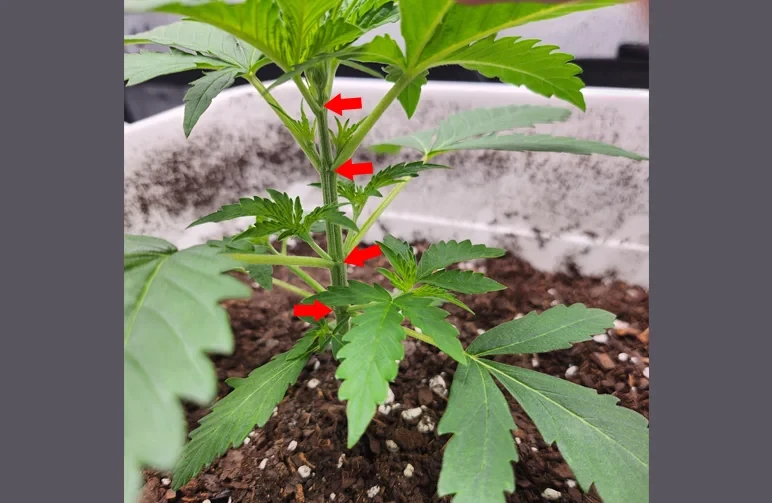
At this age, the main stem is still green, soft, and very flexible. If you wait too long, that stem will turn hard and woody. If you try to bend a woody stem, it will snap right in half.
You also need to know exactly when to stop.
Autoflowers usually start showing white hairs around week 4 or 5. This means they are entering the flowering stage. The plant will stretch up toward the light for a few days, and then the vertical growth will stop completely.
Once the plant stops stretching and focuses entirely on building buds, you must stop bending. You can adjust your old ties, but do not add any new stress.
What You Need to Get Started
You do not need to spend a lot of money to do LST right. You just need a few basic items.
Soft Plant Ties
You need something to hold the branches down. The absolute best option is a roll of soft, rubber-coated plant wire. Thick pipe cleaners also work great.
Never use thin string, fishing line, or plastic zip ties. This is a massive rookie mistake. As your plant grows, the stems will get much thicker. Thin string will not stretch.
It will cut right into the stem like a knife and choke the branch to death.
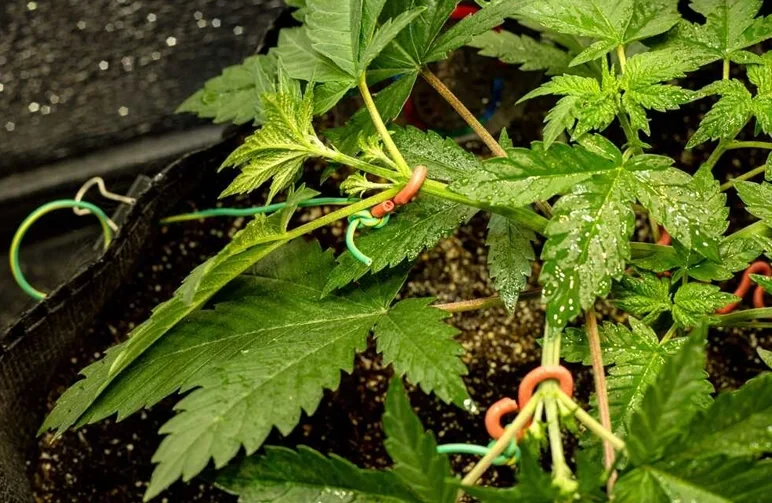
Anchor Points
You need a place to tie your wires. If you are growing in fabric pots, just buy a pack of metal binder clips. Clip them around the top edge of the pot, and tie your wires to the metal loops.
If you are growing in regular plastic pots, just take a drill and make a few small holes right around the top rim.
Step-by-Step LST Guide for Beginners
This is the fun part. Grab your soft ties and your clips. It is time to shape your plant. Just take a deep breath, move slowly, and follow these four exact steps.
Step 1: Anchor the Base
This is the most important step, but beginners skip it all the time. Before you bend the top of the plant, you have to secure the bottom.
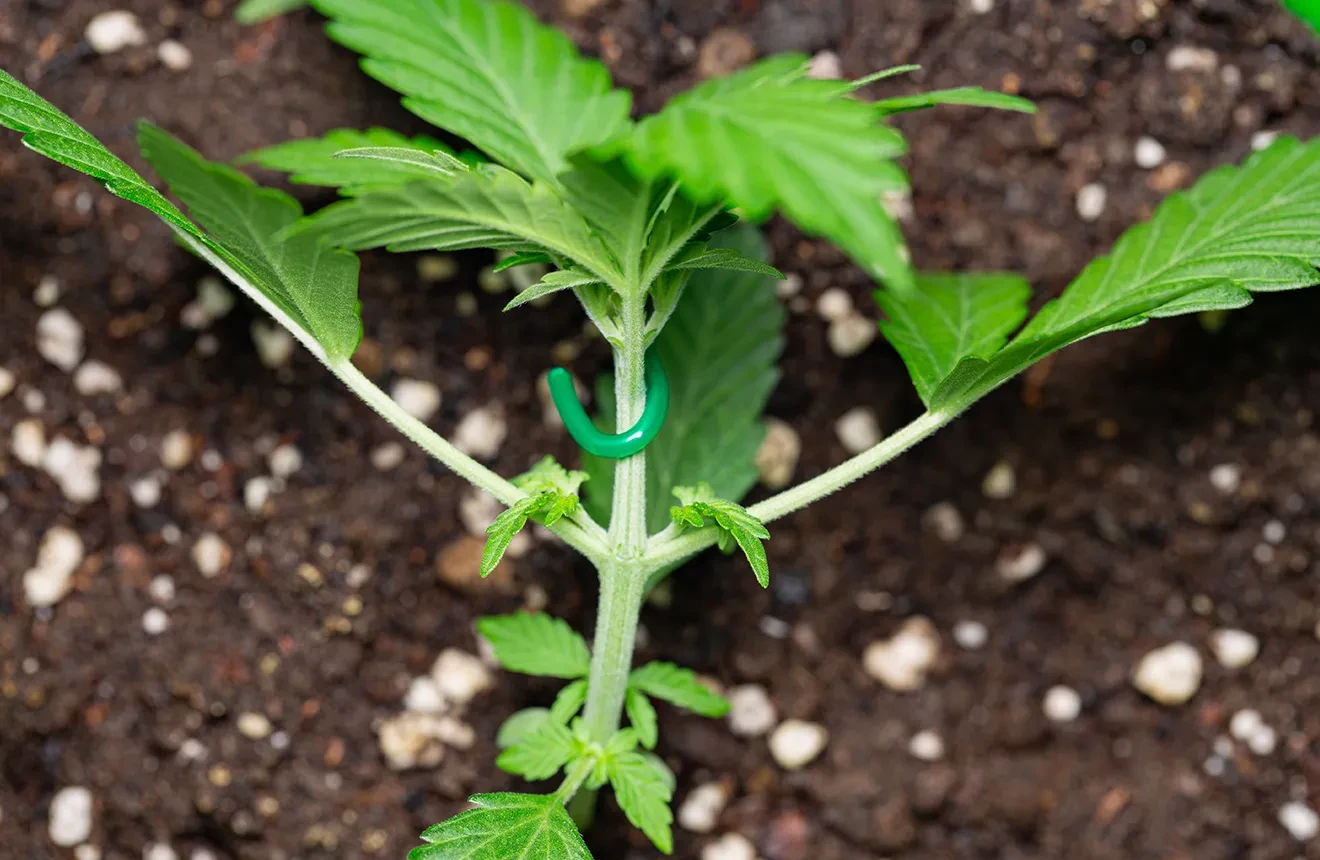
Take a soft tie and wrap it around the very base of the main stem, just an inch or two above the dirt. Tie that wire to the edge of your pot.
Why do we do this? If you just grab the top of the plant and pull, you will rip the roots right out of the soil. Anchoring the base keeps the root ball perfectly safe.
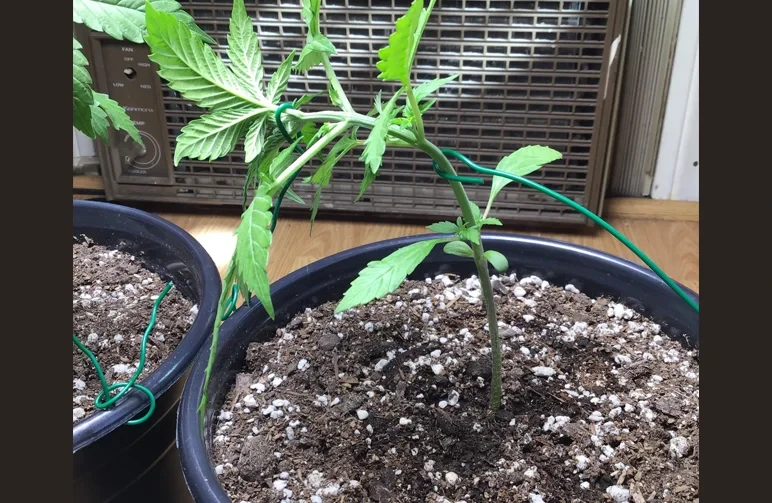
Step 2: Bend the Main Stem
Now go up to the top of the plant. Find a spot just above the third or fourth node. Hold the stem gently between your fingers.
Slowly pull the top of the plant over to the opposite side of your base anchor.
Do not force a full 90 degree bend right away. A 45 to 80 degree angle is plenty. Tie the top down to the edge of the pot.
You want the main tip to sit lower than the side branches. This flips that hormone switch we talked about earlier. The plant now thinks the side branches are the new main stems.
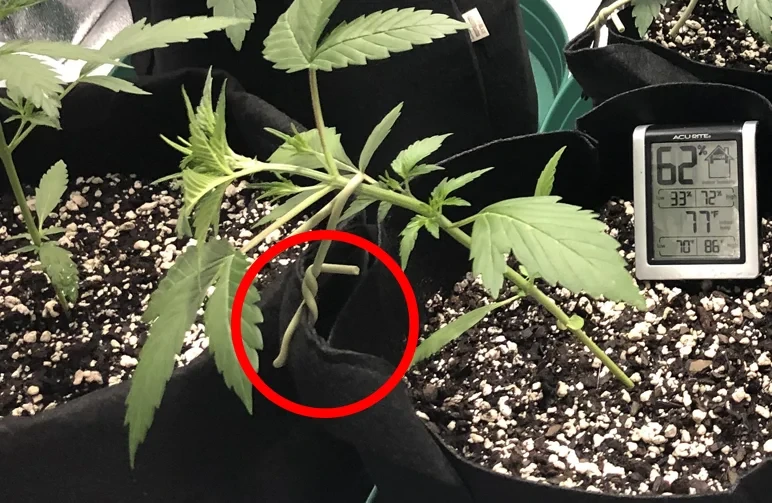
Step 3: Tie Down the Side Branches
Over the next few days, you will see a massive change. Those little side branches will suddenly shoot up toward the grow light.
As they get taller, you need to tie them down too.
Gently pull them outward and tie them to the pot. Think of it like the spokes on a bicycle wheel. You want to spread them out evenly so they do not crowd each other.
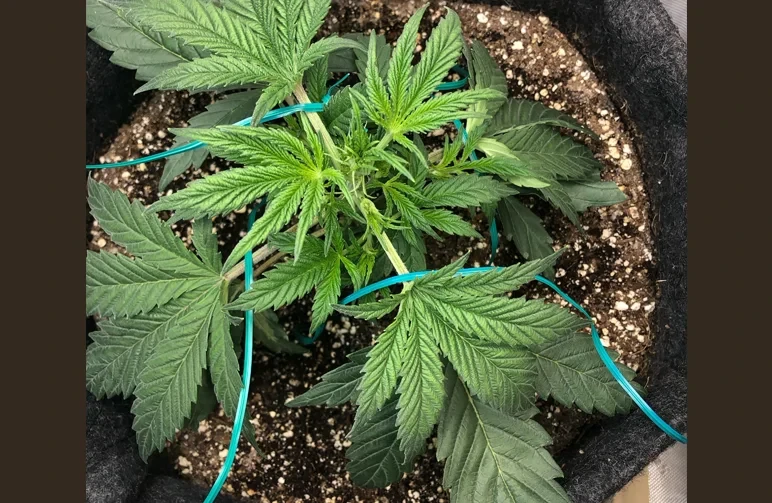
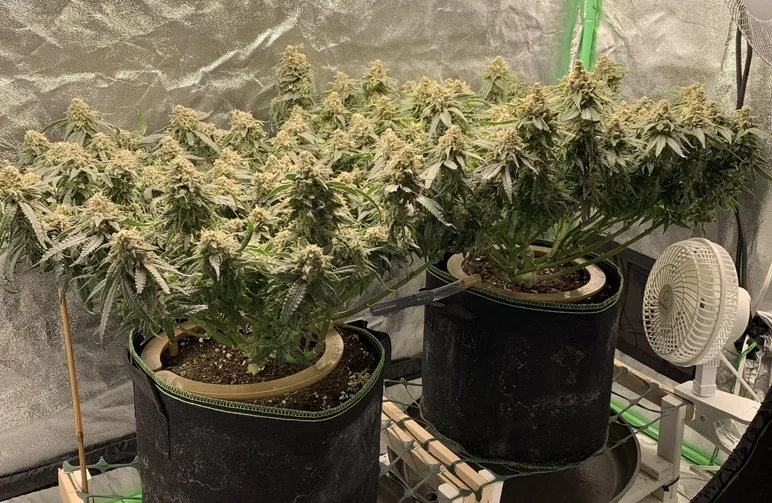
Your goal is to make all the branch tips sit at the exact same height. You are building a flat table of buds.
Step 4: Adjust as They Grow
LST is not a job you do once and forget about. Your autoflower is going to grow fast.
A soft tie that fits perfectly on Monday might choke the branch by Friday. You need to check your ties every single day. Loosen any wires that look too tight.
If one branch suddenly grows taller than the rest, gently tie it down to match the others. Keep that canopy perfectly flat until the plant stops stretching.
4 Common LST Mistakes to Avoid
Even with a step-by-step guide, beginners still make a few classic errors. Here are the four biggest mistakes to watch out for so you do not ruin your crop.
Starting Too Late
This is the number one rookie mistake. If you wait until week 5 to start bending, the main stem will be stiff and woody. If you try to bend a woody stem, it will snap right in half. Always start early when the plant is green and flexible.
Using the Wrong Ties
We talked about this earlier, but it is worth repeating. Never use thin string, fishing line, or zip ties. As the branch gets thicker, the string will not stretch. It will slice right into the plant and kill the branch. Stick to soft rubber ties.
Bending Too Hard
Enthusiasm is great, but do not try to fold your plant in half on the very first day. A sudden, aggressive bend will break a healthy stem. Be gentle. Bend it a little bit today. You can always pull it down a little further tomorrow after the plant adjusts.
Setting and Forgetting
LST is not a one-time job. A tie that fits perfectly on Monday might be choking your plant by Friday. If you do not check your ties daily, you will restrict the growth of your plant.
What to Do If You Snap a Branch
It happens to every single grower. You push a little too hard, and you hear a loud crack.
First of all, do not panic. Do not throw the plant away. If the branch is still attached, you can probably save it. Cannabis plants heal incredibly fast if you help them out.
Think of it like a broken arm. You just need to make a cast. Grab some garden tape, electrical tape, or even duct tape. Wrap the tape tightly around the broken spot to hold the two pieces together. If the branch is heavy, push a small wooden stick into the dirt and tie the branch to it for support.
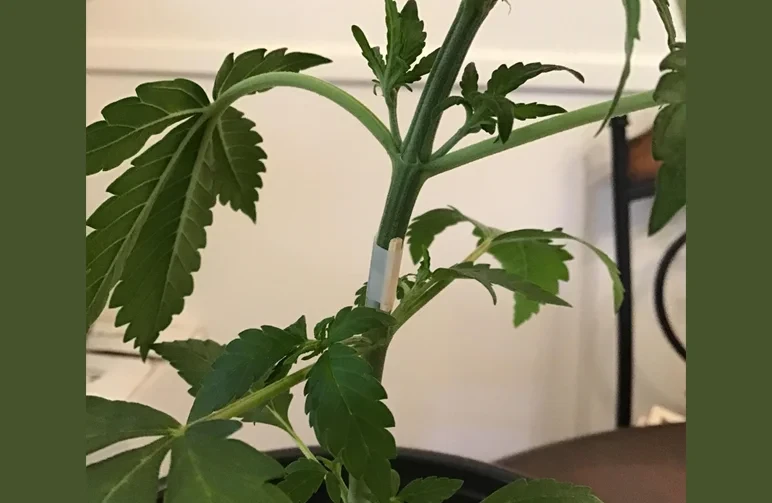
Leave the tape alone for a week or two. The plant will form a hard knuckle over the break and keep right on growing. Just do not bend that specific branch anymore.
Frequently Asked Questions
I get a lot of questions from new growers who are nervous about bending their plants. Let's clear up a few common concerns so you can train your autos with confidence.
Can I top an autoflower and do LST?
You can, but it is a big gamble. Advanced growers sometimes cut the top off their autoflowers to force them to grow wide. But if you are a beginner, you should absolutely skip this.
Topping is a high stress move. It will shock your plant and stall its growth. Stick to just LST for your first few runs. It is much safer and still gives you incredible results.
Should I defoliate during LST?
Yes, but you need to go easy. Autoflowers hate losing too many leaves at once. If a big fan leaf is blocking the light to a lower bud site, try to tuck it behind a branch first.
If you absolutely cannot tuck it out of the way, you can snip it off. Just stick to removing two or three leaves at a time. Less is always more.
How much can LST increase yield?
It makes a massive difference. When you let a plant grow naturally, only the very top bud gets the best light. When you use LST to build a flat canopy, every single bud site gets blasted with direct light.
With a good grow light and a healthy environment, you can expect a 20 to 50 percent increase in your final harvest weight.
The Wrap Up
Low Stress Training is the smartest way to grow autoflowers. It takes just a few minutes of your time each day, and the plant pays you back with fatter, heavier colas.
Start early, keep your hands gentle, and always aim for that flat, even canopy. Watch the plant, adjust your ties, and do not panic if you hear a small crack.
If you want an easy win for your next run, grab some soft ties and start bending. It is simple, it is safe, and it really works. Happy training!