

Here at WSE Labs, we get asked this all the time: should you run autoflowers or photoperiods? The short answer is: it depends—on your schedule, space, climate, and what you want from the smoke.
In this definitive guide, drawing on our extensive lab research and cultivation experience, we break down cannabis genetics, the practical differences between autos and photoperiods, and how each choice impacts yield, potency, and workflow.
Whether you're a first-timer prepping a closet grow or a seasoned breeder plotting a mother room, we'll give hands-on, experience-backed advice so you can choose the right path (and the right seeds) for your goals.
Key Takeaways
- Choose autoflowers when you need speed, simplicity, and multiple seasonal harvests—modern autos finish in 8–12 weeks and thrive in small, discreet spaces.
- Pick photoperiods if you want maximum control, higher per-plant yields, and elite terpene/THC expression through extended veg and advanced training.
- Match strain type to your setup: small tents, beginners, or short seasons favor autoflowers, while dedicated rooms, breeders, and high-yield goals favor photoperiods.
- Optimize each system: run autos on 18–20 hours light, avoid heavy stress or late repots, and run photoperiods with 18/6 veg, blackout-proofing, and aggressive training for bigger colas.
- If unsure, run an autoflower for a quick win while dialing in a photoperiod mother—autoflowers vs. photoperiods isn’t a race, it’s a workflow decision based on your goals.
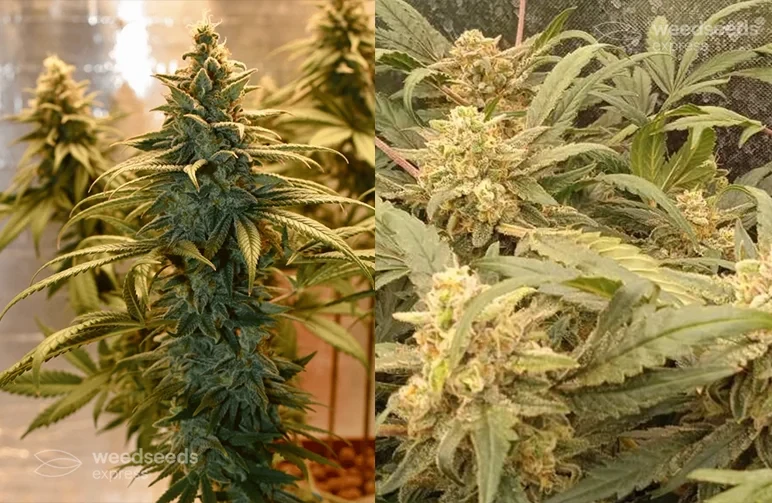
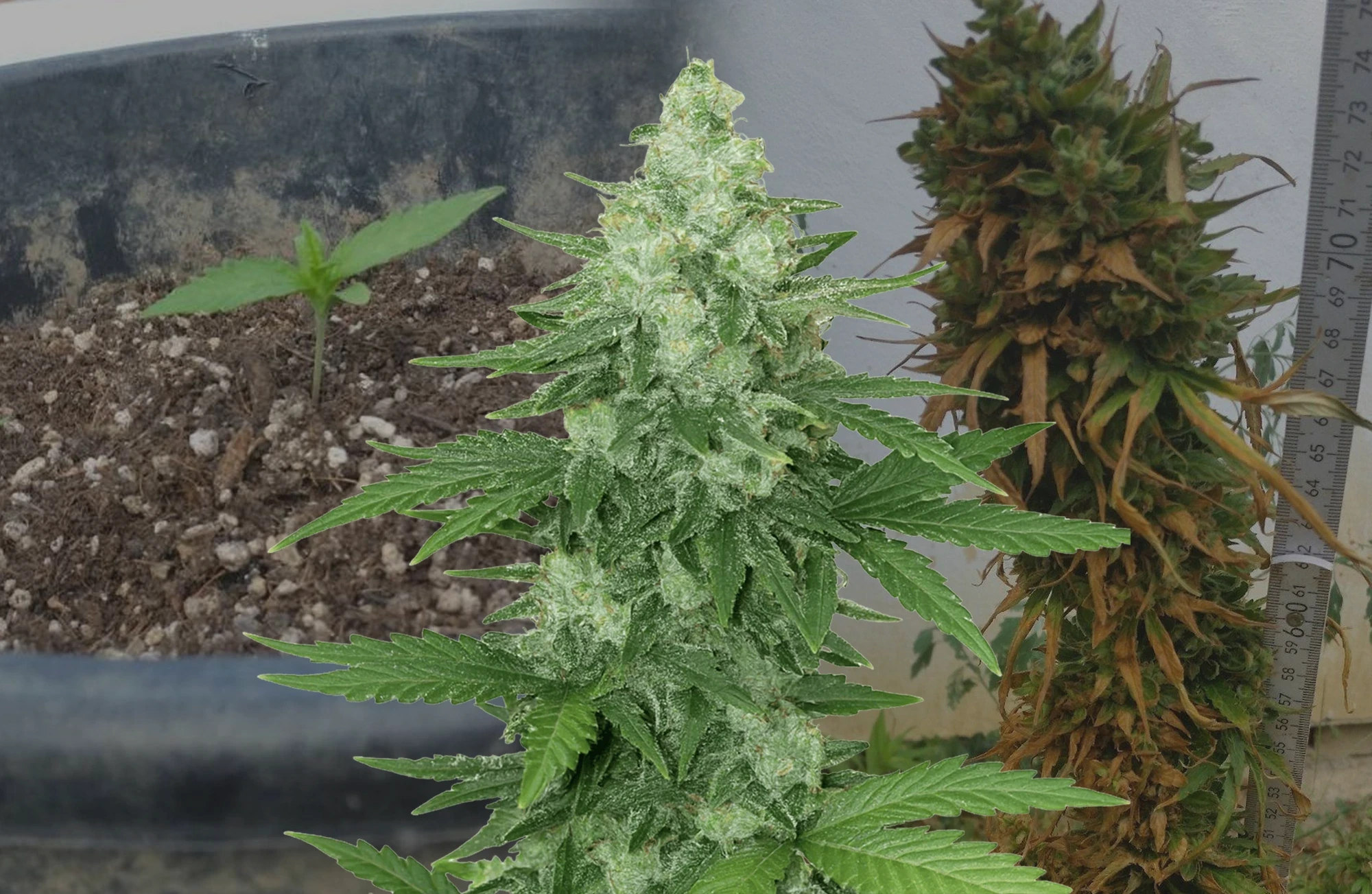
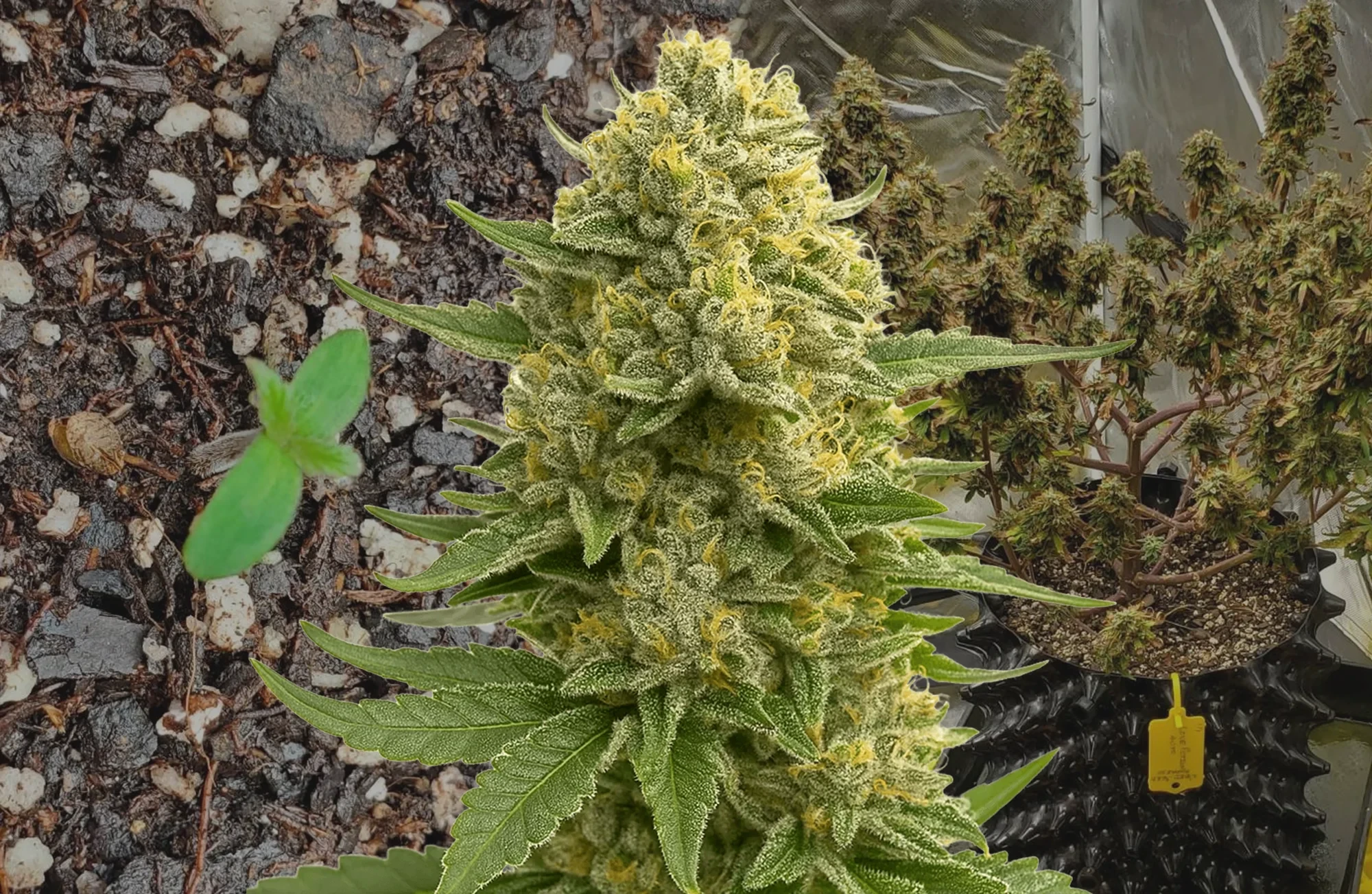
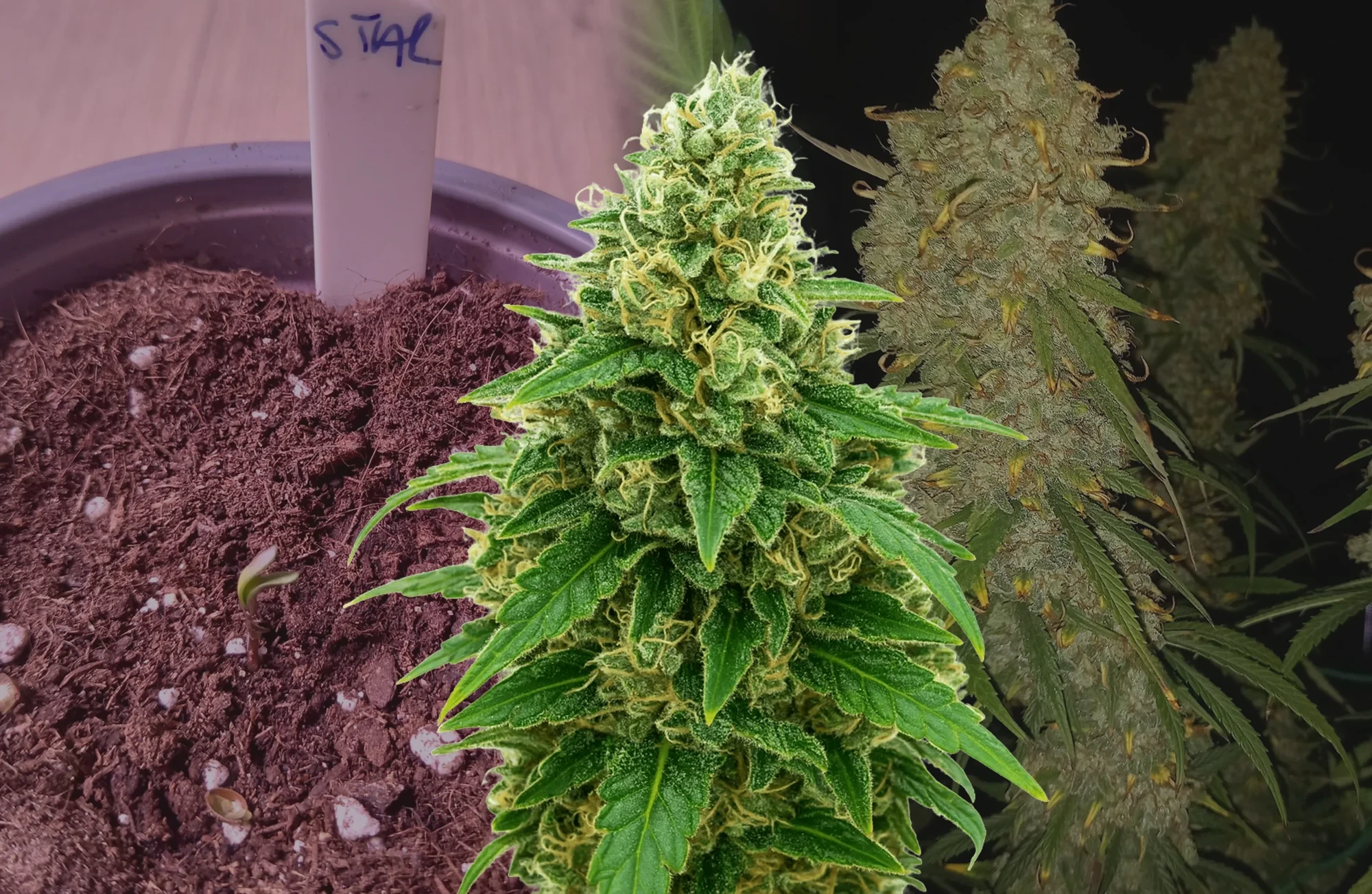
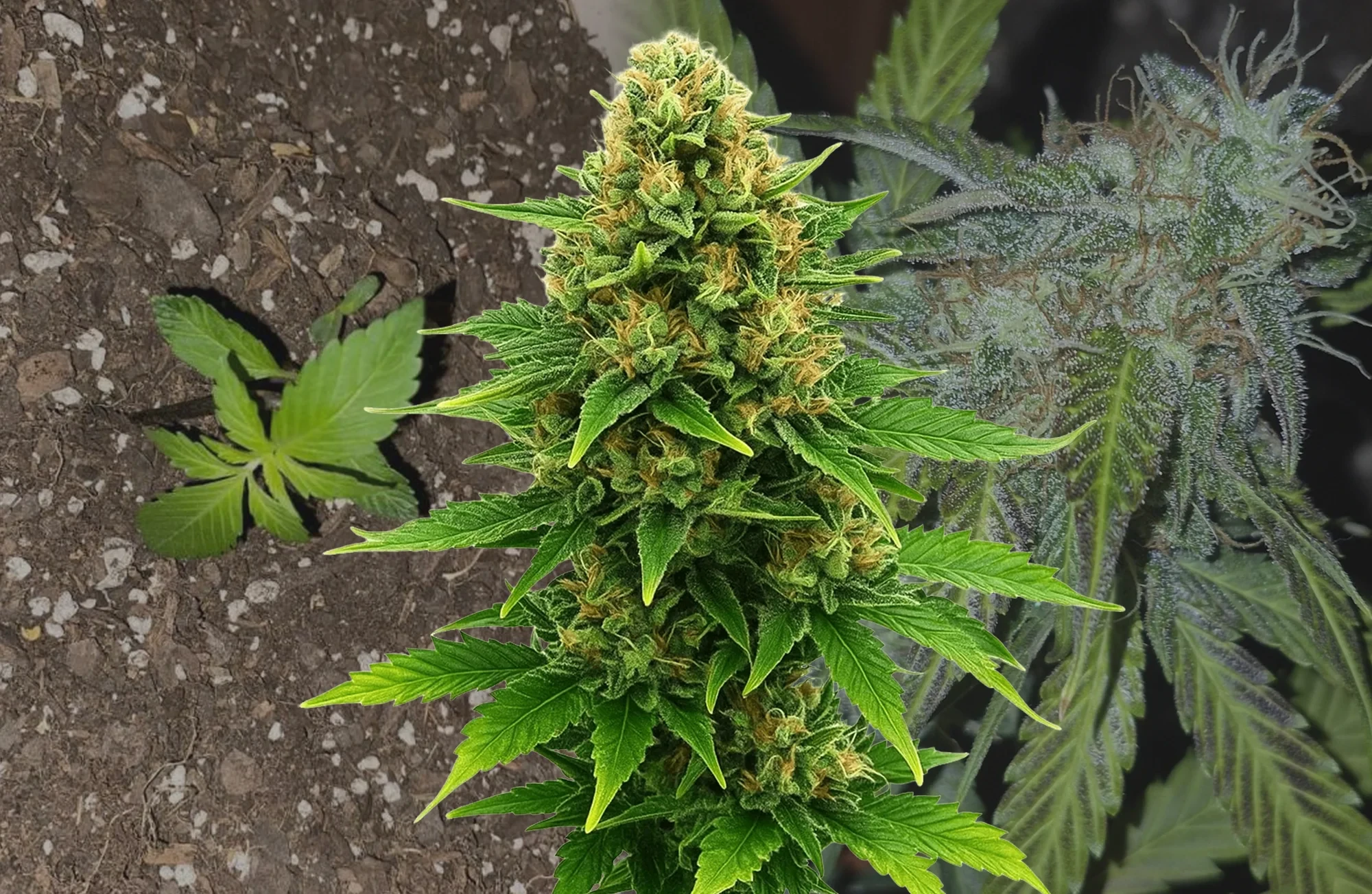
Note the towering, vertical cola structure achieved by user Silky_smooth via traditional photoperiod timing, compared to the compact, efficient, and bushy flower development from user leeman’s autoflower. While both offer the iconic GDP profile, their growth "blueprints" require different tent management. (Credit: Silky_smooth & leeman via GrowDiaries)
Understanding Cannabis Genetics: The Foundation
What Are Photoperiod Cannabis Strains?
Photoperiod strains are the classic garden-variety cannabis most growers think of: they remain in vegetative growth while they receive long light periods (commonly 18/6) and only switch to flowering when the light schedule changes, usually to 12/12.
That light-triggered flip is a trait inherited from Cannabis sativa and indica lineages.
For growers, that means control: extend veg to fatten colas, experiment with training like ScrOG or heavy LST, and use mothers and clones to lock-in elite phenos.
Photoperiods are our go-to when we want maximum control over plant architecture, top-shelf yields, and the broadest selection of genetics.
Think long runtimes (20+ weeks from seed to harvest for many runs) and higher ceilings for THC and terpene expression when dialed in.
When searching for the best photoperiod seeds, prioritize genetics known for stability and desired traits.
What Are Autoflowering Cannabis Strains?
Autoflowers carry ruderalis genetics, plants that evolved to flower based on age rather than light changes.
In practice, autos begin flowering after a set number of days (often a few weeks) regardless of whether you run 18, 20 or even 24 hours of light. That makes their life cycle compact: many autoflowers finish in 8–12 weeks from seed.
Autoflowers are beloved for speed and simplicity. They're typically smaller and more discreet, tolerate a range of climates, and let you harvest multiple crops per season outdoors.
Modern breeding has improved potency and yields considerably, but autos still trade some flexibility and single-plant ceiling for those benefits.
When seeking the best autoflower seeds, look for reputable breeders known for robust and potent modern lines.
(We test both types at WSE, autoflower lines for fast turnarounds and photoperiods for trophy runs.)
The Core Differences: Autoflowers vs. Photoperiods at a Glance
To make an informed choice, it's vital to understand the fundamental distinctions between autoflowering and photoperiod cannabis strains. Here’s a quick overview of their key differences:
| Feature | Autoflowers | Photoperiods |
|---|---|---|
| Flowering Trigger | Age (typically 3-4 weeks from sprout) | Light cycle change (e.g., 12 hours light / 12 hours dark) |
| Light Cycle | Flexible (18-24 hours light common, e.g., 20/4) | Vegetative: 18/6 or 20/4. Flowering: Strict 12/12 |
| Life Cycle Duration | Fast (8-12 weeks seed-to-harvest) | Slower (12-20+ weeks depending on veg duration) |
| Plant Size | Compact, discreet (ideal for small spaces) | Can grow very large, high vigor (requires more space) |
| Yield Potential | Lower per plant, but high per year with multiple cycles | Higher per plant, especially with extended veg and training |
| Potency/Cannabinoids | Modern autos can be highly potent, some variability | Generally higher and more consistent top-tier potency/terpenes |
| Training Flexibility | Limited (light LST, defoliation only), fixed clock | High (topping, ScrOG, LST, supercropping), recoverable from stress |
| Cloning | Not suitable (clones flower based on age of mother) | Excellent for cloning, ideal for mother plants and genetic preservation |
| Beginner Friendliness | Very high (forgiving, simple light schedule) | Moderate to High (rewards precision, more demanding light management) |
| Resilience | Often hardy, quicker recovery from minor stress | Can be less forgiving to mistakes but recovers in veg |
| Energy Consumption | Higher constant light for short duration | Variable, intense light for extended veg, then 12/12 for flower |
Light Cycle Requirements
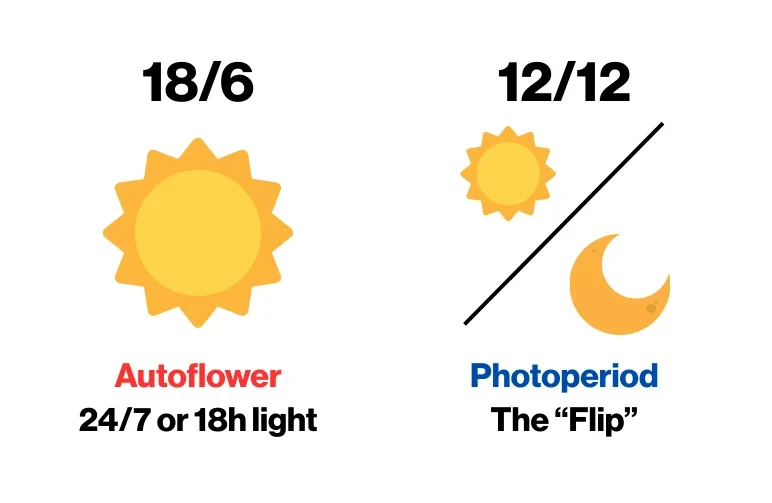
The defining difference in daily maintenance is how you manage your timer. Autoflowers are "set and forget," thriving on 18 to 24 hours of light from seed to harvest. Photoperiods, however, require a manual "flip" to 12 hours of uninterrupted darkness to signal the plant that it's time to stop growing leaves and start growing buds.
Autoflowers: 18–24 hours of light is common: they don't need a 12/12 trigger.
That simplifies scheduling (and timers) and means energy consumption is consistent throughout their life cycle, albeit at a higher daily rate than a flowering photoperiod.
Photoperiods: Require a switch to 12/12 to initiate flowering. Vegetative lighting is usually 18/6 or 20/4.
While their flowering light schedule uses less energy per day, the longer overall cycle can lead to comparable or even higher total energy use.
Growth Speed and Life Cycle Duration
Autoflowers: Fast, 8–12 weeks seed-to-harvest is typical.
Photoperiods: Slower, often 20+ weeks when you include extended veg and a full flower stretch.
Size and Plant Structure
Autoflowers: Compact, bushy or columnar depending on genetics: great for tents and tiny spaces.
Their smaller stature also makes them ideal for discreet grows, which can be a factor in regions with strict cultivation limits or for those prioritizing privacy.
Photoperiods: Taller, can develop large canopies: ideal for high-yield training techniques. These require more vertical and horizontal space.
Yield Potential
Autoflowers: Lower yield per plant historically, though modern breeders are closing the gap. The trick is more plants per area or more cycles per year.
Photoperiods: Higher ceiling per plant when trained and vegged long enough.
Potency and Cannabinoid Content
Autoflowers: Historically trailed in THC but modern autos can reach impressive potency. Expect some variability by breeder and phenotype.
Photoperiods: Generally offer higher and more consistent cannabinoid/terpene expression when grown optimally.
Control and Training Capabilities
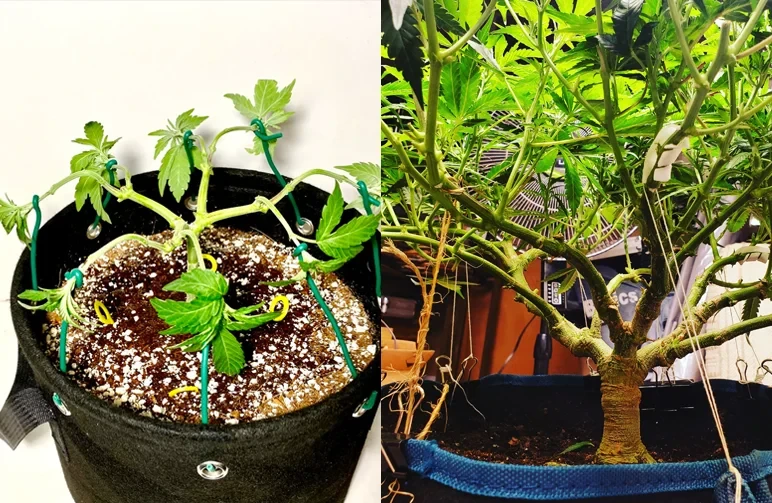
Photoperiods allow for aggressive structural engineering. On the left, Henrique Dias (budtrainer.com) demonstrates 'Mainlining' or 'Manifolding,' a high-stress technique used to create a symmetrical skeleton for even nutrient flow. On the right, sillyskunk (Reddit) shows the massive, woody trunk of a photoperiod plant after months of Low Stress Training (LST). Because these plants aren't on a "fixed clock" like autoflowers, they have the time to recover from heavy pruning and build the massive foundations required for trophy-sized yields.
Autoflowers: Limited, avoid heavy stress. Light LST and other low-stress techniques work best since autos have a fixed clock. Major stress like topping or heavy pruning can significantly impact yield due to their short recovery window.
Photoperiods: Highly trainable. Topping, heavy LST, ScrOG, supercropping: you can extend veg to recover from stress.
Resilience and Hardiness
Autoflowers: Often hardier and quicker to bounce back from minor environmental stress, making them good for novice outdoor growers or marginal climates.
Photoperiods: Can be less forgiving but reward precise environmental control with bigger yields and refined profiles. Their ability to recover during an extended vegetative stage offers a buffer for grower errors.
Advantages of Growing Autoflowers
Speed and Multiple Harvests
Autoflowers let you stack harvests. In a single outdoor season we can often get two to three cycles where a photoperiod might give just one, huge if you want steady supply.
Ease of Cultivation / Beginner-Friendly
Autos are idiot-friendly: less dependence on exact light switching, fewer decisions about when to flip, great for first-time growers learning the ropes of irrigation, pH, and pest management.
Space Efficiency and Discretion
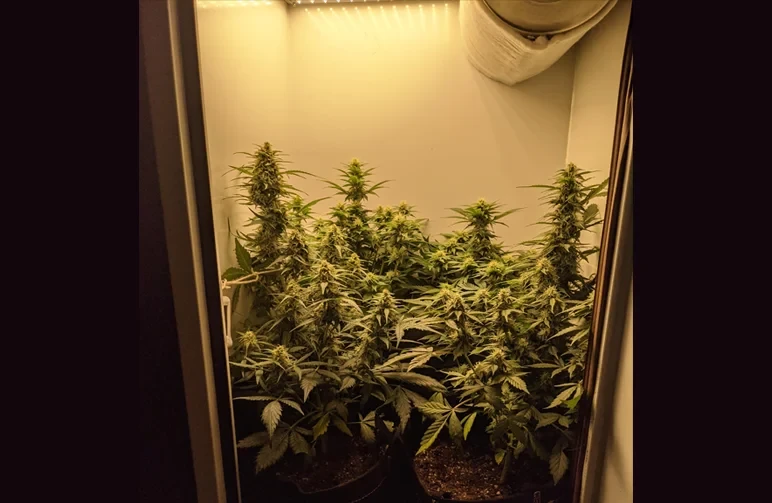
For many home growers, space is the ultimate constraint. This sleek cabinet setup by sbgrow33 (Reddit) perfectly demonstrates why autoflowers are the undisputed kings of the stealth grow. Their naturally compact stature allows them to thrive in small cabinets or closets, delivering a full canopy of medicine without the risk of the plant outgrowing its environment. In a space this size, a photoperiod plant could easily become unmanageable during the flowering stretch.
Small footprint and short stature make autos perfect for stealth grows or tight tents. You can pack more plants per square foot. This small size can also be advantageous in regions where plant count or height restrictions are in place.
Reduced Light Schedule Management
No 12/12 drama. You can run a simple 18–20 hour schedule and leave timers alone, less room for human error.
Outdoor Growing Flexibility
Autos shine in short-season climates. Plant late and still harvest before frost: throw multiple plantings through the season for continuous yield.
Disadvantages of Growing Autoflowers
Smaller Yields Per Plant
Even modern autos usually don't match the per-plant output of a well-managed photoperiod. Our workaround? More plants or more cycles.
Less Control Over Growth Cycle
You can't extend veg to build a monster canopy, autos are on a clock, so big training moves often cost yield.
Not Suitable for Cloning or Mother Plants
You can't maintain a perpetual mother room with true autos: clones will transition based on age too, which defeats typical cloning workflows.
Poor Response to Stress / Repotting
Autos don't tolerate long recovery times. Repotting or major trauma can stunt them irreparably if it happens during the short veg window, impacting overall yield and quality.
Genetic Limitations (Historical Perspective vs. Modern)
Early autos were weak on potency and flavour. Breeding has closed that gap, but some rare terpene-expressive phenos still favor photoperiod backgrounds.
Advantages of Growing Photoperiods
Higher Yield Potential
With longer veg and training, photoperiods can deliver massive per-plant yields. If you want kilos (or close), photoperiods are the route.
Greater Control and Training Flexibility
We love photoperiods for ScrOGs, topping, and heavy LST, because you can recover the plant before flower. This allows for highly customized plant architecture.
Cloning and Mother Plant Potential
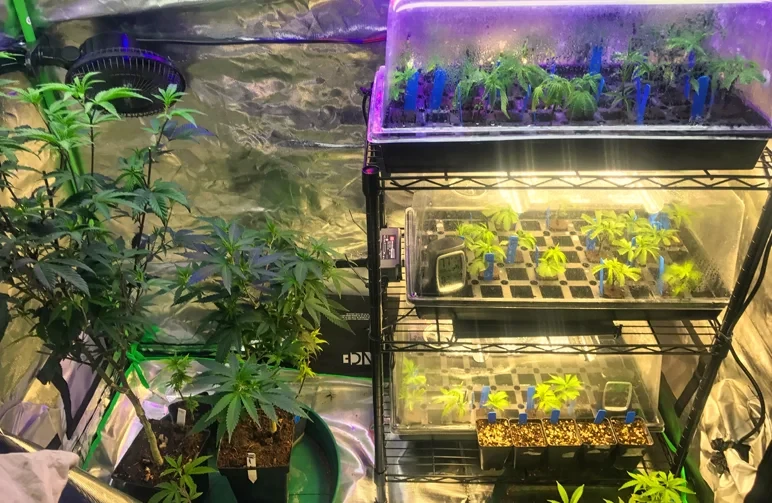
One of the greatest advantages of photoperiod genetics is the ability to maintain 'Mother Plants' indefinitely. In this efficient setup by Mpgolds (Reddit), you can see a mother plant (left) providing a continuous source of genetically identical clones. These clones are housed in propagation domes on a tiered racking system (right), ensuring that every single harvest has the exact same potency, flavour, and growth habits. This level of consistency is the hallmark of a professional grow and is a workflow unique to photoperiod strains.
Keep moms, make clones, and curate elite phenos. That continuity is gold for breeders and consistent producers looking to maintain specific genetic lines.
Broader Genetic Variety and Strain Selection
Most boutique crosses and rare landraces are in photoperiod form, so if you want unique terpene profiles or legacy genetics, photoperiods give you the widest selection of premium cannabis seeds.
Extended Vegetative Period for Recovery
Stress? No problem, flip later. Photoperiods give you the breathing room to correct pH, feed mistakes, or recover from pests, ensuring a healthier plant before initiating flower.
Disadvantages of Growing Photoperiods
Longer Grow Cycle and Time to Harvest
Patience required. From seed to smoke you're often looking at 5+ months for many photoperiod runs, demanding a significant time commitment.
Strict Light Schedule Management Required
A missed light during flower can herm or ruin a run. Timers, blackout-proofing, and redundancy are necessary. Even minor light leaks can cause significant stress.
More Demanding for Beginners
Photoperiods reward precision; nutrients, pH, humidity control, and training choices matter more, making them a steeper learning curve for novice growers.
Larger Space Requirements
Big plants need big rooms. If you're limited to a closet or small tent, photoperiods can be overkill unless you plan to heavily prune/train.
Which Strain Type Is Right For Your Grow? (Choosing Between Autoflowers and Photoperiods)
Consider Your Experience Level
Beginners: Autos are forgiving and simple. You'll learn irrigation, pH, and pests without the strict timing of photoperiods.
Intermediate/Expert: Photoperiods unlock advanced techniques. If you want to push yields and terpene expression, go photoperiod.
Evaluate Your Grow Space and Equipment
Small tents and stealth setups: Autos. Their compact size can also be a benefit in areas with legal plant height restrictions. Big rooms, grow racks, and dedicated mother/clone areas: Photoperiods.
For a complete guide on setting up your indoor space, check out our article on how to grow weed indoors.
Determine Your Desired Yield and Harvest Frequency
Need steady, staggered harvests? Autos let you cycle multiple crops throughout the year. Want one big haul? Photoperiods are better per-plant.
Assess Your Time Commitment
Short on time? Autos reduce babysitting. Want to tinker and optimize over months? Photoperiods reward that investment.
Climate and Environment (Indoor vs. Outdoor)
Short growing seasons or unpredictable climates favor autos. Long, stable seasons and controlled indoor environments favor photoperiods. In a controlled indoor environment, managing light cycles for photoperiods is straightforward, while autos can thrive on a consistent longer light period.
Specific Strain Goals (Potency, flavour, Effects)
If you're chasing elite terpene profiles or the highest THC phenos, prioritize photoperiod selections from reputable breeders.
If you want fast, reliable smoke with respectable potency, modern autos from quality seed banks, like the curated lines we run at WSE, can deliver.
Tips for Optimizing Your Grow, Whichever You Choose
Essential Autoflower Growing Tips
- Run 18–20 hours of light to maximize growth and energy without burning your electricity bill. We usually run 20/4 for a balance. 24/0 is OK too, but consider the increased power draw and potential stress on some plants.
- Avoid stressful training, favor gentle LST and low-stakes canopy shaping early.
- Start in the final pot when possible: avoid transplant shock. If you must transplant, do it early and gently.
- Feed lightly and watch for nutrient burn, autos are less forgiving of overfeeding.
- Choose modern, reputable genetics. At WSE we test and recommend lines with proven turnaround and potency.
Essential Photoperiod Growing Tips
- Use a consistent veg light schedule (18/6) and don't rush the flip, size in veg equals yield in flower.
- Train aggressively: topping, FIM, ScrOG, and supercropping reward you with canopy control and bigger colas.
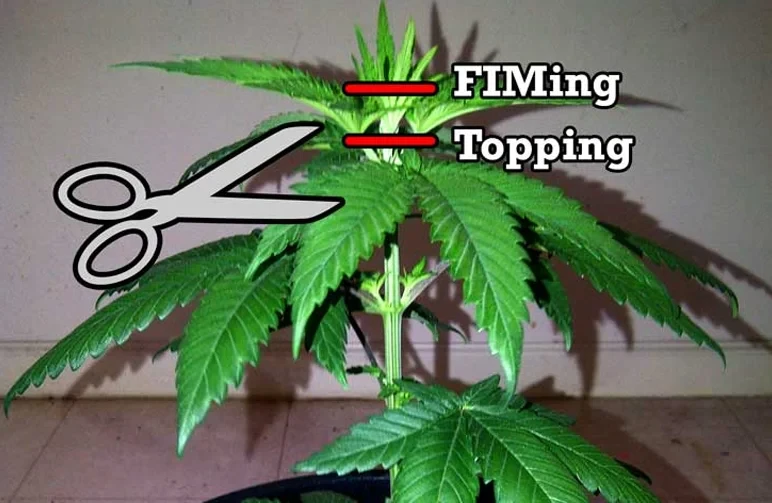
Precision Training: Topping vs. FIMing.
To maximize the yield of a photoperiod plant, you must break its apical dominance. As shown above, Topping involves removing the tip of the main stem to create two main colas, while FIMing (a partial cut of the new growth) can result in four or more. Because photoperiods allow you to extend the vegetative stage, the plant has ample time to recover from these high-stress cuts, eventually building a massive, multi-cola canopy that would be impossible on an autoflower's restricted timeline. - Invest in blackout-proofing if growing indoors or outdoors in areas with light pollution. Any light leak during the dark cycle of flowering can cause issues.
- Maintain stable temps (ideal 20 °C–26 °C) and RH targets (veg 50–70%, flower 40–50%), and watch trichome development rather than calendar dates.
- Keep mothers and a cloning workflow if you want genetic consistency and quick turnaround for repeat runs.
Conclusion: Making Your Informed Decision
There's no single winner in the autoflowers vs. photoperiods debate, only the right choice for your setup and goals.
If speed, discretion, and simplicity matter most, modern autoflower strains are stupidly convenient and getting better every season.
If you want ultimate control, top-end yields, and the widest palette of flavours and effects, photoperiod seeds remain king.
We recommend matching genetics to your workflow: small tents and busy schedules = autos; dedicated rooms, breeding, and big harvest goals = photoperiods.
And if you're still unsure, try both; run an auto for a quick win while you dial in a photoperiod mother. At WSE we stock vetted autos and photoperiod seeds, so you can pick the line that fits your ambition.
Grow smart, trust the plant, and don't be afraid to experiment.
As a leading provider of premium cannabis genetics, WSE is committed to advancing cultivation knowledge.
Our in-house research and rigorous testing ensure that the insights shared in this guide are accurate, up-to-date, and grounded in real-world results.
Frequently Asked Questions (FAQ)
Can I grow autoflowers and photoperiods together?
Yes, but it's tricky. Autos run on an internal clock and won't wait for a 12/12 flip, so if you keep both in the same room you must choose a lighting schedule that suits autos (e.g., 18/6) and accept that photoperiods won't flower until you flip the lights.
Many growers keep autos in separate tents or rooms, or run photoperiods on a timed schedule while autos get continuous light.
Are autoflowers less potent than photoperiods?
Historically, yes, autos trailed photoperiods in THC and terpene complexity. Modern breeding has closed much of that gap: you'll find autos with knockout potency.
Still, elite photoperiods often retain the edge for absolute top-shelf potency and nuanced terpene profiles.
What's the best light schedule for autoflowers?
Most of us run 18–20 hours of light: 20/4 is a sweet spot for efficiency and plant health. 24/0 works and can speed growth, but increases electricity costs and sometimes stresses plants in long runs.
How much do autoflowers yield compared to photoperiods?
Per plant, autoflowers typically yield less. The tradeoffs: you can fit more autos per area and harvest multiple cycles per year. So annual output can be comparable depending on your planting density and seasons.
Our advice: calculate by square-foot-per-year, not per-plant, to compare fairly.
(For seed selection, germination guarantees, and breeder-tested lines, visit our catalogue at WSE, Buy Premium Cannabis Seeds - WSE, for curated autos and photoperiods that match real-world grows.)