
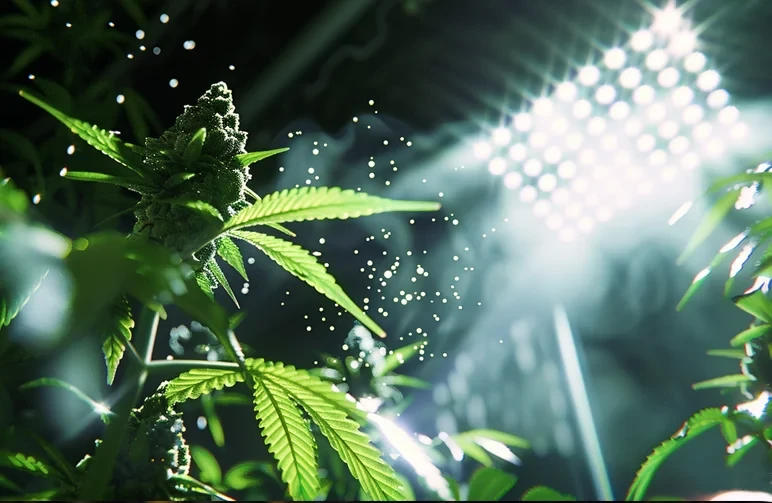
Light is plant food. Get it right and buds stack up like frosty little baseballs. Get it wrong and you'll either grow stretchy salad or crispy critters.
In this guide, we'll demystify the best PPFD for indoor cannabis, no bro-science, no math anxiety.
We'll explain what PPFD, PAR, and DLI actually mean (in plain English), then show you exactly how to set your light height, dimmer, and schedule for consistent, top-shelf results.
Whether you're rocking a 2×2 with a budget LED or a dialed 4×4, you'll walk away with numbers you can trust and a simple playbook you can copy. And yes, we'll cover when higher PPFD makes sense with added CO2 and when it's overkill.
Let's feed your plants the right amount of light, calmly, confidently, and without cooking anything.
Key Takeaways
- The best PPFD for indoor cannabis shifts by stage: 100–300 for seedlings, 300–600 for veg, 700–900 for flower without CO2, and 1200–1500 only with added CO2 and warmer temps.
- Use DLI (PPFD × hours) to hit daily light goals; autos can run slightly lower PPFD because longer days boost DLI, while photos on 12/12 typically need 700–900 PPFD to match totals.
- Match light to environment to prevent stress: raise temps as PPFD rises, keep RH in the stage-appropriate range, and aim for sensible VPD.
- Prioritize uniformity over peak readings: create a 9-point PPFD map, keep the canopy within ±10–15%, raise the light to smooth spread, and use the dimmer to fine-tune intensity.
- Fix issues fast and gently: increase PPFD 10–20% or lower the light for stretch, and for excess light (canoeing/bleaching) dim 10–30% or raise 3–6 inches and recheck temps and RH.
PPFD, PAR, And DLI—Plain-English Basics

What PPFD Measures (Usable Light Hitting Leaves)
PPFD stands for Photosynthetic Photon Flux Density. Translation: how many useful light particles (photons) hit one square meter of your canopy every second. It's measured in µmol/m²/s.
Think of PPFD like the brightness of sunlight that actually lands on your leaves, not the watts on the box or the lumens marketing fluff.
Why it matters: cannabis turns those photons into sugars and growth. Too few photons and the plant stretches and stalls. Too many and the leaves curl, bleach, and shut down.
Our goal is to give "just enough" for each stage.
PAR: The Photosynthetically Active Spectrum, Simplified
PAR is the chunk of the light spectrum plants can use for photosynthesis (roughly 400–700 nm). White LEDs, HPS, and CMH all produce PAR light, just with different mixes.
You don't need to obsess over every nanometer, modern full-spectrum LEDs cover PAR well. What you do need is the right intensity (PPFD) and good distribution over the canopy.
Quick sanity check: "more watts" doesn't always mean "more usable PAR at the leaves." Efficiency, optics, and hanging height change how much actually lands on your plants.
DLI: Turning PPFD And Hours Of Light Into A Daily Light Budget
DLI is Daily Light Integral. It's your plant's daily photon budget, like calories per day. Formula (don't panic):
DLI (mol/m²/day) = PPFD (µmol/m²/s) × seconds of light per day ÷ 1,000,000.
Plain-English examples:
- 300 PPFD at 18 hours: 300 × (18 × 3600) ÷ 1,000,000 ≈ 19.4 mol/day.
- 600 PPFD at 18 hours: ≈ 38.9 mol/day.
- 900 PPFD at 12 hours: 900 × (12 × 3600) ÷ 1,000,000 ≈ 38.9 mol/day.
See it? Same DLI can come from lower PPFD with more hours (veg/autos) or higher PPFD with fewer hours (flower). We'll use DLI to sanity-check your setup so you don't underfeed or fry your plants.
Best PPFD For Cannabis By Stage (With And Without CO2)
Seedlings And Clones: 100–300 PPFD For Gentle Starts
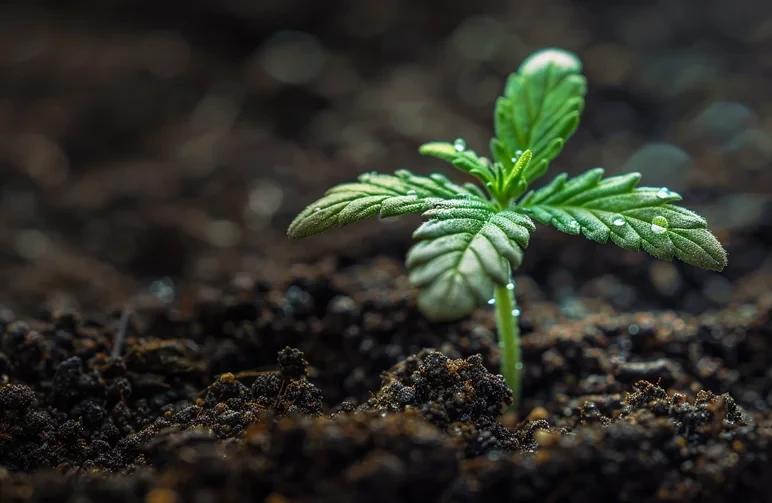
Seedlings and fresh clones don't have the root mass or leaves to process intense light. Aim for 100–200 PPFD days 1–7, then 200–300 PPFD in week 2. If they're reaching like sky-scrapers, bump 50 PPFD.
If cotyledons look pale or leaves taco upward, back off the light or raise it.
DLI idea: at 200 PPFD for 18 hours, you're around 13 mol/day, plenty to build strong roots without stress.
Vegetative Growth: 300–600 PPFD For Fast, Compact Nodes
Veg is where structure sets yield. Hit 300–450 PPFD early veg, 450–600 PPFD late veg. Expect tight internodes, deep green leaves, and vigorous lateral growth.
On an 18/6 schedule, 500 PPFD delivers ~32.4 mol/day, beautiful for thick, bushy plants.
Tip: More PPFD isn't automatically better if your temps and humidity lag behind. Keep metabolism in sync (we'll show you how in the environment section).
Flowering: 600–1000 PPFD Standard, 1200–1500 PPFD With CO2
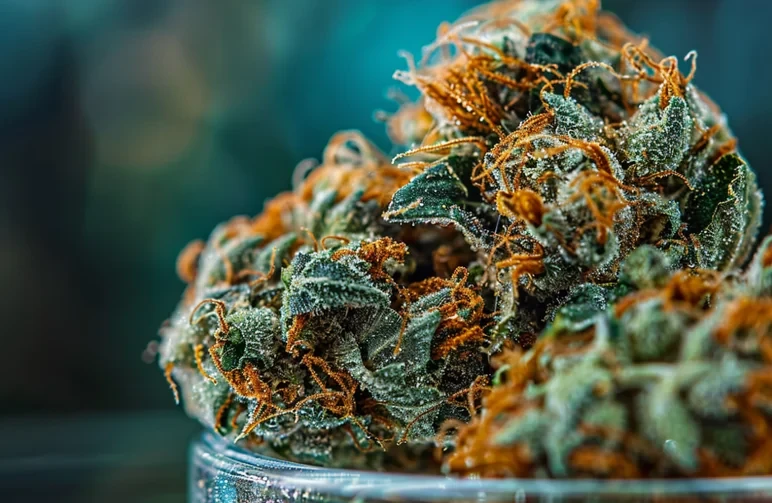
For most home grows without added CO2, 700–900 PPFD during flower is the sweet spot. It fuels dense flowers without pushing the plant past its gas tank. Peak around weeks 3–7 of flower: taper slightly late if you see stress.
With added CO2 (target 1000–1200 ppm, sealed room, strong airflow and dehumidification), plants can use 1200–1500 PPFD, but only if temperatures run warmer and nutrients, water, and root oxygen keep up.
If you aren't managing CO2 and environment tightly, don't chase 1200+ PPFD. It's like bolting a turbo on a engine without upgrading the cooling, things go sideways fast.
Autos Vs Photoperiods: Same PPFD, Different Hours = Different DLI
Autos and photos use light the same way per second (PPFD), but autos run longer days (18/6 or 20/4) from seed to harvest. That means at the same PPFD, autos stack more DLI.
Example: 700 PPFD on 20/4 gives ~50.4 mol/day, pretty aggressive. Many auto growers do great at 500–700 PPFD because the extra hours add up. Photos on 12/12 often benefit from 700–900 PPFD to hit a similar daily total.
Match Your Environment To Your Light (Temp, RH, VPD)
Warmer Temps For Higher PPFD: Keeping Metabolism In Sync
More light speeds up metabolism, plants "breathe" faster and want warmer leaf temps. General targets:
- Low PPFD (seedlings 100–300): 22 °C–24 °C
- Moderate PPFD (veg 300–600): 24 °C–27 °C
- High PPFD (flower 700–1000): 26 °C–28 °C
- With added CO2 and 1200+ PPFD: 28 °C–30 °C canopy temp
If your room is cool while PPFD is high, plants can't process all that light, hello, canoeing and stalled growth.
Humidity Targets And VPD: The Plant's Comfort Zone At Each Stage
VPD stands for Vapor Pressure Deficit, think of it as the plant's comfort zone for how easily it can move water.
Too low VPD (air too humid) and plants can't transpire: too high (air too dry) and they lose water faster than roots can supply.
Simple targets (lights on):
- Seedlings: 65–75% RH, VPD ~0.6–0.9 kPa
- Veg: 55–65% RH, VPD ~0.9–1.2 kPa
- Early flower: 50–60% RH, VPD ~1.1–1.3 kPa
- Late flower: 45–50% RH, VPD ~1.2–1.5 kPa
You don't need to become a VPD scientist. Use these as guardrails. If you push PPFD up, nudge temps up and make sure RH suits the stage so leaves don't freak out.
Lights And Coverage: LEDs, HID, And Hanging Height
LEDs Vs HIDs: Efficiency, Heat, And Spectrum Considerations
- LEDs: Most efficient per watt, less radiant heat, and great PAR coverage with full-spectrum white (plus some red). Easier temp control and lower bills.
- HPS/CMH (HID): Still grow great bud, but run hotter and less efficient. HPS leans red/orange (bulky flowers), CMH has nicer spectrum but more heat than LED.
If you're new, we recommend a quality full-spectrum LED in the 150–500W range depending on tent size. Pair great genetics from WeedSeedsExpress with the right light, and you're cooking with gas (the good kind).
Uniformity Beats Peaks: Even Canopy PPFD For Even Buds
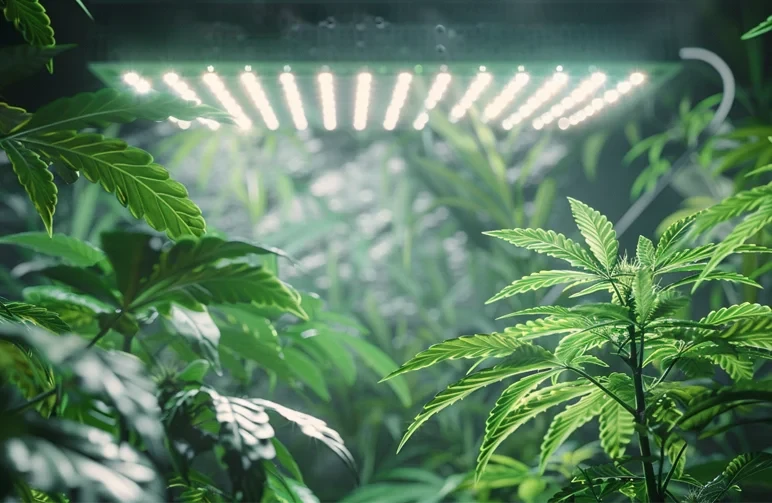
We're not chasing the single highest PPFD number at dead center. We want the whole canopy within a tight band (±10–15%). That's how you get uniform tops, not one scorched cola and a bunch of underfed corners.
Use SCROG or light LST to keep tops level.
Footprint And Hanging Height: Reading Manufacturer Charts (Without The Hype)
Ignore marketing "equivalent watts." Look for real data: PPFD maps at different heights over a given area. For a 2×2, a 150–240W high-efficiency LED should deliver 600–900 PPFD across most of the grid at 12–16 inches.
If the chart shows 1500 PPFD in the middle and 200 at the edges, raise the light or dim down and lower slightly to even it out. The goal is coverage, not bragging rights.
How To Measure PPFD And Map Your Canopy
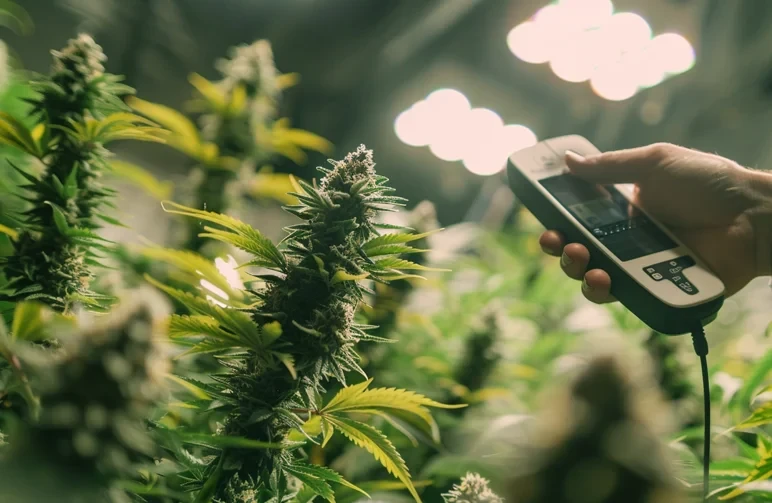
Tools: Phone Apps, PAR Meters, And What's "Good Enough"
- Best: A real PAR meter (Apogee, Photone Pro with proper diffuser, SpotOn). Not cheap, very accurate.
- Good enough: The Photone app (iOS) or similar with an LED/camera diffuser. Calibrate with the correct setting. Android options exist but vary.
- Backup method: Use the manufacturer's PPFD map as a baseline and adjust by plant feedback. Not ideal, but you can still crush it.
Whatever you use, be consistent. Measure at canopy height with lights warmed up for 15+ minutes.
Make A 9-Point PPFD Map: Quick Method For Any Tent
- Set your intended hanging height and dimmer for the stage.
- At canopy level, measure PPFD at 9 spots: 4 corners, 4 mid-edges, and dead center.
- Average the numbers. Check how far the corners are from center (aim for within 10–15%).
- If center is way higher than edges, raise the fixture a couple inches and/or dim 10–15%. Re-map quickly.
- If everything is low, lower the light or add dimmer power. Re-check temps and RH after changes.
Dialing In Dimming, Distance, And Photoperiod (18/6, 20/4, 12/12)
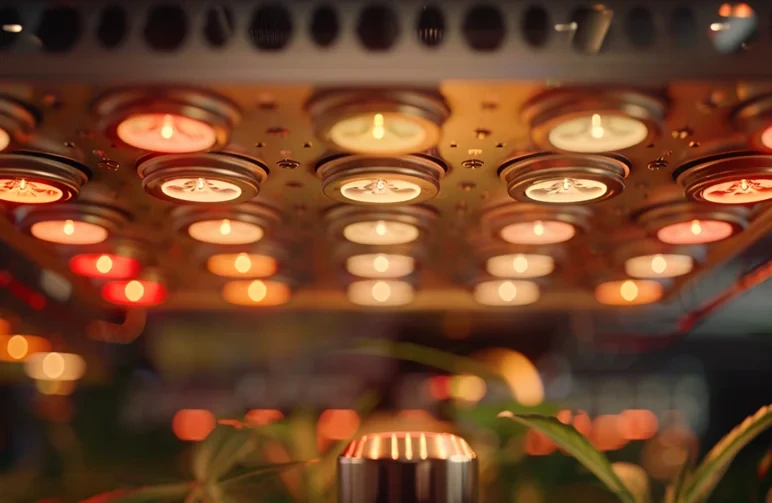
Raise The Light Or Turn The Dimmer? When To Do Which
- Hot center, weak edges: Raise the light first to smooth the spread. Then fine-tune with the dimmer.
- Overall too intense (canoeing, bleaching near tops): Dim 10–20% immediately for relief. If you're still high, raise the light 2–4 inches and re-check.
- Overall too low (stretching): Lower the light a few inches or bump dimmer 10–15%. Don't jump 40% in one go, stagger changes to avoid shock.
Rule of thumb: Distance changes uniformity: dimming changes intensity. Use both, gently.
PPFD × Hours: Setting DLI Targets For Veg And Flower
Use these easy targets:
- Seedlings/clones: DLI 10–15 mol/day → 150–250 PPFD at 18–20 hours.
- Veg: DLI 20–35 mol/day → 350–550 PPFD at 18/6 (or 450–650 at 16/8 if you prefer).
- Flower (no CO2): DLI 30–45 mol/day → 700–900 PPFD at 12/12.
- Flower (with CO2): DLI 40–60 mol/day → 1000–1400 PPFD at 12/12 with 1000–1200 ppm CO2, 82–86°F, and dialed RH.
Autos typically run 18/6 or 20/4 from seed. At the same PPFD, their DLI will be higher than photos on 12/12, so you can run slightly lower PPFD and still hit strong daily totals.
Troubleshooting: Too Much, Too Little, And Quick Fixes
Low Light Symptoms: Stretching, Pale New Growth, Slow Buds
- Long internodes, leaves reaching up, slow side branching.
- Buds look wispy mid-flower: lower sites are larfy.
Quick fix: Lower the fixture 2–4 inches or increase dimmer 10–20%. Make sure temps are at least 24 °C-26 °C in veg, 26 °C-28 °C in flower.
Excess Light Symptoms: Canoeing, Bleaching, Burnt Tips, Foxtails
- Leaves taco upward (canoe) to reduce light. Top leaves feel dry: margins curl.
- Bleaching at the very top flowers, ghost-white tips while lower buds look normal.
- Foxtailing (spiky, heat/light stress growth) late flower.
Quick fix: Immediately dim 10–30% or raise light 3–6 inches. Check canopy temps, over 29 °C without CO2 can amplify stress. Increase airflow across the canopy (not directly blasting leaves) and confirm RH is stage-appropriate.
Rapid Recovery Moves: Step-Down PPFD, Environment Tweaks, Staggered Changes
- Do changes in steps. Drop PPFD 15%, wait 24–48 hours, reassess. Plants hate whiplash.
- Balance the triangle: light, temperature, humidity. If you boost one, adjust the others.
- Last resort for bleaching tops: super gentle LST, bend the tallest cola slightly lower to match canopy height. Support with soft ties. Don't go ham in late flower.
Sample Tent Setups And A Simple PPFD Playbook You Can Copy
2×2 Tent (150–240W LED): Practical Heights, PPFD, And Timelines
- Fixture: 150–240W high-efficiency LED (Samsung LM301-class or similar).
- Seedlings/clones: 18–22 inches, ~150–250 PPFD.
- Veg: 14–18 inches, 350–500 PPFD.
- Flower: 12–16 inches, 700–850 PPFD across the grid. If center reads 950+, raise 2 inches and/or dim 10–15%.
- Note: One plant in a small SCROG gives the most uniform canopy.
2×4 Tent (240–320W LED): Mapping, Dimming, And Uniformity Tips
- Fixture: 240–320W bar-style LED for better edge coverage.
- Veg: 16–20 inches, 400–550 PPFD average.
- Flower: 14–18 inches, 700–900 PPFD average. Keep ends within 15% of center by raising an inch or two. Two plants topped once with light LST = even sea of tops.
4×4 Tent (400–500W High-Efficiency LED): Multi-Plant Canopy Targets
- Fixture: 400–500W high-efficiency bar LED. If you're at 600W, great, just dim to target PPFD.
- Veg: 18–22 inches, 450–600 PPFD.
- Flower: 14–20 inches, 750–950 PPFD. Map all nine points: aim for 800–900 average with edges no lower than ~650–700.
- Pro tip: Run two 240–320W fixtures for killer uniformity and independent dimming zones.
Auto-Friendly Schedule: Gentle Ramp, Longer Days, Watch The Clock
- Week 1–2: 150–250 PPFD (18/6 or 20/4), warm temps (24 °C-26 °C), higher RH (65–70%).
- Week 3–4: 300–450 PPFD: start LST only if plants are happy.
- Preflower to mid-flower: 500–700 PPFD. Because days are longer, your DLI is already high, no need to blast 900+ PPFD unless environment is perfect.
- Late flower: Hold steady. If you see stress, dim 10–15% rather than raising the light too far and losing uniformity.
Need genetics that respond well across these ranges? We test and ship fresh seeds weekly, feminised, autos, CBD, and yield monsters, at WeedSeedsExpress.
Pick strains by difficulty, THC, and yield, then pair them with this light plan and go from nervous to dialed.
Conclusion
The best PPFD for indoor cannabis isn't a single number, it's a range that shifts with stage, hours of light, and your environment. Start conservative, map your canopy, and adjust in small, calm steps.
Keep temps and humidity in lockstep with light, and your plants will repay you with dense, terp-loaded flowers. If you want the easy win: 200 PPFD for babies, 450–600 in veg, 700–900 in flower without CO2, done. Ready to level up?
Explore our proven genetics at WeedSeedsExpress and run this PPFD playbook with confidence. Happy growing, we've got your back.
Frequently Asked Questions
What is the best PPFD for indoor cannabis by growth stage?
Aim for 100–200 PPFD for days 1–7, then 200–300 PPFD in week 2 for seedlings/clones. Run 300–450 PPFD in early veg and 450–600 PPFD in late veg.
In flower without CO2, target 700–900 PPFD. Use DLI to sanity-check your hours × intensity.
How does CO2 change the best PPFD for indoor cannabis?
With added CO2 (about 1000–1200 ppm in a sealed, well-controlled room), plants can utilize 1200–1500 PPFD.
You must also run warmer canopy temps (28 °C-30 °C) with strong airflow, dehumidification, and adequate nutrition. Without tight environmental control, stay around 700–900 PPFD in flower.
How do I use DLI to set PPFD and light hours?
DLI = PPFD × seconds of light per day ÷ 1,000,000. For example, 300 PPFD at 18 hours ≈ 19.4 mol/day; 900 PPFD at 12 hours ≈ 38.9 mol/day.
Match stage targets: seedlings 10–15, veg 20–35, flower (no CO2) 30–45, CO2-enriched 40–60 mol/day.
Should I raise the light or dim it to fix uneven PPFD?
Use distance to improve uniformity and dimming to adjust intensity. If the center is hot and edges are weak, raise the fixture first, then fine-tune with the dimmer.
For stress signs (canoeing, bleaching), immediately dim 10–30% and/or raise the light 2–6 inches, then re-map.
Does spectrum change the best PPFD target for indoor cannabis?
PPFD measures photon intensity within PAR, so targets don’t change across common grow spectra. Full-spectrum white LEDs, HPS, and CMH can all hit the right PPFD.
Spectrum influences morphology and colour slightly, but uniform coverage and correct PPFD/VPD alignment drive yield and quality.
Does pushing higher PPFD always increase yield?
Only up to your environmental and physiological limits. Past roughly 700–900 PPFD without CO2, returns diminish and stress risks rise if temps, RH/VPD, water, and nutrients aren’t dialed.
With controlled 1000–1200 ppm CO2 and warmer temps, higher PPFD can boost yield—otherwise it’s overkill.