

We have all been there. You walk into your grow tent, stare at a yellow leaf, and immediately start panicking. Is the plant starving? Is it burned? Is the pH wrong?
If you do not fix the problem fast, nutrient issues will tank your potency, stunt your growth, and steal your yield right when it matters most.
The good news is that you do not need a chemistry degree to fix this. With a few core rules and a sharp eye, you can diagnose the problem fast and correct it even faster.
In this guide, I am going to show you exactly how to read your plant like a book. We will break down the exact symptoms you will see in the tent, and how to fix them without throwing a million bottles of nutrients at the problem.
Key Takeaways
- The golden rule: Most "deficiencies" are actually just nutrient lockout caused by bad pH. Always fix your pH before you add more food to the pot.
- Read the location: Problems on the old, bottom leaves mean you have a mobile nutrient issue. Problems on the brand new, top leaves mean you have an immobile nutrient issue.
- Watch for the claw: If your leaves turn dark, shiny green and the tips curl down like a claw, you have Nitrogen toxicity. You are feeding the plant way too much.
- Look at the new growth: Damaged leaves will never heal. Once you fix a problem, watch the brand new leaves to see if the plant is recovering.
The Golden Rule: It Is Probably Your pH
Here is the biggest rookie mistake in the growing game. You see a yellow leaf. You immediately pour more fertilizer into the pot. The plant gets worse.
Why? Because the plant was not starving. It was locked out.
We call this nutrient lockout. If your water pH is wrong, the roots physically shut down. The food can be sitting right there in the dirt, but the plant cannot eat it. It looks exactly like a deficiency. But adding more food just builds up toxic salts and makes the problem much worse.
That is why pH is the very first thing we check. Every single time.
Here are the exact targets you need to hit:
- Soil: Keep your pH between 5.8 and 6.5. We usually aim right at 6.2.
- Coco and Hydroponics: Keep your pH between 5.5 and 6.0. We like to sit around 5.8.
Rule number one is simple. Fix your pH first. Only then should you look at tweaking your nutrient bottles.
The Cheat Code: Mobile vs. Immobile Nutrients
Plants are incredibly smart. When they run out of food, they will actually rob Peter to pay Paul. They steal nutrients from their old leaves and send them up to the brand new leaves.
But they can only do this with certain nutrients.
Understanding this is the ultimate cheat code. Before you panic, just ask yourself one question. Where is the problem happening?
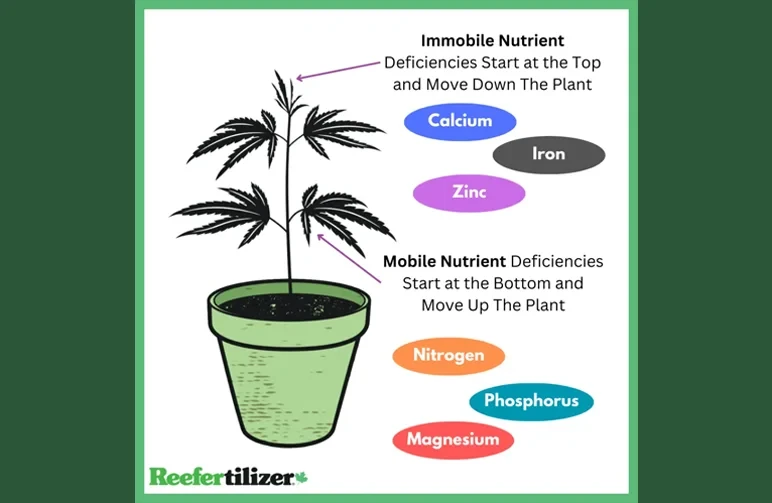
Mobile Nutrients (Problems on the Bottom)
These are nutrients the plant can easily move around. Nitrogen, Phosphorus, Potassium, and Magnesium are all mobile.
If the plant runs out of these, it steals them from the bottom of the plant to keep the new top leaves alive. That means symptoms will always show up on the older, lower leaves first.
Immobile Nutrients (Problems on the Top)
These are nutrients the plant cannot move. Calcium and Iron are the big ones here. Once they get dropped off in a leaf, they are stuck there forever.
If the plant runs out of these, the old leaves stay green, but the brand new leaves at the very top come out yellow, twisted, or covered in brown spots.
Just by looking at the top or the bottom of the plant, you instantly cut your guessing game in half.
Nitrogen (N): The Green Engine
Nitrogen is the engine that drives all of your green leafy growth. It is highly mobile, so you will always see problems on the bottom of the plant first.
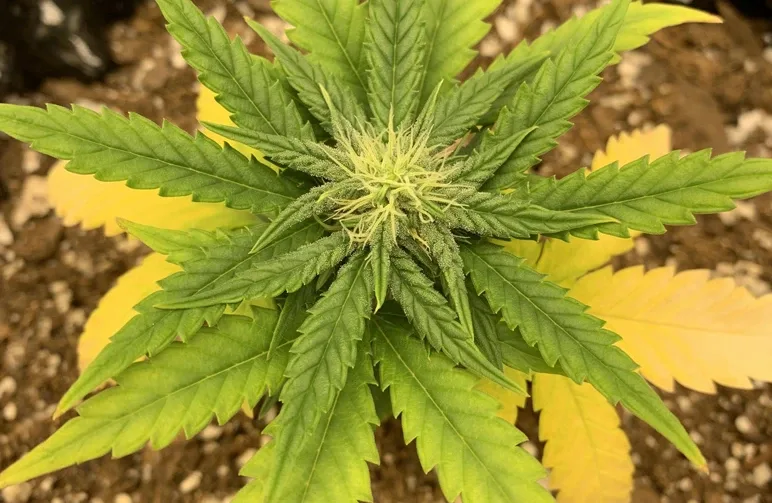
Deficiency: You will see a gentle, pale yellow fade starting at the very bottom of the plant. The old leaves will thin out, turn completely yellow, and drop off.
The Fix: Just add a light dose of your standard grow nutrient. Check your pH to make sure the plant can actually absorb it.
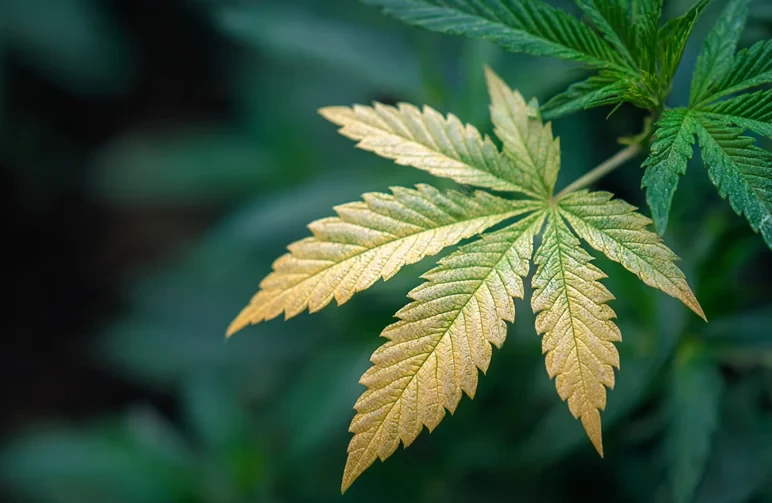
Toxicity: This is what happens when you feed the plant way too much Nitrogen. The leaves will turn a dark, shiny, waxy green. The tips of the leaves will hook straight down. We call this the claw.
The Fix: Stop feeding your plant immediately. Flush the pot with plain, pH balanced water to wash the extra Nitrogen out of the dirt.
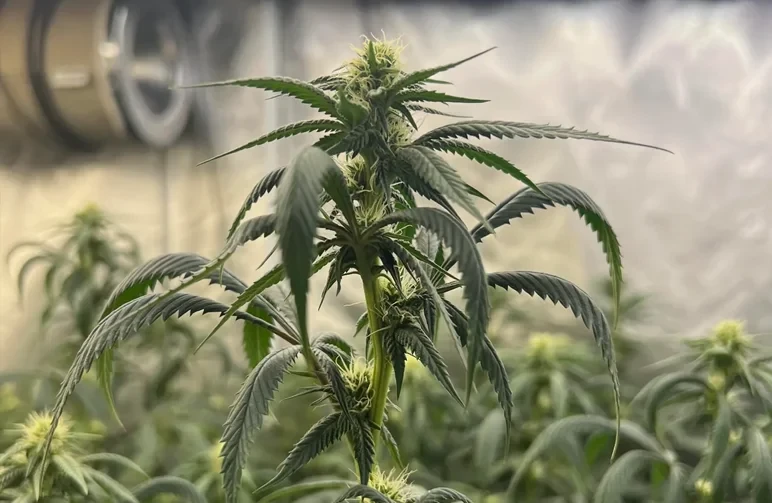
Phosphorus (P): The Bud Builder
Phosphorus is the heavy lifter that builds massive, dense buds. It is also mobile, so keep your eyes on the lower half of the plant.
Deficiency: The plant will look stuck and stop growing. The leaves will turn a dull, dark blue or green. You will start to see dark brown blotches on the leaves. Sometimes the stems will even turn bright red or purple.
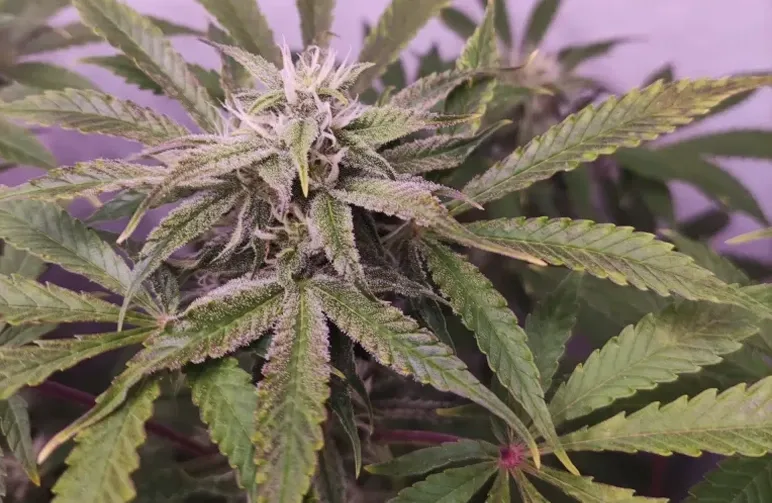
The Fix: First, make sure your grow room is not freezing cold. Cold roots physically cannot absorb Phosphorus. Keep your root zone warm. Then check your pH and add a good bloom nutrient to your watering can.
Potassium (K): The Health Shield
Potassium keeps your plant strong, regulates water, and boosts your resin production. Just like the other two, it is a mobile nutrient.
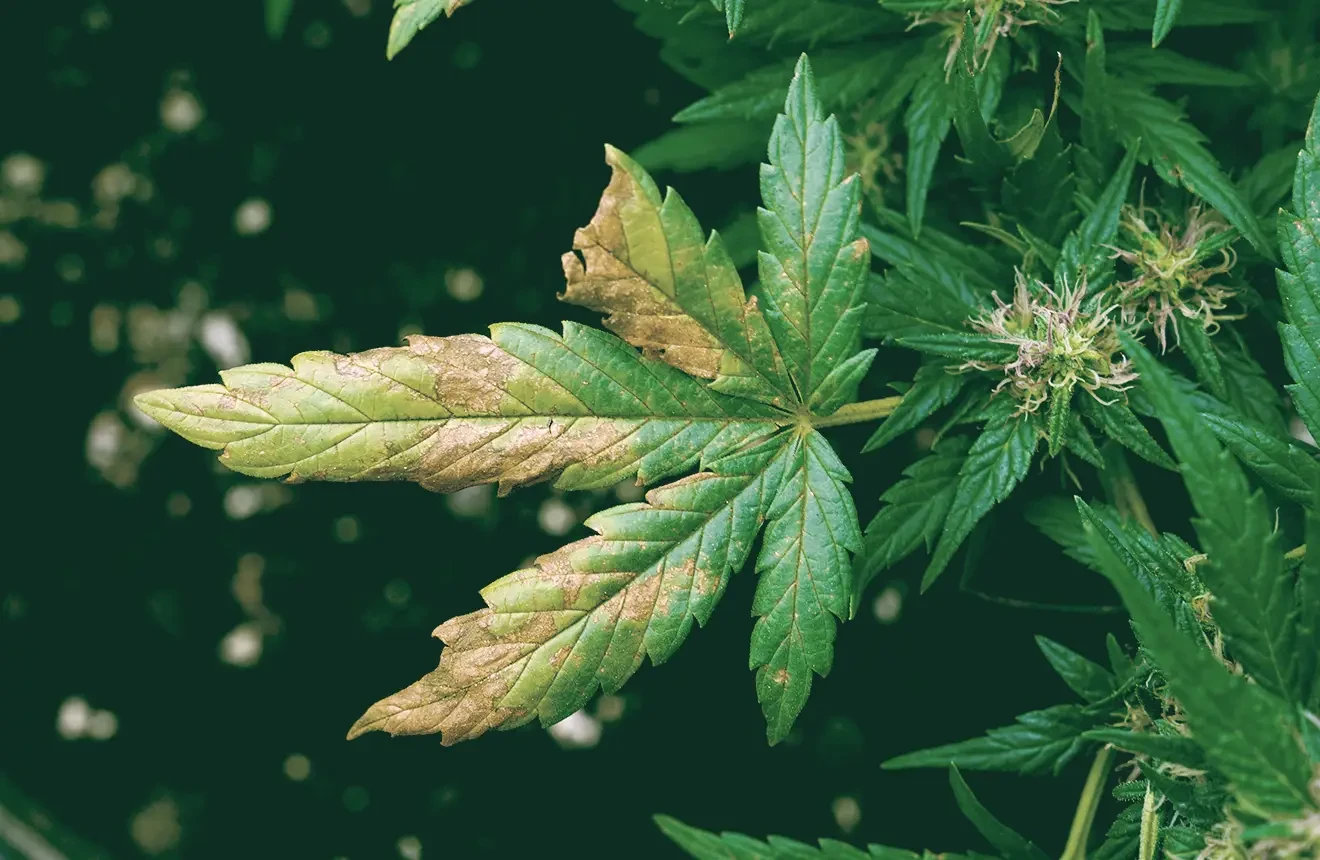
Deficiency: The edges of the lower leaves will turn yellow and get crispy. It looks like a burnt halo around the edge of the leaf, but the veins in the middle will stay green.
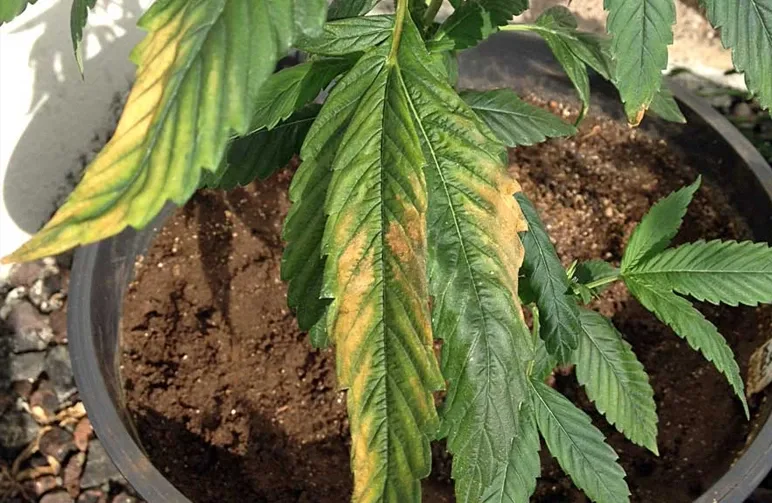
The Fix: A lot of times, a Potassium deficiency is actually caused by a salt buildup in the dirt locking the roots out. Flush your pot to wash out any old salts. Then, hit the plant with a balanced feed.
Kelp meal is a fantastic organic option to get your Potassium levels back on track.
Toxicity: Too much Potassium looks exactly like classic nutrient burn. The tips of your leaves will fry and turn crispy brown.
The Fix: Flush the pot with plain water and lower the strength of your nutrient mix.
The Cal-Mag Duo (Calcium and Magnesium)
These two nutrients almost always ride together in the same bottle. If you grow in coco coir or use reverse osmosis (RO) water, a Cal-Mag supplement is not optional. It is an absolute requirement.
But here is the trick. One of these nutrients is mobile, and the other is immobile.
Calcium Deficiency (Immobile)
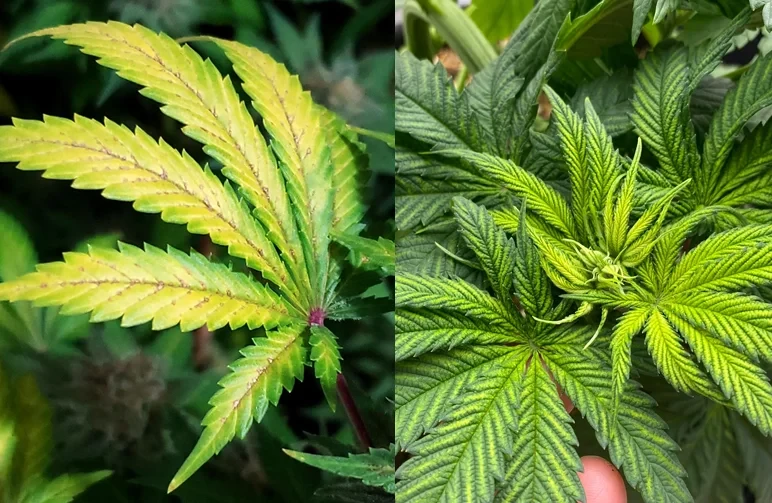
Because Calcium cannot move around the plant, you will see this problem at the very top. The brand new leaves will twist, hook, and grow in weird shapes.
You will also see tiny brown or rust coloured spots covering the fresh leaves.
The Fix: Make sure your pH is perfectly dialed in. Then, add a dose of Cal-Mag to your water.
Magnesium Deficiency (Mobile)
Magnesium is highly mobile. The plant will steal it from the bottom leaves. The old leaves will turn pale yellow, but the veins running through the leaf will stay dark green. We call this interveinal chlorosis.
The Fix: Add a dose of Cal-Mag to your regular feed. If you want a fast organic fix, you can mix a tiny bit of Epsom salts into your water.
How to Fix a Toxic Pot (The Flush)
If you feed your plant way too much, you will cause nutrient burn. The tips of the leaves will fry and turn crispy brown. If you let it go too long, the salts will build up in the dirt and lock the roots out completely.
Here is exactly how you hit the reset button on a toxic pot.
Step 1: Put the nutrient bottles away. Do not add any more food.
Step 2: Fill a bucket with plain water. Adjust the pH so it sits right in the perfect sweet spot for your setup.
Step 3: Pour a massive amount of this plain water through your pot. You want to pour about one to two times the volume of the pot itself.
Step 4: Let all that water drain out the bottom. This washes all the toxic, built up salts right out of the dirt. We call this a flush.
Step 5: Let the pot dry out so the roots can breathe. On your next watering day, start feeding the plant again at exactly half strength.
Frequently Asked Questions
Should I cut off the damaged leaves?
Yes. Once a leaf turns yellow or gets covered in brown spots, it will never turn green again. Damaged leaves do not heal. Pluck them off so the plant stops wasting energy on them.
You judge your recovery by watching the brand new leaves at the top of the plant.
How fast will my plant recover?
If you fix your pH and correct the feed, you should see healthy new growth in three to ten days. If the new leaves look perfectly green and happy, you solved the problem.
Is it a deficiency or nutrient burn? How can I tell?
Deficiencies usually make the leaves turn pale, yellow, or spotty. Nutrient burn makes the very tips of the leaves fry and turn crispy brown.
If your leaves are dark green and the tips look burnt, you are feeding the plant too much.
The Wrap Up
Do not panic the next time you see a yellow leaf. Diagnose the plant by location first. Look at the old leaves, and then look at the new leaves. That single trick speeds up everything.
Always fix your pH before you start chasing problems with expensive nutrient bottles. Correct the issue gently, flush the pot if you have to, and watch the new growth.
If you are getting ready to set up your room and plan out your feeding schedule, make sure to check out our complete guide on how to grow weed indoors to map out your exact next steps.
At Weedseedsexpress, we are growers first. We know that healthy roots and a steady environment make all the difference.
When you are ready to level up your garden, grab some stable genetics from our lineup and grow something you are proud of. Keep your pH honest, and happy growing!